

China rations electricity for millions as cities turn dark
 Add BT as a preferred source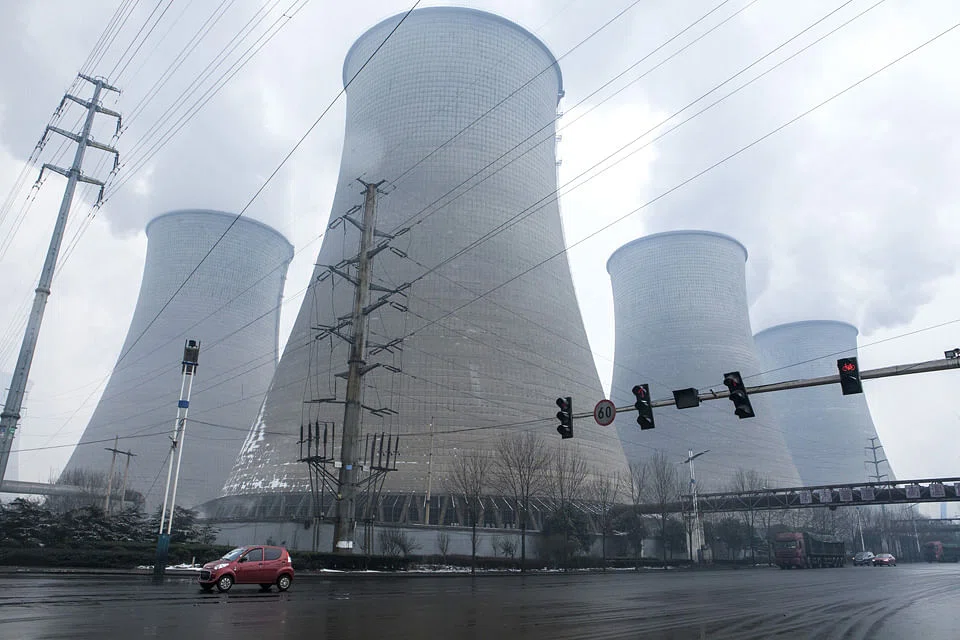
Yiwu, China
IN the city of Yiwu in eastern China, the authorities turned off streetlights for several days and ordered factories to open only part-time.
Over in coastal Wenzhou, the government ordered some companies not to heat their offices unless temperatures are close to freezing. And in southern Hunan province, workers have reported climbing dozens of flights of stairs after elevators were shut down.
Large swathes of China are scrambling to restrict electricity use this winter, as the country's rapid economic recovery from the coronavirus pandemic and unexpectedly frigid temperatures have sent demand for power surging.
Officials in at least three provinces - where a total of more than 150 million people live - have issued orders limiting energy use, warning of potential coal shortages.
Demand for coal is so high in the mining hub of Henan province that buyers have been lining up in trucks at the gates of coal mines, jostling for access, said a recent report in the state-run news media.
Many residents have responded to the restrictions with anxiety and confusion, worrying about being left in the cold or suffering hits to their businesses.
Chinese officials have sought to remind citizens of the country's ambitious environmental goals while reassuring them that there is plenty of energy to keep people warm and the economy humming.
"In general, please believe that our ability to ensure stable energy supply is not a problem," Zhao Chenxin, secretary-general of the National Development and Reform Commission, which steers energy policy, said on Monday.
But the drastic measures point to potential longer-term problems in China's energy universe, as leaders juggle competing priorities. Chinese President Xi Jinping has vowed to make China a climate leader and to make the country carbon-neutral by 2060.
But the country still draws nearly 70 per cent of its power from fossil fuels, predominantly coal, and those energy sources have helped propel China's impressive recovery from the pandemic.
By May of this year, China's carbon dioxide emissions from energy production, cement making and other industrial uses were 4 per cent higher than the year before.
"He has got to wrestle with economic growth, economic structures, employment and the environment," Philip Andrews-Speed, senior principal fellow at the Energy Studies Institute at the National University of Singapore, said of Mr Xi.
Some of the present difficulties may also be self-inflicted.
Coastal areas of China depend on imported coal, including from Australia. But relations between the two countries have gone into freefall this year, as Australia has, among other things, demanded an investigation into the origins of the coronavirus, which first emerged in China.
China in turn has banned imports of Australian coal - leaving huge ships stranded at sea. Chinese officials have denied that the ban on Australian coal is responsible for the current squeeze on energy, noting that in 2018, less than 8 per cent of China's coal consumption involved imported coal. Much of Australia's coal is also used for steel and other metals, not power.
But the government has also acknowledged, with rare bluntness, the scale of the problem.
"At the moment, some provinces temporarily do not have enough electricity. This is an objective fact," said one of the national government's most powerful bodies, the entity that oversees state-owned companies.
The reports of shortages and restrictions began emerging earlier this month. On Dec 4, officials in Hunan announced that monthly electricity demand had seen double-digit growth from the previous year, and would soon exceed the grid's capacity. The shortage would last into the spring, they added.
In response, the authorities ordered residents to begin rationing energy. Every day between 10.30 am and noon, and 4.30 pm and 8.30 pm, lighting on most building facades and billboards are to be shut down, according to the order.
Office buildings will not have power during weekends. Residents were also told not to use electric stoves or ovens.
Hunan, where 67 million people live, has been unusually cold, with temperatures last week slipping below freezing.
In Jiangxi province, in the south, officials have also set out peak hours in which energy use will be limited. In Wenzhou, a city in Zhejiang province, officials said that companies would not be allowed to turn on heating until temperatures fell below 3 degrees Celsius, and would not be allowed to set the temperature higher than 15 deg C.
A county near Wenzhou said that the cafeterias of government agencies, businesses and financial institutions should not turn their heating on, even during mealtimes. Elevators should operate only for the fourth floor and above, until the end of the year, officials said.
The restrictions have drawn the ire of many local residents. In Yiwu, home to the world's largest wholesale market, the government turned off streetlights for several days, until residents complained about safety issues.
"The whole city was dark, and you couldn't see anything," said Zhang Shaobo, a store owner in Yiwu. "Driving home from work a few days ago, I saw several car accidents. All you can do is drive more slowly."
Elevators and billboards in the city's malls remain turned off. Some manufacturers have also been ordered to take two or three days off for every day they work - much to the annoyance of workers who have just started to see their livelihoods return after the economy ground to a halt during the epidemic.
The resurgence of manufacturing may be one reason for the new restrictions.
China reported a record trade surplus of US$75 billion in November, fuelled by a 21 per cent surge in exports compared with the same period last year. Exports to the United States alone jumped 46 per cent.
That spurt of demand, while bolstering Yiwu's economy, may also have put the city over its energy targets, said Mr Andrews-Speed. That could have prompted officials to make sudden cuts in order to comply with environmental goals, he added.
The authorities have emphasised regional differences in the energy restrictions, noting that while Hunan and Jiangxi faced real shortfalls in power supply, Zhejiang's limits were voluntary. NYTIMES
Decoding Asia newsletter: your guide to navigating Asia in a new global order. Sign up here to get Decoding Asia newsletter. Delivered to your inbox. Free.
Share with us your feedback on BT's products and services
TRENDING NOW

Lamborghini-driving boss of Eminent Frog Porridge charged with S$3.8 million tax evasion, money laundering
Malaysian tycoon Vincent Tan’s sell-downs point to pruning rather than an exit plan

Palm oil stocks set to surge as Indonesia said to be scaling back export overhaul: analysts

Soon Su Lin to step down as Frasers Property Singapore CEO; Tan Wee Hsien named successor

