

China says tech growth a challenge to predicting energy demand
The growth of emerging sectors including AI and EVs makes forecasting future energy needs harder
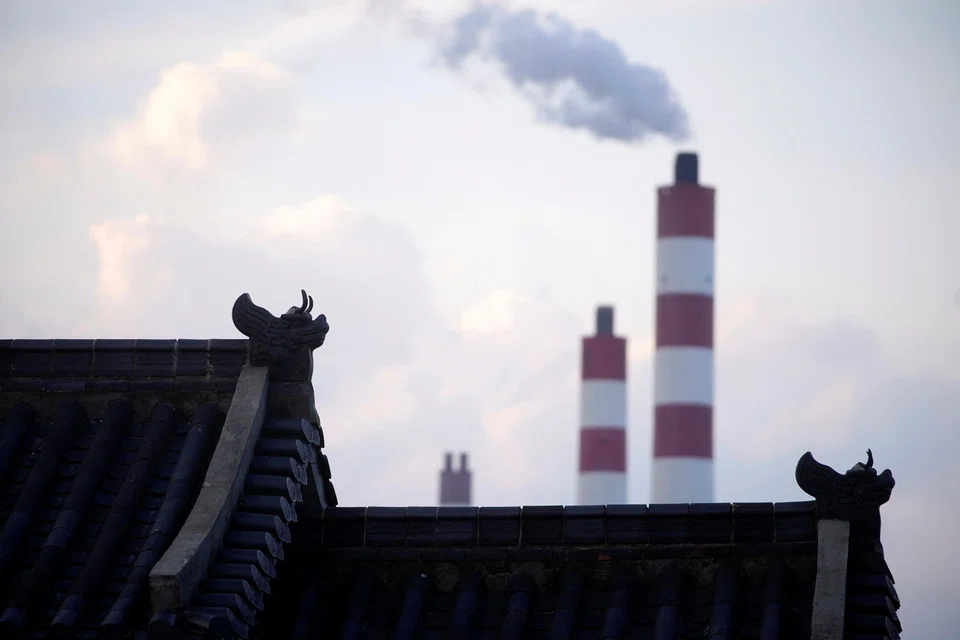
CHINA faces greater uncertainty in forecasting energy demand as structural changes in the economy and the rapid expansion of new industries reshape consumption patterns, said a top government official.
Demand over the past five years surpassed the government’s expectations, said Ren Yuzhi, director-general of the planning department at the National Energy Administration (NEA).
The growth of artificial intelligence, electric vehicles and other emerging sectors is compounding the problem for energy planners trying to map out the next five years.
Deliberations extend to potentially rethinking China’s geography and where electricity is consumed, after decades of building up power networks to serve the massive cities in the east.
“Forecasting future energy demand – especially electricity – is a key challenge in the next planning cycle,” Ren said in an exclusive interview on Friday (Jun 26), after his agency released more details on the energy component of China’s new Five-Year Plan that runs through 2030.
“AI computing centres and the development of EVs are important factors,” he said.
“EVs, in particular, have seen faster growth in recent years – especially this year – and charging demand has risen significantly.”
Understanding future energy demand is critical for the planners guiding trillions of dollars in investment in China’s more centrally planned economy. The task is made more complicated by the country’s transition to cleaner but less consistent renewable energy.
China now expects an average annual increase in power demand of around 600 billion kilowatt-hours (kWh) in the next five years, according to the NEA, which would be more than Germany produces in a year.

That compares with 570 billion kWh over the past five years, said Ren.
Marked shifts
The implications of getting it wrong can be seen in the marked shifts in China’s energy policy over the past five years.
In 2021, planners estimated China would need about 4.6 billion tonnes of coal equivalent a year by 2025, a 14 per cent increase from 2020 levels. Instead, demand grew so fast that total production ended up at 5.13 billion tonnes last year.
A series of power shortages in 2021 and 2022 led to an about-face in the country’s policy around coal. Authorities pushed miners to boost output to record levels and began approving hundreds of new coal-fired power plants.
China’s current plans call for peaking coal by 2030. To achieve that, clean energy will need to grow swiftly and be flexible enough to handle all additional demand.
Traditional industries such as steel continue to consume vast amounts of energy, while new sectors like AI and advanced manufacturing are becoming important new sources of demand.
At the same time, China wants to shift energy use from fossil fuels to electricity, which will add further strains to the grid, Ren said.
“We will not only need to meet traditional demand, but also the growing needs of people’s daily lives,” he said. “Increasingly, new areas are having a significant impact.”
Those new sources of demand are prompting policymakers to reconsider how energy and industrial capacity are geographically distributed, he added.
Rather than continuing to transmit large volumes of electricity from western China to the eastern seaboard, authorities are weighing a shift toward relocating energy-intensive industries westward, closer to renewable resources.
“The western region has traditionally focused on exporting coal, electricity, and natural gas,” Ren said. “Going forward, it is more likely that the west will export finished products and computing power.”
On the wire
The increase in China’s industrial profits softened for the first time since November, suggesting that strong exports and price gains failed to offset the drag from tepid domestic demand.
China Three Gorges is in talks to buy a German wind portfolio from NEAG Norddeutsche Energie.
Some Fortescue iron ore cargoes due in China next month are being held up because negotiations between the Australian miner and the country’s state-backed buyer remain deadlocked. BLOOMBERG
Decoding Asia newsletter: your guide to navigating Asia in a new global order. Sign up here to get Decoding Asia newsletter. Delivered to your inbox. Free.
Share with us your feedback on BT's products and services
TRENDING NOW

DBS, OCBC, UOB rout lops billions off STI as inflation, rate concerns spook investors

Grab CEO’s wife Chloe Tong on life with Anthony Tan and finding her purpose

OCBC sheds S$8 billion in value as shares close nearly 6% down; analysts cautious on banks

Deal between tycoon friends sparks scrutiny of Philippine power sector

