

China signals lenient launch for national carbon trading
 Add BT as a preferred source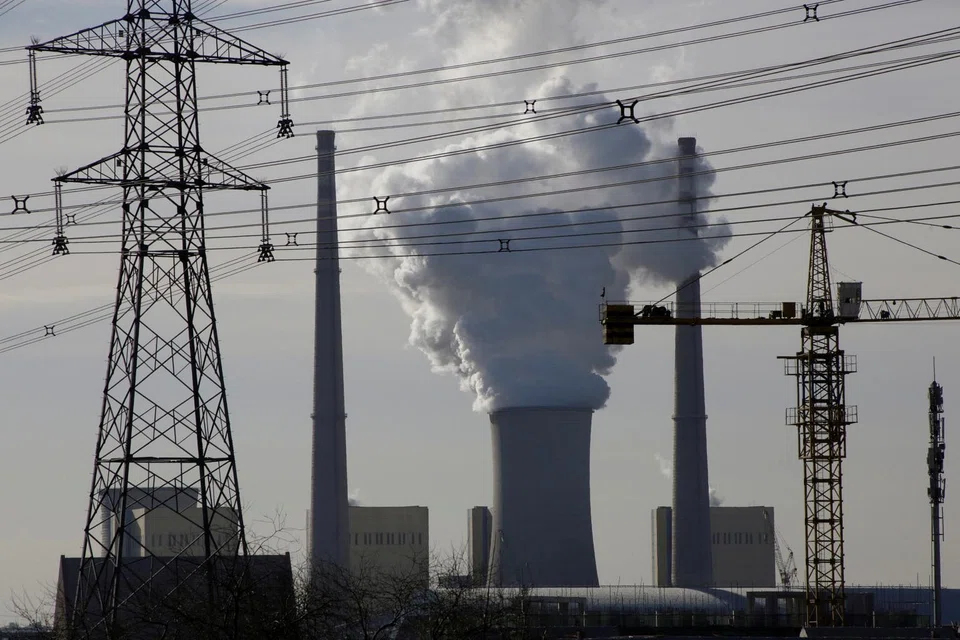
DeeperDive is a beta AI feature. Refer to full articles for the facts.
[NEW YORK] China's plans to control emissions with the launch of a national carbon market, which will be the world's biggest, may start off more fossil-fuel friendly than its existing regional systems.
A proposal for the rules governing the national programme, known as an allowance allocation plan, is being circulated by the Ministry of Ecology and Environment for feedback from industrial participants, according to people with knowledge of the issue.
The plan offers some of the most concrete examples yet as to how China's trading scheme would work. The rules haven't been finalised and details may change, said the people, who asked not to be identified because the information isn't public. Ministry officials didn't respond to a fax requesting comment on the proposal.
The carbon market is expected to cover China's power sector, which accounts for half its fossil fuel-derived emissions and 14 per cent of the entire world. China has several regional pilot programmes, while the nationwide plan is scheduled to start by the end of this year.
Those pilot programmes - covering Beijing, Chongqing, Fujian, Guangdong, Hubei, Shenzhen, Shanghai and Tianjin - priced carbon emissions between 22 yuan and 94 yuan per tonne on Monday, data from exchanges showed.
The plan, if implemented, is likely to result in "considerable and oversupplied quotas" as the government wants to reduce objections from the industry at the beginning, said Li Shuo, a policy adviser from Greenpeace China.
Navigate Asia in
a new global order
Get the insights delivered to your inbox.
It would benefit more-efficient power companies, which would be left with excess quotas to sell. That risks making carbon trading a "social welfare system instead of a mitigation system", he said.
Here are some key details of the plan, which was reviewed by Bloomberg: It covers carbon emissions from 2019 and 2020, and would give companies allowances for a certain amount of emissions. If their actual emissions were more than the allowed level, the companies would need to buy allowances from other firms.
Rules for future years aren't included, and the plan doesn't set specific allowance levels or say when trading would begin.
It includes formulas for how many allowances would be given for each power plant based on size and hours of operation, and they appear to be more lenient than the existing pilot programmes. For example, a small coal-fired power plant would get 17 per cent more initial allowances under the national proposal than the same plant would have received in Guangdong province in 2019, according to Bloomberg calculations.
The proposal limits the maximum amount of extra allowances a company would have to purchase to the equivalent of 20 per cent of its total emissions.
Companies don't have to purchase extra allowances for emissions from natural gas power plants, and gas-related allowances would be able to be used to offset coal emissions or sold on the open market.
BLOOMBERG
Decoding Asia newsletter: your guide to navigating Asia in a new global order. Sign up here to get Decoding Asia newsletter. Delivered to your inbox. Free.
Share with us your feedback on BT's products and services
TRENDING NOW

Ministry of Home Affairs Permanent Secretary Pang Kin Keong to retire
Shelving S$5 billion office redevelopment plan proved ‘wise’ as geopolitical risks mount: OCBC chairman

Richard Eu on how core values, customers keep Singapore’s TCM chain Eu Yan Sang relevant

China pips the US if Asean is forced to choose, but analysts warn against reading it like a sports result

