China’s private refiners snap up Middle East oil as prices slide
Iran’s floating hoard, meanwhile, is swelling as major buyers stay away
CHINA’S independent refiners are taking advantage of cheaper Middle Eastern oil after flows accelerated through the Strait of Hormuz, snapping up barrels from producers including Saudi Arabia and Iraq.
Rongsheng Petrochemical has bought Saudi crude on a spot basis for arrival in July, while Shandong Chambroad Petrochemicals purchased Iraq’s Basrah grade for August, said traders with knowledge of the matter.
Another processor, Shenghong Petrochemical Group, acquired Upper Zakum from the United Arab Emirates, they said.
Refiners in Asia have been inundated with offers as shipments through Hormuz picked up following an interim peace deal between Washington and Teheran, and after the US issued a temporary waiver allowing the purchase of Iranian crude.
State producers Saudi Aramco and Abu Dhabi National Oil have been offering their oil on more flexible terms in an effort to encourage higher sales.
Many of the cargoes sold by Aramco and Iraq were priced at discounts of as much as US$5 a barrel to Brent futures on a delivered basis to China, said the traders, asking to not be identified discussing private information.
Those levels are much cheaper than grades from West Africa and Brazil, which are the typical sources for their spot crude requirements, due to costly long-haul freight, traders said.
They are also comparable to, or possibly cheaper than, recent offers for Iranian crude, they added.
State-controlled Saudi Aramco has so far sold at least six million barrels of crude to customers in South Korea, Japan and China, sources said. The cargoes are to be delivered on three supertankers.

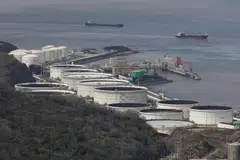
Traders said that the spot sales were highly unusual as Aramco typically only sells crude to long-term contract buyers at official selling prices that are set once a month.
Shipments that are purchased will count toward customers’ annual contractual volume obligations with the producer.
Representatives from Rongsheng, Chambroad and Shenghong did not immediately respond to e-mails seeking comment. Saudi Aramco declined to comment.
Teheran struggles to sell
At the same time, a hoard of Iranian oil is building up at sea as the Islamic Republic struggles to find buyers.
More than 20 million barrels of Iranian crude have been idling in Asian waters for at least seven days, up nearly 18 per cent from a week earlier, data from Kpler showed.
Estimates for the overall volume of the country’s oil on water – either in transit or stationary – have ranged from 58 million to 68 million barrels since the US sanctions waiver kicked in last week, according to data from Vortexa and Bloomberg calculations.
More than 90 per cent of these cargoes on water have no clear destination. The vessels are either indicating “for orders” or Singapore as their next port of call, a sign they may conduct ship-to-ship transfers in the Malacca Strait.
A failure to quickly sell the crude would deprive Teheran of much-needed revenue and could weaken its hand in negotiations with Washington.
Demand from Chinese independent refiners – Iran’s main customers prior to the conflict – has been muted as the sector’s run rates crash to a nine-year low. China’s state-owned refiners have also stayed on the sidelines, citing concerns over the ability of banks to finance any deals.
Most of the oil is in and around the Persian Gulf, in the Indian Ocean or the Malacca Strait near Singapore.
Restrictions and risks at play
Teheran faces a number of obstacles in trying to sell the oil.
EU and UK restrictions are still in place, complicating insurance, while some ports may be hesitant to accept the dark-fleet vessels that Tehrean uses to carry its crude.
There is also a chance the barrels could get stranded mid-deal if US President Donald Trump decides to end the window early.
Iran said on Wednesday that it had shipped more than 40 million barrels of oil since the US lifted its naval blockade.
Buyers remain wary that Washington could reimpose sanctions if negotiations collapse, US Treasury Secretary Scott Bessent told Fox News on Tuesday.
“No one other than China, who was already buying it when it was sanctioned, has bought it, so it’s still trading at a discount.”
The other major barrier to Iran offloading the crude is a lack of demand in major Asian markets, where there has been little interest despite Teheran’s efforts to court buyers.
The region is well-supplied, both with non-Iranian Persian Gulf oil that can now transit the Strait of Hormuz and crude from farther afield that was bought during the war.
China’s imports of Iranian crude more than halved in June to about 654,000 barrels a day from a month earlier, Kpler data showed. Still, at least one tanker has discharged a cargo of the oil in China over the past week, according to Kpler and Vortexa.
Indian Oil Minister Hardeep Puri met his Iranian counterpart in New Delhi last week, but stopped short of committing to imports.
The country’s state-run processors are avoiding the Iranian oil for now, because they have already secured crude supplies through at least the end of August, said people with knowledge of the matter who asked not to be named as the discussions are not public.
They are also still seeking clarity from Washington over US-denominated payments, the sources said.
India would consider resuming purchases once payment channels are clarified, while a complete withdrawal of sanctions could enable refiners to buy from Iran over the longer term, they added.
Still, Asian interest in Iranian oil could quickly emerge if the price is right.
Refiners that have already secured crude supplies can resell some oil to free up some space, should the shipments be highly discounted, and there is also the option of raising operating rates if raw material costs are cheap. BLOOMBERG
Decoding Asia newsletter: your guide to navigating Asia in a new global order. Sign up here to get Decoding Asia newsletter. Delivered to your inbox. Free.
Share with us your feedback on BT's products and services