

Commodities the asset class to watch amid looming rate cuts, macroeconomic uncertainty

Uma Devi
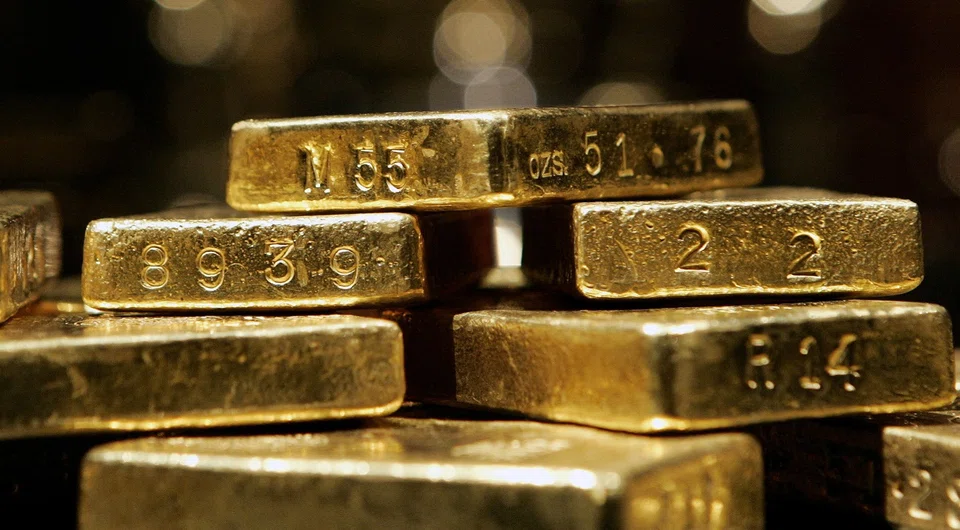
COMMODITIES have typically been used by investors to help diversify their portfolios and as a buffer against macroeconomic shocks, but market watchers polled by The Business Times say investors should now keep a closer eye on the asset class.
The sector often serves as a diversification tool, as its returns are independent of those from equities and bonds. Commodities are also an asset class that is set to benefit from the impending interest rate cuts by the US Federal Reserve.
Analysts of Bank of America’s global commodity research team said returns from commodities have lagged those of equities and bonds for several years due to weaker spot prices, near-zero Treasury bill returns and a negative roll yield.
But structural economic changes that are currently plaguing markets could “reverse these trends”, they said.
“We believe the future could be different for commodities than the past 15 years. Global nominal gross domestic product (GDP) growth is expanding at a strong pace and markets expect a US soft landing,” said the analysts.
They noted that commodities have yielded a positive roll return for the past two years. “Commodities have an increased appeal and could bring new and attractive diversification benefits,” they added.
Observers are currently bullish on gold and crude oil. Bank of America’s analysts said low inventories and ample spare capacity in crude production could lead to persistent energy backwardation – a market condition where prices for a commodity in the future are lower than current prices – as spot metals prices benefit from energy transition spending.
John Chen, Standard Chartered’s regional head of corporate commodities sales for Asia, noted that gold prices have rallied about 10 per cent from mid-February.
“Unlike previous rallies that set fresh all-time highs, this recent move was not accompanied by new catalysts or risk events such as Covid-19 or Russia’s invasion of Ukraine. Despite a strong equity market, high interest rates and a strong US dollar, demand for physical gold remains strong,” he said.
While gold is likely to be vulnerable to corrections, Chen said the physical market demand appears to limit the downside risk. He reckoned that the bulk of price support comes from demand from central banks – which are expected to be net buyers of the precious yellow metal this year.
Standard Chartered maintains its call for the first Federal Reserve rate cut to take place in June, which will mean gold prices could be sustained at higher levels. The bank also holds the view that there is still “scope for fresh long positions to be added” in gold.
“A combination of safe-haven demand and a supportive physical market presents limited downside risks for gold,” Chen added.
Thomas Taw, head of iShares investment strategy for the Asia-Pacific at BlackRock, said the asset manager remains positive on gold.
He said the relationship between gold and its usual drivers – interest rates and the US dollar – appears to have “broken down”.
Investor demand, measured by flows of exchange-traded products, have also booked outflows for 10 consecutive months.
“This leads us to central bank demand as the likely suspect in driving prices higher. We expect this demand is likely to remain stronger for longer, providing a catalyst to keep prices elevated for longer,” he added.
Some market watchers, however, warn that commodities as an asset class is a diverse one. Sim Moh Siong, commodity strategist at Bank of Singapore, said each commodity comes with characteristics that are important in determining its supply and demand, including health of the global economy, ease of storage, geopolitics and weather.
Commodities, led by energy, are up this year but lag equities, he said, as the latter benefits more from global growth holding up better than expected and as disinflation progress paves way for central bank easing later this year.
“Adding broad commodity exposure can help diversify a portfolio of stocks and bonds,” Sim said. Bank of Singapore, which has coverage on oil and precious metals, has an asset allocation with a 4 per cent weighting for commodities in a typical balanced portfolio.
Analysts at Fitch unit BMI said Brent crude oil prices have broken through near-term resistance and are currently trading at around US$86 per barrel.
“A creeping improvement in the macroeconomic outlook has had a hand here, but the more proximal driver has been rising risk on the supply side,” said analysts, noting that Ukraine has been stepping up its attacks on Russian refineries in an attempt to dent the government’s oil revenue, and Kyiv likely has the capacity to sustain these attacks.
A further escalation poses “meaningful risk” to BMI’s current oil price outlook, the analysts warned, although they acknowledged that the price reaction so far has been “relatively well-contained”. They are forecasting Brent to average US$85 per barrel this year, and US$82 per barrel next year.
Morgan Stanley’s research team said a steady rally in time spreads since the start of the year and supportive refining margins highlight the degree of market tightness. This, they said, could push crude prices to US$90 per barrel this summer.
But much depends on whether discipline from the Organization of the Petroleum Exporting Countries (Opec) is maintained, they said.
Morgan Stanley also sees an “overall upward skew” for metals. Uranium and copper are its top picks, and analysts are positive on iron ore too.
“Copper is seeing good demand from China as well as very large supply disruptions, tightening the balance. Iron ore is well-supported by seasonally soft supply and strong steel production,” they said.
Another commodity to watch, said Standard Chartered’s Chen, is cocoa. On a per-tonne basis, cocoa beans are now more valuable than refined copper, he noted, as prices of the agri-commodity have more than doubled and touched new highs on the back of supply shortages from key producers such as Cote d’Ivoire and Ghana.
For now, Chen said the International Cocoa Organization expects that demand will far outstrip supply this cocoa season ending September, which suggests that higher prices may be sustained.
“Academic research has shown that cocoa demand is inelastic,” he said, adding that the recent rally in cocoa prices will lead to more expensive chocolates for the end-consumer.






