Commodity sector braces itself for prolonged period of higher costs and volatility

Uma Devi
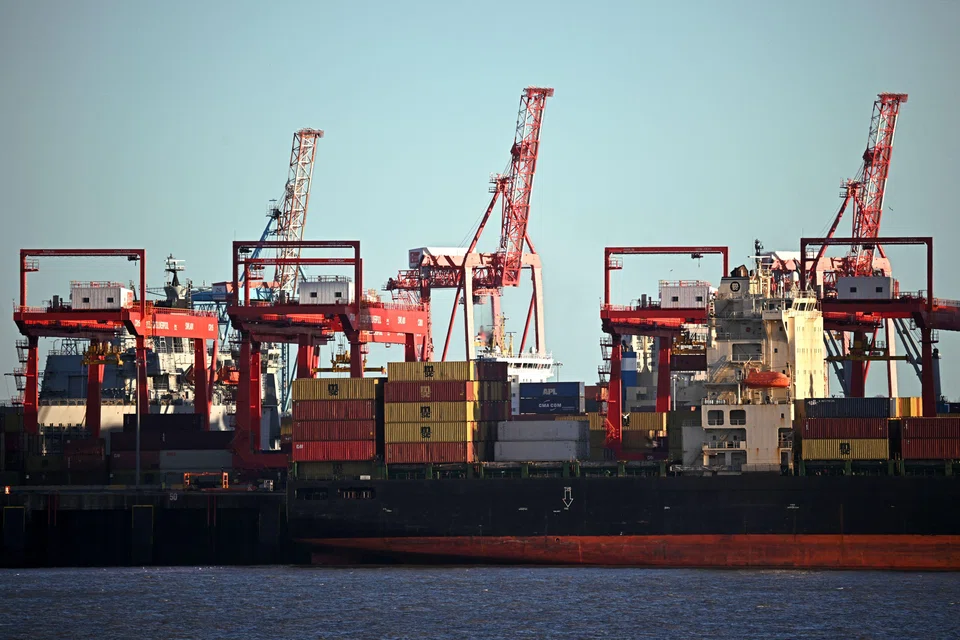
HIGHER freight costs and longer voyage times on the back of trouble in the Red Sea are among the key challenges that commodity companies and traders are grappling with. These come even as they brace themselves for an extended period of uncertainty hanging over the sector.
Speaking at a series of panel discussions on the opening day of the Asia-Pacific Commodity Trading Week – held in Singapore for the first time – executives of trading firms and commodity giants voiced concerns over the impact of factors such as geopolitical tensions and weather conditions on their businesses.
Vikram Sardeshpande, managing director at soft commodity services group ECOM Agroindustrial Asia, said commodity firms have had to adjust their risk models across the board last year on the back of volatility.
Models that were formerly based on supply and demand now focus more on geopolitics and climate change. “Traders have to be very agile in this environment, as there are factors being thrown at us at every moment,” he said.
Rising costs have also pushed players to think about their cost of capital.
Biggest contributor
According to Sardeshpande, there has been an “extreme focus on driving efficiencies in (a company’s) working capital”, which has led to unintended consequences in the commodities sector.
“Inefficiencies in supply chains have developed because of the efficiency that we want in the working capital,” he added.
Loic Brachet, head of biofuels for the Asia-Pacific at Hartree Partners, said that while the nominal price of commodities may not seem too bad, companies in the sector have to “think in terms of cost” – of which the biggest contributor is freight.
“(Freight costs) have increased tremendously,” he said, as ships now have to take longer routes to get to their destinations.
“There are a lot of businesses that used to be profitable – in environments with low inflation and low capital costs – that are no longer profitable. So this is…also making supply chains a lot more challenging.”
Aditya Aggarwal, head of risk at global oil-and-gas company Emirates National Oil Company (ENOC), pointed out that the commodities sector is one where “very tight monetary conditions can significantly affect global trade business”.
To partially mitigate higher freight costs, ENOC uses time charters (the hiring of a vessel for a specific period of time) and spot charters (the one-off chartering of a tanker for a single voyage).
Garima Jain, deputy chief executive and head of grains at Louis Dreyfus Company in India, said the company applies hedging tools or risk-management techniques to offset higher freight rates. She stressed that companies need to have a “robust hedging mechanism” in place to navigate the uncertainties.
Protecting margins
Pierre-Yves Rigaux, chief executive of commodity trading and logistics company Interasia Energy, said big firms such as Trafigura are better at fending off volatility because they tend to have large portfolios and cash resources to fall back on.
Smaller trading companies cannot shy away from volatility; instead, they need to anchor themselves to short positions and protect their margins from severe price fluctuations.
Average margins for traders in the commodities sector come in at 3 or 4 per cent, he said. “If your cost of financing increases by the same amount, you’re going to be wiped out.”
Trading houses should stay nimble and look at niche areas – such as biofuels and feedstocks – that can deliver good returns during volatile periods, Rigaux said.
Peta Milan, principal of family office Henmil Group, believes the commodities sector needs to innovate and shake things up in order to thrive amid the uncertainty.
For example, she said, the group is looking at regenerative investing, which involves putting its money into investments that restore biomass in soil, or undertaking reforestation in a way that prevents global warming and encourages carbonisation.
“I think the onus is on the investor to really drive the boards and the C-suite to start exploring how they can do commodities differently,” Milan added.
TRENDING NOW
Grab CEO’s wife Chloe Tong on life with Anthony Tan and finding her purpose
Once staunchly pro-China, Malaysian Chinese businesses are now distancing themselves from Beijing
Crystal Jade Fine Dining faces charge for failing to file income tax return on time
UOB found ‘grossly negligent’ over Stamford Land rights issue advice, to pay S$1.9 million