Creating a people-centred culture

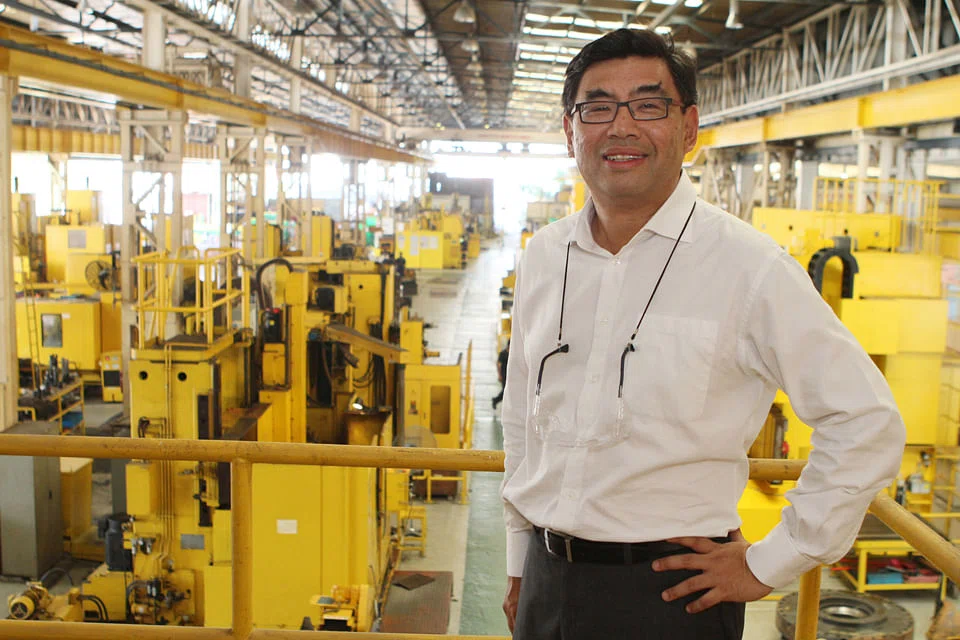
MTQ Corp's Kuah Boon Wee, winner of a Best CEO Award, believes in the importance of creating a congenial workplace environment.

Fiona Lam
Fiona Lam

Published Wed, Jul 8, 2015 · 09:50 PM

    AT MTQ Corporation, people management is a key area which chief executive officer Kuah Boon Wee is proud of.

    At the companies that the oil and gas equipment and services provider acquired, the bulk of their management teams remained with MTQ and went on to become important members of the group, Mr Kuah tells The Business Times.

    "Our philosophy with people is to align rewards with performance, to empower people, and to promote a culture where we are a friendly and good company to work with," he says.

    At MTQ, employees address their co-workers by name - there is no hierarchy where "everyone is Mr this and Mr that", Mr Kuah adds.

    Employees also hold regular social gatherings and go on overseas vacations together. Some of the women staff even participate in group yoga at lunchtime.

    "That's a culture I want to promote; even though we're an industrial company, we still think of people as individuals," Mr Kuah says.

    At this year's Singapore Corporate Awards, MTQ bagged the Best CEO Award for companies with less than S$300 million in market capitalisation. The company, established in 1969, specialises in engineering solutions for oilfield equipment, including repair, manufacture and rental operations.

    Mr Kuah was appointed MTQ's chief executive in 2010, about four years after joining its board of directors. Previously, he served as chief executive of PSA Southeast Asia and Singapore Terminals from 2007 to 2010. He has also worked in multinational corporations (MNCs) in various industries, including property investment and development, IT, consumer finance, and automobile distribution.

    "My time in PSA gave me good insight into labour challenges at the front end, since professional chief financial officer (CFOs) tended to be further away from front-line operations," Mr Kuah says.

    Today, as an SME (small and medium-sized enterprise) in Singapore, MTQ faces long-term labour challenges and, frequently, battles with many bigger competitors for opportunities with the major companies. As a result, being nimble and having a flat reporting structure are key, Mr Kuah says.

    To grow, the company has decided to look to acquisitions and build complementary niches to bundle more services together. MTQ acquired the Premier Group in 2011, followed by Neptune Marine Services and then Binder in 2014, expanding into Australia, the UK and Indonesia.

    Another recent milestone for MTQ was getting its oilfield engineering operations in Bahrain to achieve profitability last year. The business took some time to get to a critical size after MTQ expanded to the Middle Eastern nation four years ago, "not helped by the geopolitical challenges facing the region", Mr Kuah says.

    With him at the helm, MTQ's revenue almost quadrupled from S$82 million in 2010 to S$313 million in 2014. During that period, net profit also doubled from S$12 million to S$24 million.

    As at end-March 2015, the company had close to 1,300 staff, with 276 in Singapore and the rest in Indonesia, Bahrain, Australia and the UK.

    While Mr Kuah is thankful for the recognition from the award as well as the hard work of everyone in the company, he is also aware that the recent oil price slump is making this a "very challenging time" for MTQ and the industry. "I feel extra motivation to not let people down and to do my very best," he says.

    In fact, Mr Kuah sees the current environment as his biggest challenge thus far at MTQ.

    Since oil prices fell in late 2014, the demand for services in the oil and gas industry has declined, and Mr Kuah believes the situation is not likely to reverse soon. "A lot of capital has gone into our sector in terms of assets, and it will take time for such assets to achieve better utilisation," he says.

    In the meantime, the environment has become very competitive, with oil companies curtailing expenditure and looking for better returns from their suppliers. Several of MTQ's MNC customers are in major cost-cutting mode and have laid off significant parts of their workforce, Mr Kuah points out.

    "It is a tough time in our sector and we need to survive this downturn," he says. Aside from the "inevitable" short-term measures of cutting costs and streamlining processes, MTQ is focusing on its core competencies while planning ahead and doing what is best for the business in the long run, says Mr Kuah.