

Dollar falls as yields languish, euro gets extra late-day lift
 Add BT as a preferred source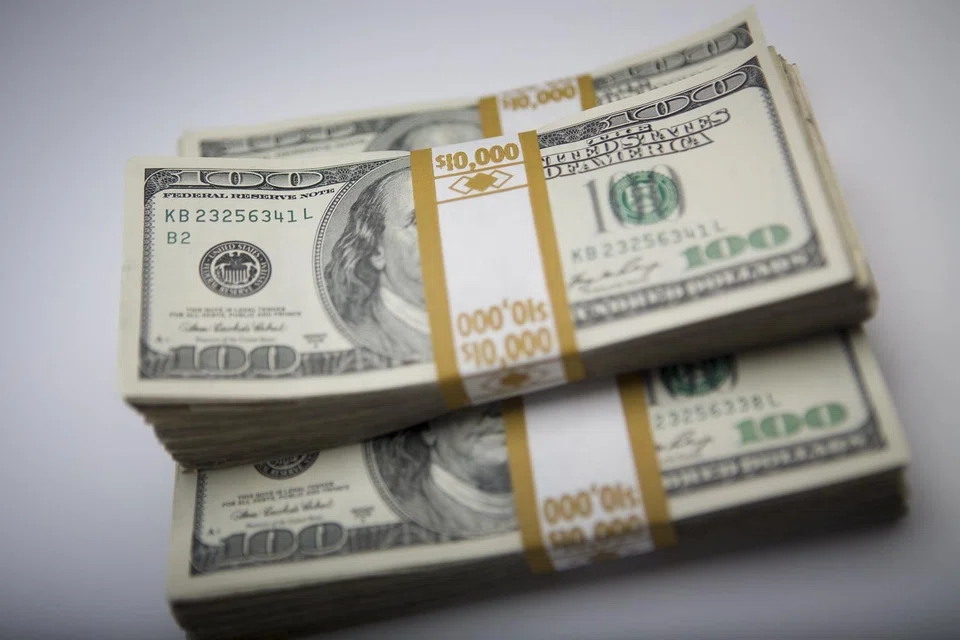
DeeperDive is a beta AI feature. Refer to full articles for the facts.
[NEW YORK] The dollar fell against major currencies on Friday as US yields languished and the euro got an extra late-day lift following a earlier boost from an upbeat survey of purchasing managers.
The dollar index fell 0.5 per cent to 90.8080, a level not seen since early March, after the euro climbed 0.7 per cent to US$1.2098, pushing through its earlier high for the week.
More than half of the euro's appreciation came late in the day after the market digested earlier economic news.
"This is thin markets on a Friday afternoon," said Marc Chandler, chief market strategist at Bannockburn Global Forex in New York. "The euro making new highs for the week late in the day suggests it is going to have momentum into next week."
The exaggerated move came after the markets saw a European purchasing managers' index for April come in better than expected, supporting the view that the region's economic recovery is accelerating and won't keep lagging so far behind the US recovery.
A similar US survey showed factory activity powered ahead in April. Another report said new home sales in the United States jumped 21 per cent in March. Both affirmed that the economy was being lifted by government stimulus and increased vaccinations against the coronavirus.
Navigate Asia in
a new global order
Get the insights delivered to your inbox.
The US survey results were tempered by manufacturers reporting increased struggles to get raw materials and other supplies for production.
YIELDS ON 10-YEAR
US Treasuries traded in a narrow range through the news and were at 1.56 per cent late in the day, about four basis points lower than at the start of the week.
Until the late-day boost to the euro, Mr Chandler said Friday's major currency markets were largely "a continuation of what we have seen since the beginning of the month," with the dollar losing much that it had gained earlier in the year as yields climbed to 1.75 per cent on March 31.
"The dollar had a very strong first quarter and the market is still unwinding that," Mr Chandler said.
The dollar in the first quarter gained 3.6 per cent but it has lost about 2.6 per cent so far in April.
Markets now are looking toward next week's meeting of the US Federal Reserve Open Market Committee to review monetary policy and the economy.
Fed Chair Jerome Powell is expected to echo Thursday's message from European Central Bank President Christine Lagarde that scaled back some expectations for a withdrawal of monetary easing.
Mr Powell's remarks could put more downward pressure on Treasury yields and limit any bounce of the dollar.
Auctions of US Treasuries next week are not likely to be big factor, Shaun Osborne, chief currency strategist at Scotiabank told the Reuters Global Markets forum on Friday.
"There still appears to be good demand for Treasury product," Mr Osborne said.
"The FOMC will likely be the highlight of a busy data week for the US," Mr Osborne said.
Overall, he expects that "low yields, low volatility plus strengthening global growth should drive diversification away from the USD to riskier assets."
The Australian and New Zealand dollars firmed on Friday, but traders said risks are pointed to the downside due to the recent weakening in commodity prices.
The British pound rose 0.3 per cent on the day.
Bitcoin and other cryptocurrencies trimmed some losses that had come out of concern that US President Joe Biden's plan to raise capital gains taxes will curb investment in digital assets.
Bitcoin, the biggest and most popular cryptocurrency, slumped as much as 5 per cent and fell below US$50,000 for the first time since early March. It was down 1.5 per cent to US$50,932 at 21495 GMT. Smaller rival Ether was down fell about 2 per cent.
REUTERS
Decoding Asia newsletter: your guide to navigating Asia in a new global order. Sign up here to get Decoding Asia newsletter. Delivered to your inbox. Free.
Share with us your feedback on BT's products and services
TRENDING NOW

Shelving S$5 billion office redevelopment plan proved ‘wise’ as geopolitical risks mount: OCBC chairman
China pips the US if Asean is forced to choose, but analysts warn against reading it like a sports result

Beijing’s calculated silence on the Iran war

Middle East-linked energy supply shocks put Asean Power Grid back in focus

