NEWS ANALYSIS

An electrifying start to Singapore’s power sector liberalisation has turned into a damp squib

Anita Gabriel
Anita Gabriel

Published Thu, Jul 6, 2023 · 09:00 AM
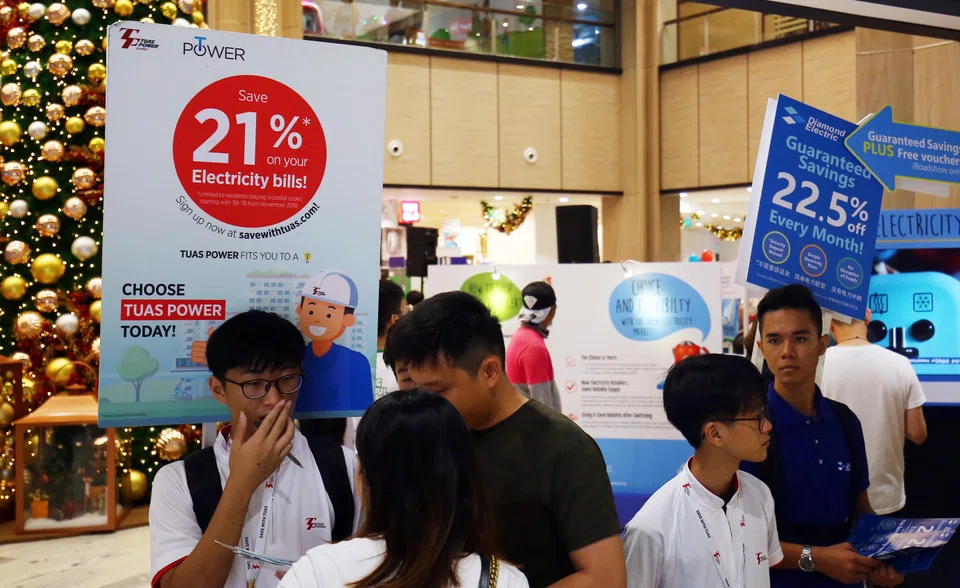
    • Back in the heyday of Singapore’s OEM in 2019/2020, residential consumers were spoilt for choice as frenzied competition among retailers eager to grow their market share resulted in super competitive rates.
    • Back in the heyday of Singapore’s OEM in 2019/2020, residential consumers were spoilt for choice as frenzied competition among retailers eager to grow their market share resulted in super competitive rates. PHOTO: BT FILE

    TWO years since Singapore’s liberalised power sector was turned on its head by sky-high prices and a gas crunch that drove out some electricity retailers, some fractures remain, and regaining the shine of its early years has been elusive.

    The once-zealous trading activity in Singapore’s electricity futures market has evaporated – as has the promise of much lower power bills. Back then, the potential savings of up to 30 per cent had lured half of 1.4 million households to dump the incumbent SP Services for another retailer under the city state’s Open Electricity Market (OEM).

    The number of players in the residential segment has shrunk to nine; six of these are gentailers – power-generation companies or “gencos” which are also retailers. Amid the extraordinary swings in electricity prices of 2021, five independent retailers, including the biggest one, iSwitch, exited the market.

    A key executive of one of those retailers that fled the sector that year said: “There are not many non-genco participants left in the market to compete with the existing gentailers.

    “The declining volumes in the futures market are a result of traders and retailers abandoning the market due to a lack of confidence. Consumers are now stuck with fewer options; there is no longer genuine competition.”

    In the heyday of Singapore’s OEM in 2019/2020, residential consumers were spoilt for choice. The frenzied competition among retailers eager to grow their market share resulted in super competitive rates – as low as just under 15 Singapore cents per kilowatt hour.  These days, consumers may have to count themselves lucky for a fixed plan that’s less than double that.  

    The sweetened offers then, coupled with a seamless migration saw half of the households jump ship to another retailer in a little less than a year – an impressive result, given that switch rates in other open and competitive markets are typically in the single digits.  

    The landscape has altered much since.

    Ernst Westendorp, co-founder and chief commercial officer of Flo Energy Singapore, a licensed electricity retailer for businesses, said: “There are fewer options available for consumers, and the gentailers dominate the OEM market.

    “If you take a look at the OEM comparison website, the IRs can’t match the gentailers’ offer at this point in time. This is due to limited hedging options and a more conservative approach to managing volatility.”

    The Singapore Exchange’s electricity futures market (EFM), where retailers hedge their positions, is now a pale shadow of the record trading volumes of 29,000 gigawatt hours it fetched in both the monthly and quarterly futures contracts in 2019 – the same year Singapore’s liberalisation under the OEM went into full swing nationwide.

    Responding to queries from The Business Times, the Energy Market Authority (EMA) said: “While we have observed some growth in trading volumes in the EFM since 2015, it has not been sufficient to sustain further growth.

    “Since the onset of the energy crisis in the second half of 2021, liquidity in the EFM has dried up, as market makers made the commercial decision to sit out the market to manage risks and limit exposure to market volatilities.“

    The uniform Singapore energy price (USEP) – which reflects the real price of electricity and varies half-hourly depending on demand-supply dynamics in its wholesale market – began gyrating in July 2021 as electricity demand surged with the easing of pandemic curbs. This had coincided with unplanned gas curtailment from Indonesia.

    In February the following year, things turned topsy-turvy when Russia’s invasion of Ukraine led to a gas shortage, resulting in an unprecedented global energy crisis.

    Befuddled by the sudden spikes in the wholesale market, independent retailers felt the pain as hedging options on the local bourse’s futures market dried up, and market makers stayed away.

    A Singapore Exchange spokesperson, responding to queries from The Business Times, said: “As a result of various factors causing global electricity prices to spike in 2021, electricity retailers that did not sufficiently hedge their electricity-price exposure were caught in the unexpected price spikes, leading to their exit from the market. Market makers in the electricity futures market also bowed out due to elevated market volatility.”

    EMA requires all OEM retailers to hedge at least half their contracted load against wholesale electricity prices. Following the turmoil, the regulator has proposed to raise this to at least 80 per cent to ensure better resilience among retailers during volatile periods.

    But this may be hard to pull off.

    Flo Energy’s Westendorp said: “The EFM is very shallow at the moment; there is not much trading going on.”

    On its part, Flo Energy secures over-the-counter deals with other hedge providers, which enables it to offer its customers rates that are more competitive than those of the EFM, he said.

    Singapore’s electricity market may have become less volatile since last year, but sky-high prices are still not a thing of the past. This is largely because the recent soaring temperatures have spiked the demand for energy.

    Data from the Energy Market Company (EMC), an independent operator of Singapore’s wholesale electricity market, indicates that, from 2021 to date, the highest monthly USEP of S$492.09 per megawatt hour (MWh) was recorded in May this year. That month clocked the highest average monthly demand of 6,574 MW, and the highest average temperature of 29.6 deg C.

    Interestingly enough, the second-highest monthly USEP over the period was recorded in October 2021, when demand was not even at its highest – it came in at 11th highest between January 2021 and May 2023. The biggest factor behind the surging prices then was a tight global gas market in the aftermath of the Covid-19 pandemic amid sustained elevated oil prices.

    The high electricity prices have benefited major gencos such as Sembcorp Industries and Keppel Corp. Their latest financial results show as much.

    Effective Jul 1, EMA set a temporary cap on wholesale electricity prices as a way to address the swings in electricity prices. While the stocks of Sembcorp and Keppel fell following this announcement, analysts reckon that the good times are here to stay for gencos, given the “constructive market dynamics” of soaring demand and tight supply.

    It is going to take a lot more to win back confidence in Singapore’s OEM after the bruising it has undergone.

    Edgare Kerkwijk, managing director of Singapore-based Urban Renewables, said: “The OEM was a very good initiative and probably the most progressive in South-east Asia. (But) the market for IRs wasn’t mature enough and was relatively young when the price volatility started.”

    He added: “The question is, where is this market going? It’s important that EMA sets a clear regulatory framework for the future, which both prevents what happened in the past and yet, stimulates the liberalisation and allows in new entrants. This needs to tie in with the required additional capacity for energy-thirsty Singapore.

    “The market liberalisation and interest from investors got badly hit, but I don’t think it is too late.”