

Empty oil tanks at key US storage hub show speedy demand rebound
Demand is increasing as country emerges from lockdown
 Add BT as a preferred source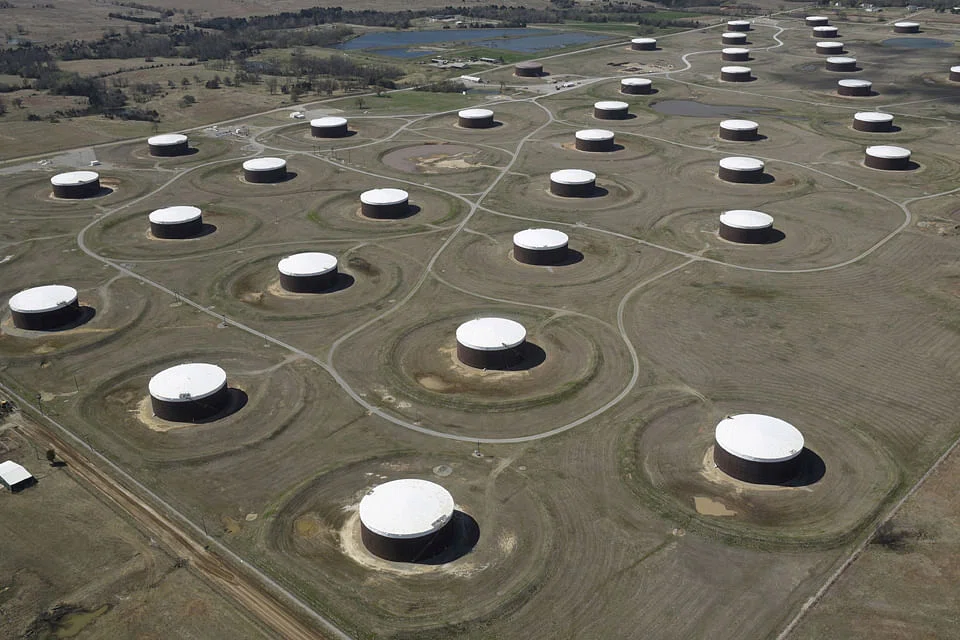
DeeperDive is a beta AI feature. Refer to full articles for the facts.
New York
CRUDE storage tanks that were brimming a year ago when the pandemic grounded flights and kept drivers at home are beginning to empty in the main US distribution hub, the latest sign of strengthening demand in the world's biggest oil-consuming country.
For the first time since before the pandemic, empty tanks are being offered for lease at Cushing, Oklahoma, the delivery point for West Texas Intermediate (WTI) oil futures. At least 1.4 million barrels of storage is up for rental starting in July, for roughly 12 US cents per barrel a month, said Steven Barsamian, chief operating officer at storage brokerage Tank Tiger. That is a stark contrast to at least 60 US cents charged when there was little space left about a year ago.
Americans are taking to the roads and skies at increasing numbers as the summer nears and the country emerges from months of lockdowns, with oil refiners speeding up fuel making to meet the rising demand. Last week, California, America's most populous state, reopened its economy, while New York ended most of its curbs.
This is a dramatic turnaround from a market crash during which traders stored unwanted crude in tankers at sea, and US producers at one point had to pay for customers to take their oil last year.
Meanwhile, shale producers are sticking to their pledges to focus on balancing their books and boosting returns to shareholders, rather than increasing output. US production is 15 per cent below its peak last year, limiting flows to the storage centre.
Navigate Asia in
a new global order
Get the insights delivered to your inbox.
So traders are rapidly draining their storage tanks to supply refineries with every barrel of crude feedstock they need.
Empty tanks are typical of a market where demand is outpacing supplies and traders are getting a premium on the nearest deliveries, making it unprofitable to keep oil in storage - a pattern known as backwardation.
A year ago, when traders were storing as much oil as possible to wait for better prices, the nearest deliveries for WTI crude were selling at a discount to longer-dated ones. That structure is known as contango.
These patterns affect especially the commercial storages used in speculative trading, such as the ones in Cushing. "Typically, in a backwardated market, it's the storage that isn't being used for operational purpose like the ones in Cushing, Oklahoma, that get emptied out first," Mr Barsamian said. "Storage at most other locations such as in Houston and Midland in Texas are used for operational purposes, and get emptied out later."
Traders might see more of the bottom of tanks across America in the coming months. Global oil demand is expected to recover to pre-pandemic levels late next year, according to the International Energy Agency. BLOOMBERG
Decoding Asia newsletter: your guide to navigating Asia in a new global order. Sign up here to get Decoding Asia newsletter. Delivered to your inbox. Free.
Share with us your feedback on BT's products and services
TRENDING NOW

Shelving S$5 billion office redevelopment plan proved ‘wise’ as geopolitical risks mount: OCBC chairman

Eurokars Group introduces rental car franchises Enterprise Rent-A-Car, National Car Rental, and Alamo to Singapore
20 photos that show how dramatically Singapore has changed in two decades
Singapore’s key exports up 15.3% in March from electronics surge, exceeding forecasts

