

Europe frets with gas flows still at risk after pipeline restart
 Add BT as a preferred source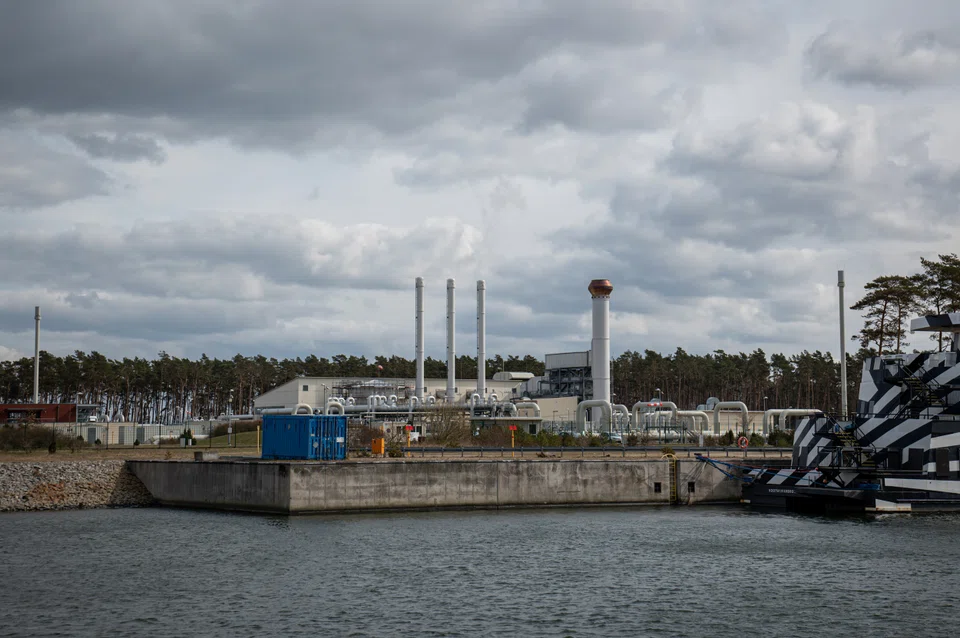
EUROPE is again on edge about potential gas supply disruptions from Russia, even after the restart of the crucial Nord Stream pipeline following maintenance this week.
A turbine that helps pump gas into the link is held up in transit in Germany after first being stranded in Canada due to sanctions. President Vladimir Putin has warned that shipments through Nord Stream - Russia’s biggest pipeline to the continent - could dwindle if the part isn’t returned to Russia in the coming days.
Throughout the European Union (EU), politicians and business are bracing for the possibility that Russia could cut gas supplies further, or halt them completely. EU nations are racing to build their stockpiles as they navigate a historic energy crisis, stoked by Russia’s war in Ukraine, that risks inflicting severe economic damage as it ripples across the continent.
“Further disruptions are expected as Russia seeks to increase political and economic pressure on Europe as winter approaches,” said Penny Leake, research analyst for Europe gas and LNG at Wood Mackenzie. “It remains unclear what Russia will do.”
Since it returned from maintenance on Thursday (Jul 21), Nord Stream has been running at about 40 per cent of its capacity, roughly the flow rate before the works.
That level could drop to 20 per cent as soon as next week if the turbine delays aren’t resolved, according to Putin. Only 2 turbines at a compressor station in Russia are currently operating, and 1 of them needs to go for maintenance this month, he said earlier this week. Unless the replacement component sent from Canada arrives in Russia soon, flows will drop, he added.
The status of the part wasn’t immediately clear. As of Friday, the replacement turbine was stranded at undisclosed location in Germany because Russia hadn’t provided the necessary paperwork to enable shipment, according to a person familiar with the matter.
But Russia’s Gazprom said that it hasn’t received requested documents from turbine manufacturer Siemens, and noted that it has no additional obligations to the German company in order to receive the component.
“Russia plays a strategic game on gas supplies to Europe,” said Simone Tagliapietra, a senior fellow at think tank Bruegel. “Keeping low flows going is better than cut-off. It decreases Europe’s resolve to reduce gas demand. Europe must not fall into this trap and go crisis mode anyhow.”

European officials including German Foreign Secretary Annalena Baerbock have accused Russia of using energy as a weapon - a claim the Kremlin categorically rejects.
Dutch gas futures, the European benchmark, rose for a third consecutive session on Friday as the supply uncertainty continues.
While the EU builds its gas stockpiles, Moscow is also preparing for one of its notoriously harsh winters. Russian Energy Minister Nikolai Shulginov told Putin on Thursday that the nation’s gas storage levels are already 81 per cent of what’s needed to withstand peak demand during the cold months.
“We are preparing for this difficult period with full understanding that our partners in unfriendly states, for example, are expecting the very complicated season nervously,” he said during a meeting broadcast on state television. “We, on the other hand, are working normally, based on our plans and timelines.”
It remains to be seen how Russia’s gas output may be affected after its own domestic storage is full, if there are limited export outlets for its fuel. Data from Gazprom showed its production is down about 10 per cent year on year year as of mid-July.
Russia is already limiting gas flows to Europe via Ukraine, with no indication that it will boost supplies. At a monthly auction earlier this week, Gazprom opted not to book extra capacity to ship fuel along the route in August.
Russian gas-export curtailments are being split between domestic storage injections and production shut-ins, according to Goldman Sachs Group.
Moscow had the option to reroute flows via Ukraine and chose not to do so, Samantha Dart, the bank’s head of natural gas research, said in an interview with Bloomberg TV earlier this week.
Russia’s imposition of conditions to get flows fully on track suggests “that this is more than just about a turbine”, she said. “This is likely a political and economic decision as much as a technical one.”
While uncertainty remains over pipeline shipments to Europe, the continent has seen some relief via imports of liquefied natural gas, which has been flowing at record volumes this year.
That’s partly due to Asian demand being subdued as a result of sufficient inventories and Covid-related lockdowns in China, which even resold some cargoes in the spot market.
“The moment Chinese activity picks up, we may see this quickly change and, as a result, fewer cargoes available for Europe,” said Dart. BLOOMBERG
Decoding Asia newsletter: your guide to navigating Asia in a new global order. Sign up here to get Decoding Asia newsletter. Delivered to your inbox. Free.
Share with us your feedback on BT's products and services
TRENDING NOW

Johor property old hand KSL readies family handover amid market boom
Wilmar, Musim Mas among palm-oil firms in Indonesia under probe for suspected export under-invoicing

Sats may reward shareholders with special dividend if there’s spare cash
Property group Lee Kim Tah reaches settlement with ex-director in ongoing misconduct probe

