

European gas jumps 41% after Russia attacks Ukraine targets
 Add BT as a preferred source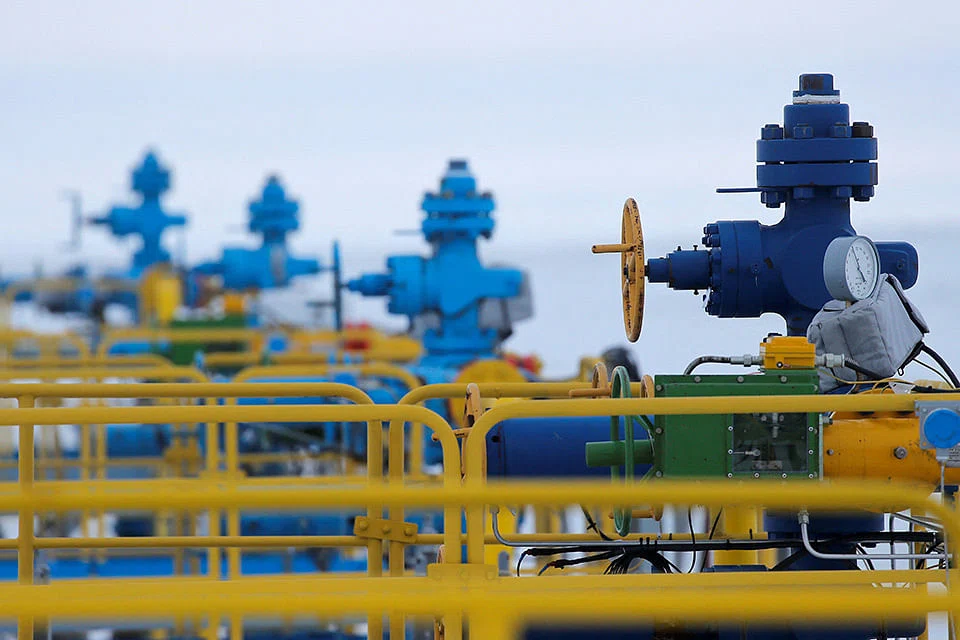
DeeperDive is a beta AI feature. Refer to full articles for the facts.
[LONDON] European energy prices soared after Russian forces attacked targets across Ukraine in an effort to demilitarise the country. The West vowed further sanctions.
Benchmark Dutch futures gained as much as 41 per cent in their fourth-straight daily advance. German power for March soared as much as 31 per cent. Prices have jumped throughout the week as tensions over Ukraine intensified.
Russia launched a barrage of missile attacks early on Thursday (Feb 24), triggering the worst security crisis Europe has witnessed in decades.
Ukraine's Interior Ministry warned that the capital, Kyiv, was being targeted and urging citizens to go to shelters.
Ukraine's border guard said that it was being shelled from 5 regions, including from Crimea in the south and Belarus to the north.
In a nationally televised address ahead of the offensive, Putin said that Russia doesn't plan to "occupy" its southern neighbour but that the action was necessary after the US and its allies crossed Russia's "red line" by expanding the Nato alliance.
Navigate Asia in
a new global order
Get the insights delivered to your inbox.
US President Joe Biden called Putin's move "an unprovoked and unjustified attack" and said the "world will hold Russia accountable." Biden said that he would meet his Group of Seven counterparts on Thursday and then speak to the American people to announce further punishments that would be placed on Moscow.
Any sanctions curbing Russia's access to foreign currency could upend commodity markets from oil and gas, to metals and food.
"The bigger picture will strongly depend on how Europe and US will respond," said Hans van Cleef, a senior energy economist at ABN Amro Bank NV. "Will they imply sanctions against the oil and gas sector or not?" If that sector is spared, the rally may run out of steam soon, he said.
Brent crude prices jumped above US$100 a barrel for the first time since 2014 amid the latest developments.
The crisis puts fuel supplies in Europe - which is already in the midst of an energy crunch - at further risk. The continent depends on Russia for more than 1/3 of its gas supply, and low inventories of the fuel last year sent prices to record levels.
Russia aims to keep its gas supplies abroad "uninterrupted," Energy Minister Nikolai Shulginov said earlier this week.
Fuel Supplies
"If the West were to decide to cut Russia off from Swift, payments for Russian gas supplies would become impossible," said Katja Yafimava, a senior research fellow at the Oxford Institute for Energy Studies, referring to the messaging network used by banks. "That would be a cause for contractual force majeure leading to a halt in supplies, with dramatic consequences for European consumers from physical availability and price perspectives," she said.
Germany has already suspended its certification of the Nord Stream 2 pipeline that would ship gas directly from Russia to Europe.
The US on Wednesday added the project to its sanctions on Russia. Analysts from Goldman Sachs Group to Wood Mackenzie and Rystad Energy forecast higher prices to last through the remainder of this year because of a deficit of the fuel used in power generation, industry and heating.
Russian flows have already been curbed since the second half of last year. Benchmark Dutch gas futures surged as high as 125 euros a MW-hour, and traded at 28 per cent higher at 114 euros a MW-hour by 8.38 am in Amsterdam.
German power for March reached 260 euros a MW-hour, the highest since Jan 7.
Ukraine Flows
The European Union is planning an emergency in-person summit of the bloc's leaders on Thursday to discuss the crisis.
Europe will have to compete with Asia for liquefied natural gas should pipeline shipments from Russia get disrupted as a result of the crisis.
Russian gas exporter Gazprom said on Thursday its transit to Europe via Ukraine is going as normal.
However, around a third of Russia's gas to Europe typically flows via Ukraine, and analysts have said any escalation of the conflict may disrupt those flows.
"In the event of prolonged disruption, gas inventory couldn't be rebuilt through the summer," Kateryna Filippenko, principal analyst for Europe gas research at WoodMac, said in an emailed note on Wednesday. "We'd be facing a catastrophic situation of gas storage being close to zero for next winter. Prices would be sky high. Industries would need to shut down. Inflation would spiral. The European energy crisis could very well trigger a global recession." BLOOMBERG
Decoding Asia newsletter: your guide to navigating Asia in a new global order. Sign up here to get Decoding Asia newsletter. Delivered to your inbox. Free.
Share with us your feedback on BT's products and services
TRENDING NOW

StarHub hands Ensign InfoSecurity control back to Temasek in S$115 million deal, books S$200 million gain
Singaporeans can now buy record amount of yen per Singdollar

Air India asks Tata, Singapore Airlines for funds after US$2.4 billion loss

Keppel DC Reit posts 13.2% higher Q1 DPU of S$0.02833 on strong portfolio performance

