

Festive food craving set to boost India's demand for palm oil
 Add BT as a preferred source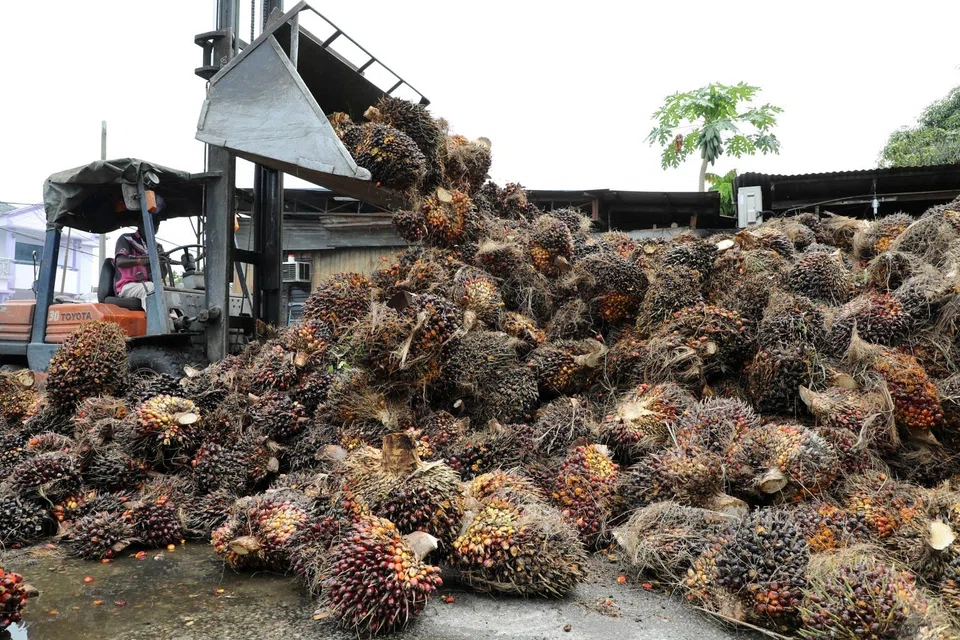
DeeperDive is a beta AI feature. Refer to full articles for the facts.
[KUALA LUMPUR] Palm oil purchases by India, the biggest importer, are likely to climb in October from a three-month low as the Hindu festival of lights drives up demand for the world's most-consumed vegetable oil.
Inbound shipments could rise to as much as 725,000 tonnes this month as traders and refiners replenish stockpiles to meet rising demand, according to GG Patel, managing partner of GGN Research. That compares with an estimated 638,000 tonnes in September, which was the lowest since June, and 778,568 tonnes imported in October 2019.
Vegetable oil consumption generally increases during the September to November festive period in the South Asian nation as Hindus celebrate major festivals such as Dussehra and Diwali. Palm oil is commonly used as cooking oil and to make treats such as biryani and jalebi.
DEMAND OUTLOOK
A recovery in demand from India may curb the expansion of stockpiles, which have begun to swell in Malaysia, and could underpin prices at a time when a chronic labour shortage hampers production in the second-largest grower. Benchmark futures in Kuala Lumpur have rallied about 47 per cent from May.
"Demand from India and China is recovering and a labour shortage may result in higher palm prices," according to Howie Lee, an economist at OCBC Bank in Singapore. Consumption from these countries is likely to remain intact as their stockpiles are relatively low, he said.
Navigate Asia in
a new global order
Get the insights delivered to your inbox.
Palm consumption in the Indian food services industry suffered after the government imposed the world's most stringent stay-at-home rules in March. The curbs are gradually being lifted, and Mr Patel sees total cooking oil imports rising to about 1.2 million tonnes in October from 1.04 million a month earlier.
Still, purchases may decline in November and December as higher production of monsoon-sown oilseeds curbs imports, while palm oil-use in restaurants and hotels remains lacklustre, he said.
Outside China, palm oil demand from food services is relatively weak as countries are still dealing with the virus, according to Oscar Tjakra, senior analyst at Rabobank in Singapore. "Palm oil consumption from low-income households is expected to decrease on the back of rising unemployment."
India likely imported about 317,000 tonnes of soya bean oil in September, compared with 394,735 in August, according to Mr Patel. Sunflower oil imports probably more than halved to 66,000 tonnes from 158,518 tonnes, he said.
Benchmark palm oil futures held around the highest level in two weeks in Kuala Lumpur on Thursday, trading at RM2,866 (S$937) a tonne.
BLOOMBERG
Decoding Asia newsletter: your guide to navigating Asia in a new global order. Sign up here to get Decoding Asia newsletter. Delivered to your inbox. Free.
Share with us your feedback on BT's products and services
TRENDING NOW

Air India asks Tata, Singapore Airlines for funds after US$2.4 billion loss

Beijing’s calculated silence on the Iran war

China pips the US if Asean is forced to choose, but analysts warn against reading it like a sports result

Richard Eu on how core values, customers keep Singapore’s TCM chain Eu Yan Sang relevant

