

Floating production market sees new opportunities
But low oil prices make project financing hard to come by, which presents a challenge to Singapore yard groups
Singapore
THE floating production market is undergoing a sea change in more ways than one that presents new opportunities to yards in Singapore that are hungry enough to test new limits to make up for order backlog shortfalls as rig-building orders dry up.
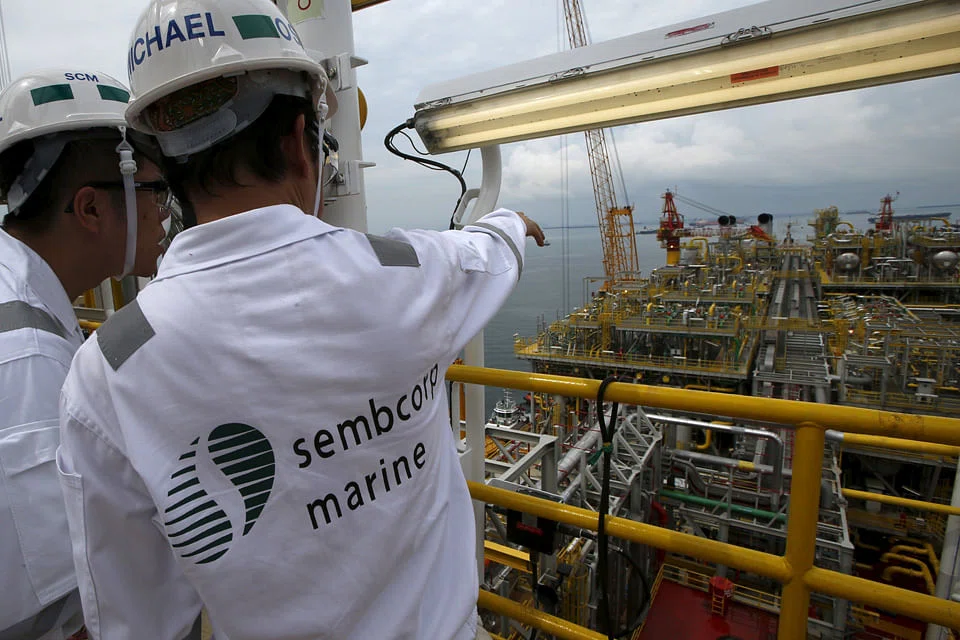
Large cap offshore marine players Keppel Fels and Sembcorp Marine have been invited to contest for the turnkey delivery of newbuild floating production projects against their larger rivals in South Korea. This may well be an opening for yard groups in Singapore - which have yet to assume the driver seat for large newbuild floating units - to move up the value chain.
Keppel Fels has made the shortlist together with McDermott, for a Hess-operated Equus semi-submersible production project off Western Australia. The Business Times also understands BP has extended an invite not only to Keppel Fels but also Sembcorp Marine for qualification towards a re-tender being drawn up for the engineering, procurement, construction and commissioning (EPCC) of the Mad Dog 2 semisub in the US Gulf of Mexico.
BP's move to extend the re-tender to yard groups in Singapore and China came after the first bids received from the South Korean trio of Daewoo Shipbuilding & Marine Engineering, Hyundai Heavy Industries and Samsung Heavy Industries. Historically, international oil companies such as BP, have stuck to the big three South Korean yards for the EPCC of large floating production units.
Despite slower offshore contracting activity freeing up more capacity, IHS principal researcher Ang Ding Li noted costs in South Korea have remained high because engineering and construction costs have held on even though yard margins and drydocking costs have declined.
Yards in South Korea are also exercising greater caution in bidding for offshore projects, having accumulated substantial financial losses in recent years from offshore (production) projects, according to Energy Maritime Associates managing director, David Boggs.
But the big three South Korean yards are probably still considered the prime candidates not least on the strength of their track records in performing newbuild floating production projects on a turnkey basis over their less experienced rivals in China and Singapore, Mr Ang explained.
Field operators will also favour execution in a single location for very large floating production units. Production units similar in scale to the Jack/St Malo semisub Samsung Heavy Industries delivered to Chevron and Eni's Goliat FPSO commissioned to Hyundai Heavy Industries, are likely to remain out of the grasp of yards in Singapore, at least for now.
In contrast, the Mad Dog 2 semisub has already been downsized from what would have been restricted to execution in South Korea.
Without commenting directly on Mad Dog 2, Keppel Offshore & Marine chief executive Chow Yew Yuen said that the Singapore yard group is ready to take on bigger EPC roles to provide a more integrated solution - including executing front-end engineering and design studies for complex floating production projects - in meeting demand from oil companies that have trimmed inhouse engineering capabilities under a low oil-price environment.
The ability to take on the integrated construction of floating production structures may set the Singapore yard groups apart from their emerging competition in China, Mr Ang noted, but he also argued - if cost is a priority - it may still be more effective to execute the project at multiple locations in China. "The IOCs (international oil companies, like BP) would still need to buy into this idea (while) smaller independents are more likely inclined towards taking their projects to China," Mr Ang qualified.
The general consensus, however, is that the current oil price environment will still favour leased over newbuild floating production projects, which will continue to play to the advantage of yards in Singapore that have historically focused on going after conversions instead of newbuild projects.
Keppel O&M, for instance, has already completed more than 100 conversions for oil and gas structures such as FSOs (floating storage offloading vessels), FSRU (floating storage, regasification units) and FSU (floating storage units).
But low oil prices also make project financing hard to come by even for leased floating production projects. Oil companies are likely more inclined to go with contractors capable of co-financing floating production-based field developments, analysts suggested. This calls on yard groups in Singapore to take on additional financial risks - a challenge emerging from the brave new world of low oil prices.
Mr Boggs noted Keppel O&M has already taken a 10 per cent stake in the Golar floating liquefied natural gas project, which is considered by some in the industry as a key requirement for the project to take off. Co-financing avenues are also available in China through the leasing arms of yard groups including CSSC (China State Shipbuilding Corporation) and Cosco Shipyard, he added.
But even conversions for floating production units have increasingly become more difficult to come by over the last two years and the slowing contracting activity is unlikely to turn around soon, with spare capacity emerging in the segment following months of depressed oil prices.
Kelvin Sam, principal researcher at CERA, projected that just three floating production units will be awarded in 2016 - all leased, ship-shaped units, or FPSOs. That would be comparable to 2015, but down from a normalised average of 10 units annually over the previous years.
By contrast, between 16 and 21 leased FPSOs have come off hire, according to analyst estimates. These exclude another six semisubs and three floating storage units that have been made idle as at March 2016, according to EMA. "It can be quite appealing for oil companies to redeploy these units," Mr Sam said, adding that independent oil and gas companies are more likely than supermajors to consider this option.
Redeployments of existing FPSOs can translate to lower development costs in some cases, and also fast-track production startup.
Since 2012, the fastest relocated FPSO to start oil production is Emas Offshore's co-owned Perisai Kamelia, which took 14 months to start producing from the time of the contract award, Mr Sam said.
This presents yards in Singapore a third opportunity amid the changing floating production landscape: a potential increase in FPSO modification work if more oil companies buy into redeploying off-hire units, although this could also mean a reduction in new conversion contracts.
If oil prices continue to stay below US$50 over the next two to three years, EMA projects "over 15 FPSOs, 10 FSOs and five semisubs or tension leg platforms will cease operation".
Modifying or upgrading an existing asset carries similar risks to conversion in that the potential for schedule and cost overruns remains, Mr Boggs said.
The contract value of an FPSO modification job - while generally expected to range lower - can match that of a conversion contract if the work scope is more complex or extensive.
Mr Boggs cited the modification of Teekay's Petrojarl-1 FPSO, which reportedly ran over US$250 million with projected completion of 18 months. Petrojarl-1 is next going on charter with Petrobras.
TRENDING NOW

He built the Vingroup empire. Now South-east Asia’s richest man is handing some key roles to his sons
Seatrium allocates S$200 million for new share buyback programme
32 companies, 6 individuals bag accolades at Singapore Corporate Awards 2026

Stocks to watch: Mapletree Logistics Trust, Seatrium, Keppel DC Reit, Food Empire

