

Germany may not need another Nord Stream pipeline right now
 Add BT as a preferred source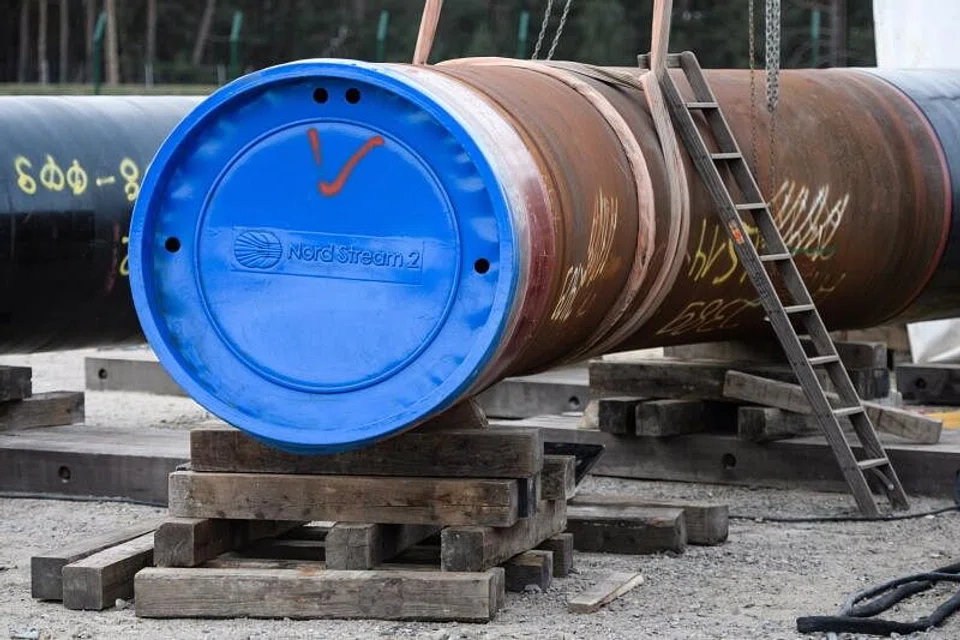
DeeperDive is a beta AI feature. Refer to full articles for the facts.
[FRANKFURT] As pressure mounts on Angela Merkel to drop support for a controversial gas pipeline caught up in a diplomatic spat, analysts question whether Europe will actually need the fuel at all over the next few years.
While the Nord Stream 2 gas pipeline is halted and tensions between Germany and Russia have escalated since the poisoning of an opposition lawmaker, Europe is flooded with gas and demand is likely to remain stable.
"I don't think it impacts the gas markets, even if the project is scrapped," Christoph Merkel, managing director of Merkel Energy consultancy. "It increases flexibility for gas supply, but Europe needs to diversify its sources of energy." Russia and Germany say Nord Stream 2 is a vital supply line that will replace declining European production. But for years, the biggest glut the world has ever seen has sent fuel to the continent through other pipelines and on tankers from as far away as the US and Qatar.
This has sent prices to record lows and with storage sites in Europe almost full, the European benchmark contract has more than halved since its peak in 2018.
At the same time, as the coronavirus pandemic took hold this year factories shut and people stayed at home denting demand. Natural gas demand is estimated to stay flat for at least the next five years, due to the rise of renewables and gains of efficiency, according to the International Energy Agency.
The almost completed 1,230-kilometer (764-mile) gas pipeline will double the capacity of the existing undersea route from Russian fields to Europe. It's construction sparked fears in the US and beyond that it would give Russia leverage over Germany and other allies.
Navigate Asia in
a new global order
Get the insights delivered to your inbox.
Originally set for completion in 2019, in June Russia's Gazprom PJSC, said it would be able to complete the project by late 2020 or early 2021. But that ambition now seems under threat following the latest fallout.
Nord Stream 2 is looking for solutions to lay the remaining 6 per cent of the pipe, a spokesperson said, declining to comment on political debates.
For Germany, Europe's biggest gas market, it would add the need to invest in liquefied natural gas terminal capacities to make up for decreased gas supplies from Norway and the Netherlands and to maintain a competitive wholesale market, Christoph Merkel said.
"If Nord Stream 2 is delayed only until the early 2020s there would be no big impact," said Katja Yafimava, senior research fellow at The Oxford Institute For Energy Studies.
Longer delays then betting on liquefied natural gas might be risky as Asian demand could pick up and divert tankers away from Europe, she said.
Germany is among the world's biggest natural gas importers according according to the EIA. The country buys the fuel mainly from Russia, Norway and the Netherlands via pipelines. Natural gas made up 25 per cent of Germany's total primary energy consumption in 2019.
Further into the future LNG might be part of the solution, according to Julien Hoarau, gas market analyst at Engie EnergyScan.
"Looking at 2030, I see a gas supply gap in Europe as domestic production will continue to decline. The continent will need to import more gas, either from Russia or LNG producers," said Mr Hoarau. "Regarding security of supply, it's mainly linked to a diversification of supply sources."
BLOOMBERG
Decoding Asia newsletter: your guide to navigating Asia in a new global order. Sign up here to get Decoding Asia newsletter. Delivered to your inbox. Free.
Share with us your feedback on BT's products and services
TRENDING NOW
China pips the US if Asean is forced to choose, but analysts warn against reading it like a sports result
Beijing’s calculated silence on the Iran war

Shelving S$5 billion office redevelopment plan proved ‘wise’ as geopolitical risks mount: OCBC chairman
Vietnam formalises new state leadership, redefining ‘four pillars’ power balance

