

Gold deluge keeps China’s US$1 trillion trade surplus in check
Gold has lost about a third of its value since the US-Iran war began in late February
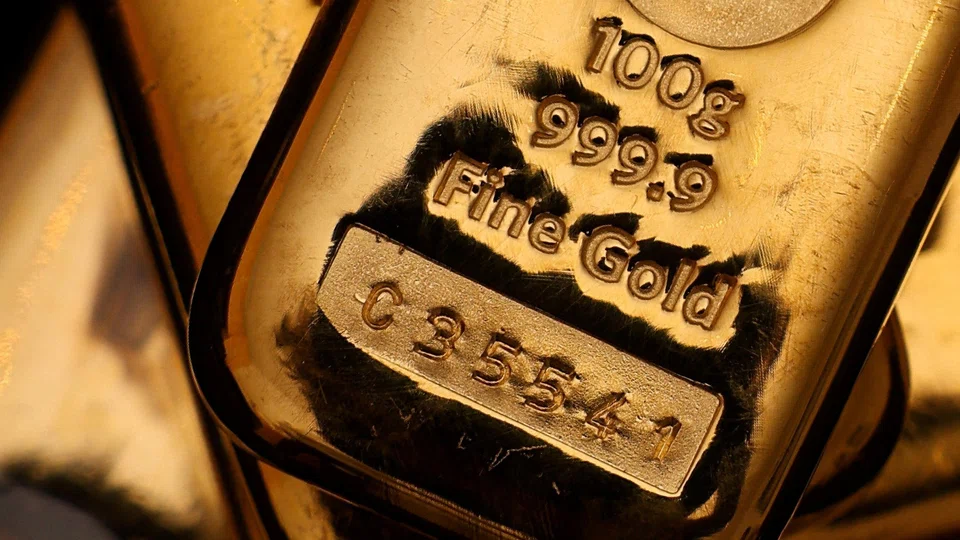
CHINA’S gold imports surged to a record US$209 billion so far this year, in an unprecedented buying spree that followed a promise by top officials to make their country into the world’s marketplace instead of just its factory.
The shift began in January — the same month Vice-Premier He Lifeng made that vow in front of a crowd at Davos — as the value and volume of bullion imports more than doubled from the month before.
Non-monetary gold purchases continued climbing in the 10 months through October, reaching a historical high that’s equivalent to nearly 8 per cent of overall imports in the period, the latest data showed on Friday.
As tensions with major trading partners like the European Union threatened to boil over, the deluge of gold has, in effect, helped keep China’s trade surplus from straying too far above last year’s record.
Were it not for gold — which unlike other goods also serves as a financial asset or store of wealth — the difference between exports and imports would have crossed the US$1 trillion mark already in September instead of passing the milestone a month later.
“At a time when China’s record trade surplus has attracted growing scrutiny from its trading partners, higher gold imports mechanically reduce the headline merchandise trade surplus and its ratio to GDP,” said Tommy Xie, an economist at Oversea-Chinese Banking Corp. This could “provide some marginal relief” to disagreements over trade, he said.

Without the accumulation of gold, China would run a surplus of US$1.5 trillion for the full year, according to Brad Setser, a former US Treasury official now at the Council on Foreign Relations. At the current pace, however, the imbalance will likely come in at US$1.3 trillion, he estimates.
As the world’s top producer and consumer of gold, China strictly controls the flows of physical bullion, with the central bank issuing quotas to a select list of lenders. The exact volumes and other details of its allocations aren’t public.
“It was a really sharp run-up, so it does suggest some kind of policy shift, not organic change,” Setser said. “It is certainly plausible that quotas were expanded to allow more imports to reduce the trade surplus.”
The People’s Bank of China and the General Administration of Customs didn’t immediately reply to faxed requests for comment.
China’s overall trade surplus is still on course to exceed last year’s record of US$1.2 trillion, even as the value of imports surged 29 per cent in the first 10 months of 2026 from a year ago, following a long stretch of stagnation or declines since 2022.
Besides the gold buying, soaring global prices of energy, metals and chips also inflated the improvement in purchases from abroad, masking persistent weakness in domestic demand.
In volume terms, imports actually contracted in August and September. By contrast, while exports also received a boost from prices, their volumes have grown thanks to strong external demand.
Chinese households have flocked to gold in recent years during a prolonged slump in traditional stores of value like property. Demand has remained resilient this year even as bullion became less expensive, causing the local premium over global benchmarks to widen.
The precious metal has lost about a third of its value since the US-Iran war began in late February, as higher energy costs stoked inflation and pushed expectations for rate cuts further into the future. It tumbled nearly 9 per cent last week, after hitting its lowest level since September 2025.
In China, higher local prices and a stronger yuan made it cheaper for a select list of importers to buy gold overseas. A new licensing regime from June also gave banks more flexibility in using the quotas.
Jewellery now accounts for less than a third of China’s bullion demand, according to the World Gold Council. It’s total jewellery consumption in the first half was the weakest in two decades.
Instead, investment has become a major catalyst for China’s gold demand over the past two years, with bullion used less for consumption purposes. But that means China is “importing a financial asset in a way that registers in the goods data and reduces the reported surplus,” said Setser.
Hong Kong, Switzerland, Australia and South Africa have been the biggest exporters of gold into China, according to official data.
Apart from non-monetary gold, or bullion that’s held privately, the PBOC has also been buying the precious metal for two years straight. It was the biggest disclosed buyer among global central banks in the third quarter and its purchases in October were the largest in three years, though imports by monetary authorities are excluded from the goods trade balance.
With global attention trained on the imbalances generated by China, the gold build-up has helped create the appearance of rebalancing trade. Facing a protectionist backlash abroad, President Xi Jinping vowed at the Apec summit last week to cut tariffs, expand market access and foster a more stable environment for foreign investments.
“Gold imports are expected to remain elevated,” said Xing Zhaopeng, senior China strategist at Australia & New Zealand Banking Group. “Gold is now one of the few assets that China can still buy in large volume and that can also preserve value.” BLOOMBERG
Decoding Asia newsletter: your guide to navigating Asia in a new global order. Sign up here to get Decoding Asia newsletter. Delivered to your inbox. Free.
Share with us your feedback on BT's products and services
TRENDING NOW

‘Walking a tightrope’: OCBC CEO Tan Teck Long on balancing bold moves with conservative banking
Share buybacks surge as 35 companies repurchase shares
Sustainability reporting largely adopted in Asia-Pacific, but gaps remain in disclosure quality and depth

South-east Asia has lost Nvidia’s best salesman

