Gold falls as war escalation and jobs data reduce rate-cut bets
Bullion’s haven appeal has also been dimmed by the need for investors to liquidate their positions and cover losses elsewhere
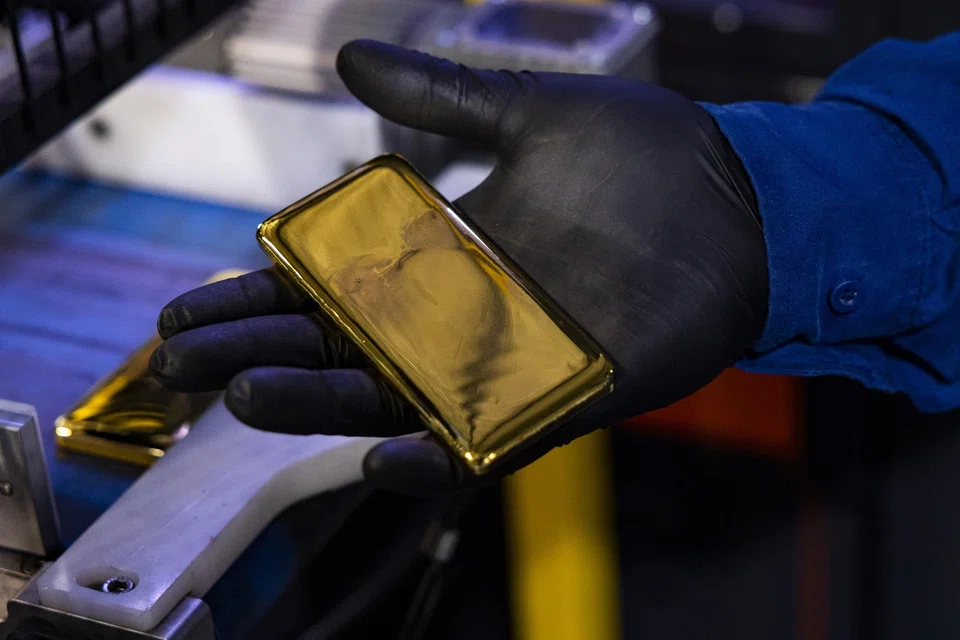
[SINGAPORE] Gold extended a decline as the escalating war in the Middle East heightened energy-supply and inflation risks, while a surprise drop in US jobless claims also reduced prospects for an interest-rate cut.
Bullion fell as much as 1.6 per cent to near US$4,600 an ounce, having lost 1.7 per cent in the session that preceded the long weekend. In a social-media post, Trump said that he would bring “Hell” to Iran if it did not open the Strait of Hormuz. Teheran rejected the ultimatum and kept up strikes on energy infrastructure in the region, including a barrage of attacks on Kuwait’s oil-refining and petrochemical facilities.
Meanwhile, nonfarm payrolls in March rose the most since the end of 2024, according to Bureau of Labor Statistics released on Friday (Apr 3). The increase will likely reinforce the US Federal Reserve’s focus on inflation risks that are compounded by higher oil prices, reducing the likelihood of a reduction in borrowing costs. Non-yielding gold typically benefits from a low-rate environment.
Adding to these concerns, the spike in US petrol prices felt by American consumers will be on full display when key US inflation data is released this week. Economists are forecasting a 1 per cent increase in the consumer price index for March, which would be the sharpest one-month advance since 2022. The war has added more than US$1 per gallon to prices at the pump, and crude oil climbed again on Monday.
Gold has fallen more than 12 per cent since the conflict began in late February, as spiking energy prices have stoked fears of inflation and the prospects for rate cuts have receded. Bullion’s haven appeal has also been dimmed by the need for investors to liquidate their positions and cover losses elsewhere.
“People are taking chips off the table to protect their assets,” said Robert Gottlieb, a market commentator and former precious metals trader at JPMorgan Chase.
Gold has also been rattled by Trump’s frequently contradictory messaging on the conflict, which has oscillated between threats to step up attacks and signals that the war is nearing an end. Bullion gained more than 4 per cent last week, with Thursday’s decline breaking a four-day winning streak.
“As long as we have those conflicting messages, gold is very much traded on headlines,” Gottlieb said.
Trump said that he plans to hold a news conference at 1 pm on Monday and also posted about a Tuesday 8 pm Eastern Time deadline, without offering any details. On March 26, the US president gave Iran a 10-day deadline to reopen Hormuz, which would expire Monday evening.

Spot gold fell 1.1 per cent to US$4,623.32 an ounce at 9:56 am Singapore time. Silver dropped 1.6 per cent to US$71.88. Platinum declined, while palladium was little changed. The Bloomberg Dollar Spot Index, a gauge of the US currency, rose 0.1 per cent after ending the previous session up 0.3 per cent. BLOOMBERG
Decoding Asia newsletter: your guide to navigating Asia in a new global order. Sign up here to get Decoding Asia newsletter. Delivered to your inbox. Free.
Share with us your feedback on BT's products and services