

Gold steadies below US$4,300 as markets await Fed rate decision
Traders now price in a 92% chance of the US central bank hiking rates
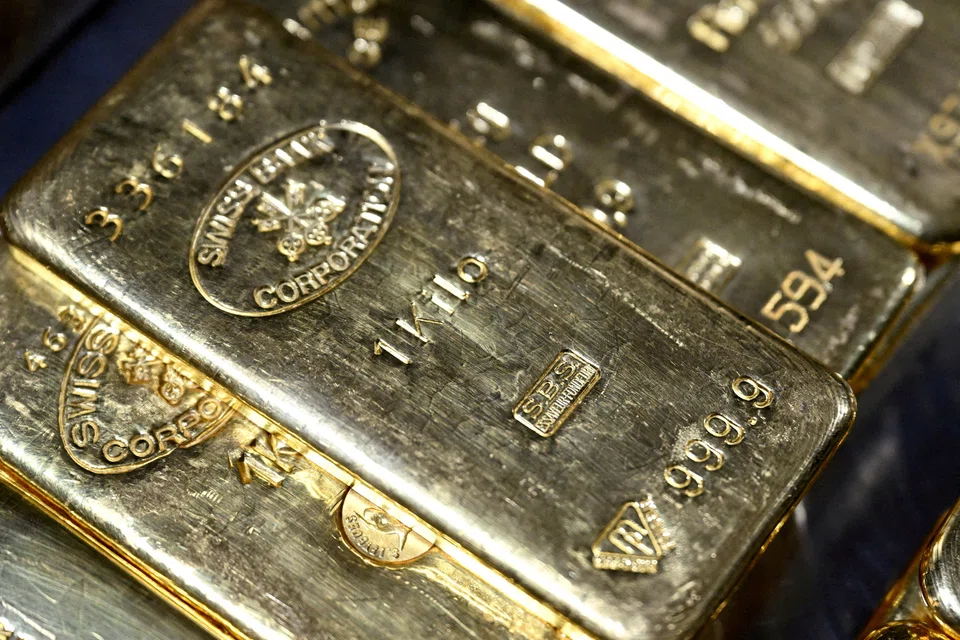
[SINGAPORE] Gold was steady after a two-day drop as high oil prices continued to fuel inflation concerns and keep interest rate hike bets a near-certainty ahead of the US Federal Reserve’s policy decision later on Wednesday (Sep 16).
Bullion was trading around US$4,290 an ounce. Elevated energy prices pushed bond yields higher, and traders are now pricing in a 92 per cent chance of the Fed hiking rates.
Higher borrowing costs are typically negative for gold, which does not pay interest.
The 10-year US Treasury yield rose to the highest level in almost two decades, the latest milestone in a bruising global bond sell-off driven by booming capital investment and soaring energy prices that are exacerbating inflation.
The yield, which serves as a benchmark for borrowing costs across the globe, rose as much as five basis points to 5.04 per cent on Tuesday, the highest since 2007.
That is adding to investor expectations that the central bank will raise interest rates for the first time since 2023.
If it does not, or if Fed chairman Kevin Warsh is noncommittal about additional increases, traders may demand even higher yields on long-term bonds to safeguard their investments against the risk of inflation remaining elevated.
“With markets already pricing a high chance of a Fed hike this week, the main uncertainty is less about the hike itself, and more about what comes after,” said Christopher Wong, a strategist at OCBC.
“If the Fed keeps the door open to further tightening, gold may be more vulnerable” and move lower towards US$4,000 an ounce if key support at US$4,250 is broken, he added.


Oil steadied after a two-day gain, as the duration of Saudi Arabia’s East-West pipeline shutdown after attacks last week remains unclear.
The route had allowed millions of barrels a day to avoid passing through the Strait of Hormuz, and Saudi Aramco is now delaying deliveries to some European customers.
Gold is down more than 3 per cent in September, after trading above US$4,700 an ounce in late August, as traders repeatedly recalibrate the outlook for Fed policy.
Still, many investors are betting that bullion will regain momentum once it rediscovers its traditional value as a portfolio hedge.
Spot gold was 0.2 per cent lower at US$4,284.99 an ounce at 8.45 am in Singapore. Silver was little changed at US$63.68 an ounce.
Platinum dipped 0.2 per cent and palladium was up 0.1 per cent. The Bloomberg Dollar Spot Index, a gauge of the US currency, was 0.1 per cent higher after gaining 0.6 per cent in the past two sessions. BLOOMBERG
Decoding Asia newsletter: your guide to navigating Asia in a new global order. Sign up here to get Decoding Asia newsletter. Delivered to your inbox. Free.
Share with us your feedback on BT's products and services
TRENDING NOW

S$8 billion wiped off OCBC value as shares slide 5.8% in heavy trade

Grab CEO’s wife Chloe Tong on life with Anthony Tan and finding her purpose

Brookfield denies accusation it cut Soilbuild out of Mapletree deal

8 public officers referred to police over property buys near unannounced MRT stations: Chan Chun Sing

