

Goldman: It's totally unrealistic to expect China to consume more than half the world's copper
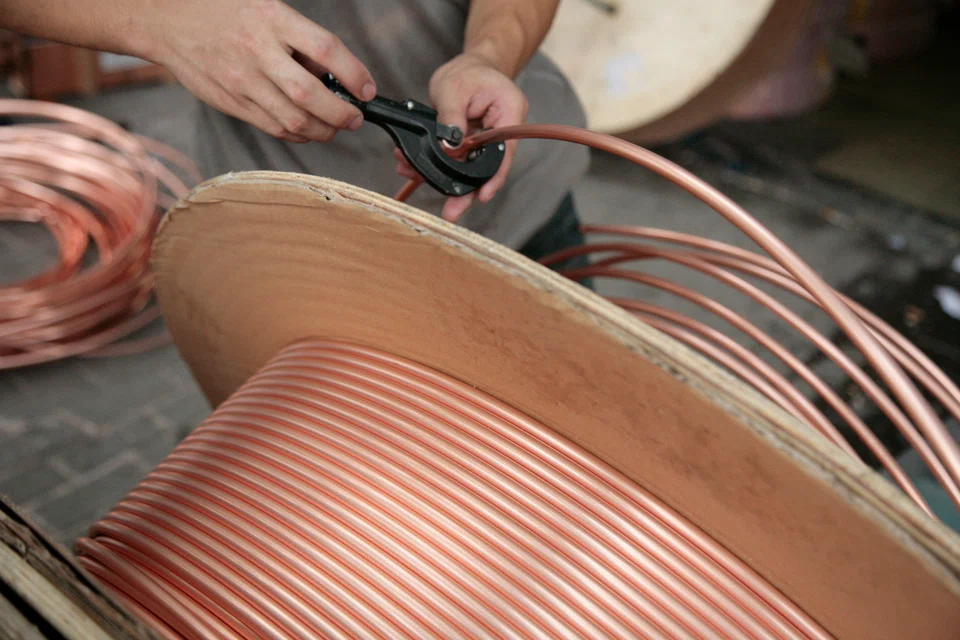
[LONDON] As reported by Bloomberg News, analysts at Goldman Sachs have dramatically slashed their price expectations for copper.
Analysts led by Eugene King now see copper falling to US$5,670 this year and US$4,725 in 2016. That's down from their previous forecasts of of US$5,724 and US$5,825 respectively. Copper is currently trading around US$5,361. So why the big bearish revision? It all has to do with China.
The analysts point out that China currently consumes about half of the world's total copper supply. Without China, the world has not required a single new tonne of copper (or iron ore) for a long time. In fact, global demand excluding China has been shrinking for the past 15 years.
With some signs of an economic slowdown now appearing in China, copper is now losing a key source of support.
You can see what a breakdown of demand for copper and iron ore in the below charts.
As the analysts put it, rather succinctly: "While copper is a later-cycle, more consumer-orientated commodity than iron ore, we believe it is unrealistic to expect the consumers of a country with a GDP per capita of less than US$7k pa and containing 20 per cent of the world's population to consume over half of the world's copper. The Chinese government's direct investment programme remains the key driver (e.g. infrastructure, property), and with the economy rebalancing away from heavy investment, the copper intensity of the economy is likely to drop."
BLOOMBERG
Share with us your feedback on BT's products and services
TRENDING NOW

He built the Vingroup empire. Now South-east Asia’s richest man is handing some key roles to his sons
Despite the de-dollarisation debate, demand for dollar liquidity in Asia is growing

Can a first-time homebuyer couple earning S$18,000 a month afford a new EC unit?

Asia needs new energy security architecture

