Infrastructure upgrades help cut airport's energy usage, costs and improve sustainability
Instead of simply swopping equipment due for replacement, Changi Airport Group did a review to find the best way to renew the systems for sustainability and future use.

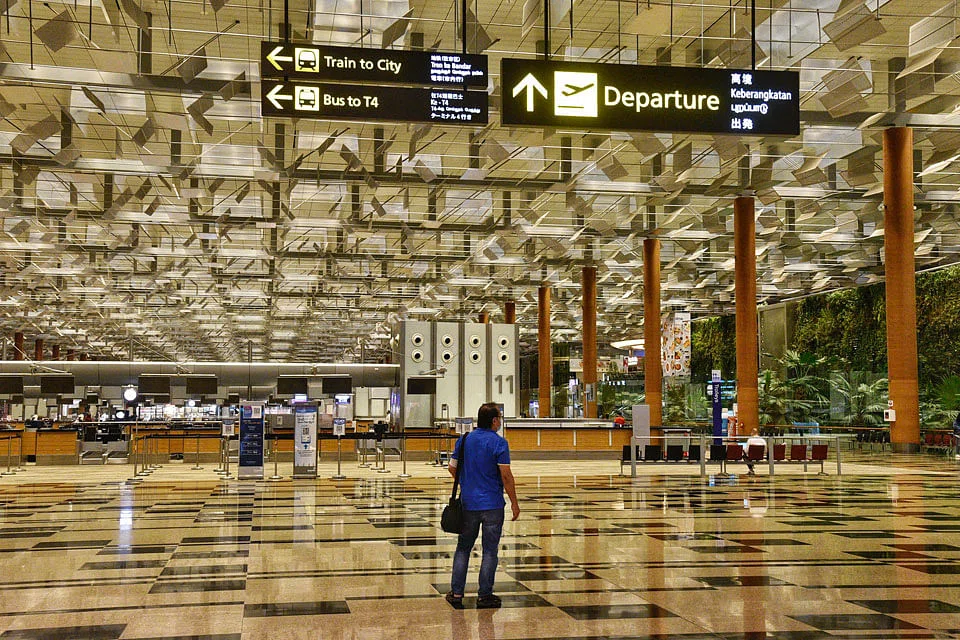


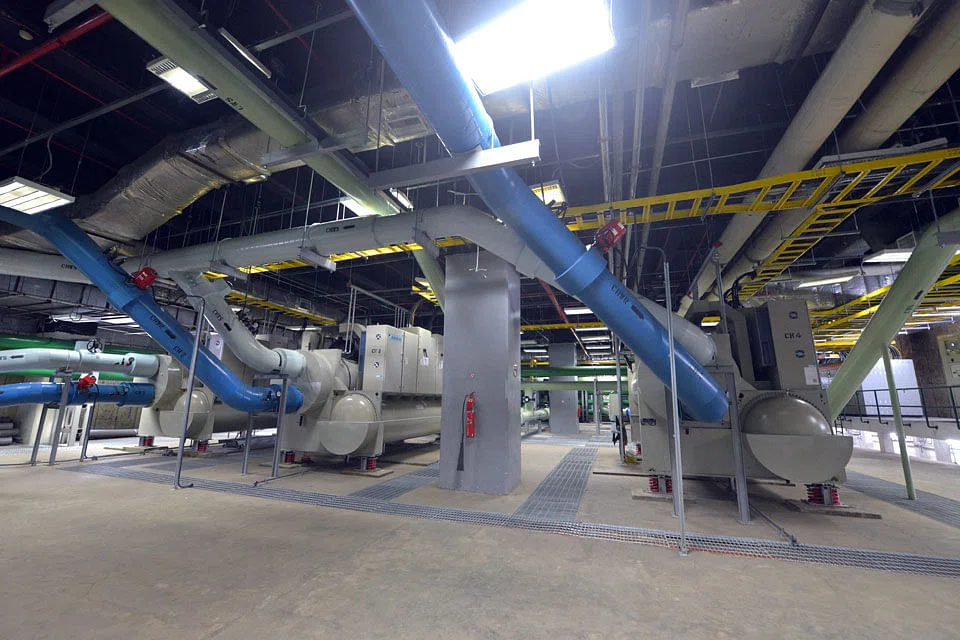
A CHILLER plant and some associated air handling facilities at Changi Airport were due for replacement in late 2018.
But operator Changi Airport Group (Singapore) (CAG) did not jump directly into a one-for-one replacement of these assets.
Instead, the company decided to first undertake a technical review to strategise the best way to renew the systems. The airport operator wanted to come up with a system design that could take into account the strengths and weaknesses of its existing systems and past lessons learnt, while also leveraging the latest technologies.
The main contributors of Changi Airport's carbon footprint and air-conditioning system costs are chiller plants and associated units. Making these facilities more energy efficient would help the airport become a more sustainable air hub.
The new system also needed to be expandable to cater for projected cooling demand as the airport expands over the next decade. And, climate change factors were on CAG's radar during consideration of the options available.
One potential solution was to have the chiller plant and its associated units designed and supplied by different vendors in the replacement exercise.
'%3e%3cpath%20d='M12.1475%2025.5262C13.7713%2025.4295%2014.94%2023.913%2014.94%2021.8832C14.94%2019.5359%2013.474%2018.093%2011.5917%2018.093C11.3745%2018.093%2010.9582%2018.093%2010.8393%2018.1413V25.2086L11.8891%2025.5745C11.8891%2025.5745%2012.207%2025.5262%2012.1475%2025.5262ZM11.4934%2017.6281C13.2567%2017.6281%2014.3843%2016.4292%2014.3843%2014.4501C14.3843%2012.372%2013.275%2011.2973%2011.4339%2011.2973H10.8393V17.6305H11.4934V17.6281ZM6.66078%2025.6482L7.39265%2025.5492C8.02617%2025.4502%208.26403%2025.3053%208.26403%2025.1097V11.6149C8.26403%2011.4193%208.1451%2011.3709%207.23484%2011.249L6.68137%2011.173L6.6219%2010.7588H11.9508C15.7153%2010.7588%2017.0624%2012.0797%2017.0624%2014.1578C17.0624%2015.9666%2015.7748%2017.1909%2013.4969%2017.6305V17.7041C16.111%2017.948%2017.6571%2019.5382%2017.6571%2021.7636C17.6571%2024.3318%2015.8937%2026.0417%2012.1109%2026.0417H6.60132L6.66078%2025.6482Z'%20fill='%232B2B2B'/%3e%3cpath%20d='M20.6287%2025.6505L21.5596%2025.5515C22.1725%2025.4779%2022.4104%2025.3076%2022.4104%2025.112V11.249H21.9346C20.073%2011.3479%2018.982%2013.0095%2018.408%2014.6227L18.1907%2015.5018H17.6555L18.1701%2010.7588H29.3837L29.6421%2015.4787H29.1664L28.9491%2014.6227C28.3728%2012.8645%2027.3047%2011.2743%2025.5002%2011.249H24.9856V25.1856C24.9856%2025.3812%2025.1251%2025.4548%2025.9965%2025.5515L26.7695%2025.6505L26.829%2026.0417H20.5693L20.6287%2025.6505Z'%20fill='%232B2B2B'/%3e%3c/g%3e%3cdefs%3e%3cclipPath%20id='clip0_5242_21648'%3e%3crect%20width='24'%20height='16.8'%20fill='white'%20transform='translate(6%2010)'/%3e%3c/clipPath%3e%3c/defs%3e%3c/svg%3e)
But CAG felt that this would result in missed opportunities for greater synergy. The maintenance team therefore commissioned a holistic study, which allowed the new design and intended operations of its sub-systems to be streamlined and synchronised for optimised energy performance.
The result was the appointment of Measurement & Verification (M&V), a Singapore energy and services company, as vendor for the airside and chiller plant upgrading projects.
M&V's energy services and solutions have been deployed across Asia, including in India, Malaysia, and Myanmar.
The company was awarded 2 design-and-build contracts and will be responsible for guaranteeing the efficiency performance of the chiller plant - providing certainty on return for CAG.
A functional system
The solution implemented by M&V gives CAG more control over its cooling infrastructure.
For instance, CAG will be able to decide which trade-off it prefers to achieve a desired cooling outcome: lowering the supply water temperature for the chiller plant, or increasing the fan speeds of associated facilities.
CAG will also be able to leverage lower, off-peak electricity tariffs and over-cool the system to store "chilled energy", and then release this "chilled energy" at peak times of need so as to even out energy draw on the upstream power distribution system.
This design, CAG said, exceeds the Building and Construction Authority's Green Mark Platinum standard.
Additionally, the system will harness such smart technologies as intelligent sensors for backend condition monitoring. It will also use data analytics to pick up performance trends and detect tell-tale signs of impending system failure, so as to enable leaner and better-targeted maintenance efforts.
The new capabilities could help the company manage rising maintenance manpower costs over time.
Meanwhile, energy savings could be about 15.8 gigawatt-hours (GWh) per year. This would come from both the main building chiller plant and associated air handling facilities replacement projects, based on conservative initial estimates.
This means Changi Airport will be able to lower its annual air-conditioning usage by a third of the existing systems' pre-Covid consumption. The savings are equivalent to the electricity consumption of 3,500 Housing Board 4-room flats for a year.
And, the cost savings would amount to S$3 million in utility bills; while the reduction in carbon emission footprint is expected to be more than 6,000 tonnes of carbon dioxide-equivalent per year for the airport when the replacement projects complete around 2023.
Koh Ming Sue, managing director of CAG's engineering and development cluster, said: "While the Covid-19 pandemic has decimated air travel temporarily, that did not set back CAG's resolve to remake Changi Airport into a much more sustainable air hub.
"Given that Singapore has limited natural green energy sources, it is all the more important for CAG and our airport partners to deep dive into airport infrastructure design and modus operandi to switch to greener technologies and practices going forward to achieve higher energy and manpower efficiency."
In pursuit of green
M&V has over 30 contracts to improve the energy efficiency of chiller plants in Singapore and Malaysia, with performance guarantees.
The total cooling capacity of these contracts amounted to more than 120,000 refrigeration tonnes, which is sufficient to cool more than 120,000 HDB bedrooms.
One refrigeration tonne is the cooling provided by 1 tonne or 1,000 kilogrammes of ice melted over 24 hours.
M&V said it has helped clients save energy costs of up to 30 per cent, and get a return on investment of up to 50 per cent.
Maximising energy efficiency is one defence against climate change, said M&V managing director Steven Kang. The added benefit is that doing so helps improve profitability.
M&V has an Energy Services Company (ESCO) accreditation from the National Environment Agency (NEA), obtained in 2013. The company said this accreditation means its clients would qualify for various government grants disbursed for projects involving an ESCO's participation.
An accredited ESCO, according to the NEA's website, is one that is dedicated to the provision of energy-efficient technology and services, including financing, design, implementation and management of projects. The objective of accreditation is to enhance the professionalism and quality of services offered by ESCOs. As of December 2021, there were 24 ESCOs.
As a design-and-build contractor, M&V typically has to rely on project financing to pay its vendors and subcontractors at various points over the course of the time it takes to complete a project.
CAG, for instance, makes milestone payments, based on works that have been completed, on a monthly basis.
M&V was able to tap UOB's financing package under the Enterprise Financing Scheme Green (EFS Green), which is a financing scheme for technologies and solutions that reduce waste, resource use or greenhouse gas emissions.
Enterprise Singapore shares 70 per cent of the risk with partner financial institutions under this scheme.
Kang said he was pleased to have found a like-minded partner in UOB: "For example, they are very focused on helping SMEs (small and medium-sized enterprises) in their sustainability projects, and one way in which they do so is through their U-Energy platform, which links up energy service companies with potential clients."
Karunia Tjuradi, head of the sector solutions group at UOB, added: "The retrofitting of buildings, as well as industrial and infrastructure facilities, to become more energy-efficient is set to gain momentum as more businesses work on cutting their carbon footprint.
"UOB is partnering industry players such as M&V to support these businesses. With the green loans under our U-Energy programme, M&V can help contribute to the sustainability objectives of Changi Airport Group and play a part in reducing Singapore's carbon emissions."
This is the last in a 20-part Green Business series, in collaboration with UOB, exploring sustainability trends across businesses and industries.

Decoding Asia newsletter: your guide to navigating Asia in a new global order. Sign up here to get Decoding Asia newsletter. Delivered to your inbox. Free.
Copyright SPH Media. All rights reserved.