

Green Deal sparks clash by EU lawmakers as war squeezes energy
 Add BT as a preferred source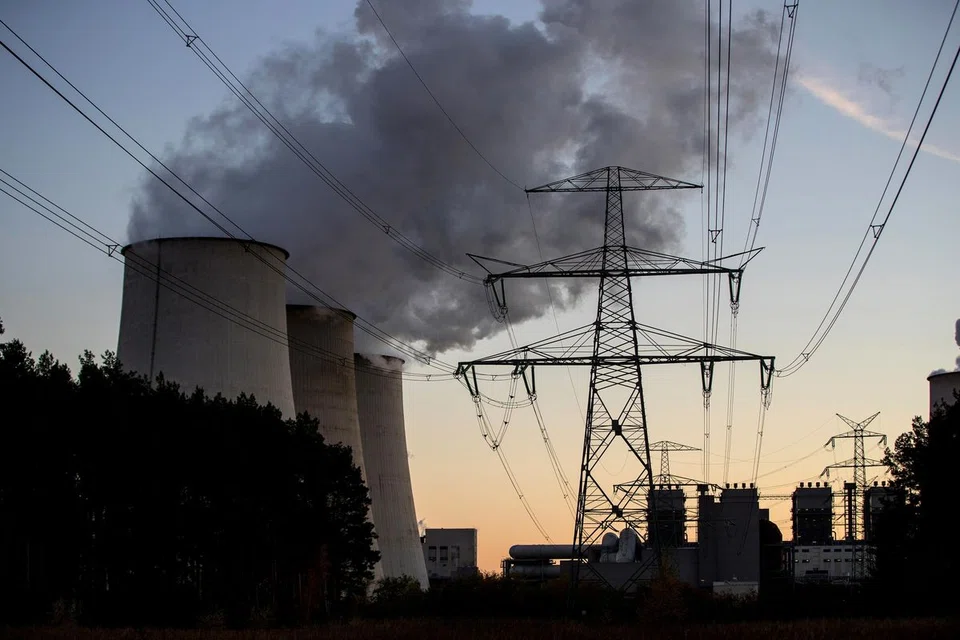
DeeperDive is a beta AI feature. Refer to full articles for the facts.
EUROPEAN UNION (EU) lawmakers sparred on Tuesday (Jun 7) over how to design the bloc's ambitious climate policies, underscoring the challenge of implementing binding climate-neutrality goals amid a war and unprecedented energy price spikes.
Some European Parliament members, predominantly in the Socialist, Liberal and Green political groups, are seeking to further toughen proposals by the European Commission, while others, led by Christian Democrats, urge caution to avoid excessive burden for the continent's industry and citizens.
Ahead of votes scheduled for Wednesday, lawmakers are debating measures including the deepest-to-date reform of the EU emissions market, a new carbon border levy and a proposal to ban new combustion engine cars by 2035.
The so-called Fit for 55 package -- put forward to enact the EU target to deepen greenhouse gas reductions to at least 55 per cent by 2030 compared with 1990 levels -- was proposed before Russian President Vladimir Putin invaded Ukraine. The war, which sparked an energy crisis, has left consumers and companies reeling from record power and gas bills.
"The war has only accentuated the importance of making the transition happen as quickly as possible," EU climate chief Frans Timmermans told the Parliament on Tuesday. "Money spent on renewables in Europe is money that stays in Europe. Money spent on fossil fuels bought in Russia is money that disappears in Putin's pockets."
The package proposed by the EU's executive arm includes a dozen draft laws that will affect all sectors of the economy, from energy production to road and maritime transport, and will require support from member states and the parliament to enter into force. The vote by the EU assembly on Wednesday will determine its position for talks with national governments about the final shape of the measures.
Navigate Asia in
a new global order
Get the insights delivered to your inbox.
Emissions Trading
Lawmakers are set to seek faster greenhouse-gas reductions in the EU Emissions Trading System, the bloc's key tool for meeting a tougher 2030 climate goal and the Green Deal overarching target of climate neutrality by 2050.
Yet they differ on when to stop free allowances that some companies currently get as a form of protection from cheaper competition in countries with laxer environmental standards. While the commission wants to phase them out by 2036 as it introduces the Carbon Border Adjustment Mechanism that will put a price on imported emissions, some groups want the free permits to end sooner.
Another sticking point in the debate on the EU ETS is access to the market. Christian Democrats in the European People's Party, the biggest political group in the parliament, want to restrict financial investors trading on their own account after carbon prices jumped to a record near 100 euros (S$146.9) per metric ton earlier this year.
The Socialists put forward an amendment that would ban speculative investors if emissions costs were to grow too fast and out of sync with market fundamentals. The measure would complement the existing mechanism to prevent excessive price growth under Article 29a of the carbon trading law. The commission is against any curbs on market access.
The parliament and the EU's executive arm are also at odds over the creation of a new carbon market that would cover road transport and heating fuel. The assembly's environment committee already recommended scaling down the plan for the so-called ETS 2 to avoid the risk of repeating the yellow vests protests that shook France 3 years ago.
"We feel this measure is politically risky," said Pascal Canfin, the committee's chair and member of the liberal Renew group. "It risks dividing our society and that is why we rejected it. The compromise we found in the environment committee will not be reopened in the plenary."
In the second part of the debate, scheduled to begin on Tuesday afternoon in Strasbourg, lawmakers will discuss measures including a proposal to ban new combustion engine cars from 2035. Members of the European People's Party are against such a goal and proposed an amendment that average emissions in an automaker's fleet should only be cut by 90 per cent by 2035.
"We have to deliver on emission reductions while ensuring that the economy can manage the social transition," Jens Gieseke, the EPP negotiator on the topic, said in a statement on Tuesday. "Mandating a phase-out of combustion engines could put up to 500,000 jobs at risk in the automotive industry." BLOOMBERG
Decoding Asia newsletter: your guide to navigating Asia in a new global order. Sign up here to get Decoding Asia newsletter. Delivered to your inbox. Free.
Copyright SPH Media. All rights reserved.
TRENDING NOW

Shelving S$5 billion office redevelopment plan proved ‘wise’ as geopolitical risks mount: OCBC chairman

Eurokars Group introduces rental car franchises Enterprise Rent-A-Car, National Car Rental, and Alamo to Singapore
20 photos that show how dramatically Singapore has changed in two decades
Singapore’s key exports up 15.3% in March from electronics surge, exceeding forecasts

