Hit by low prices, US drillers keep oil underground
Traders buy oil in oversupplied market and save it to lock in profits at higher prices later
Houston
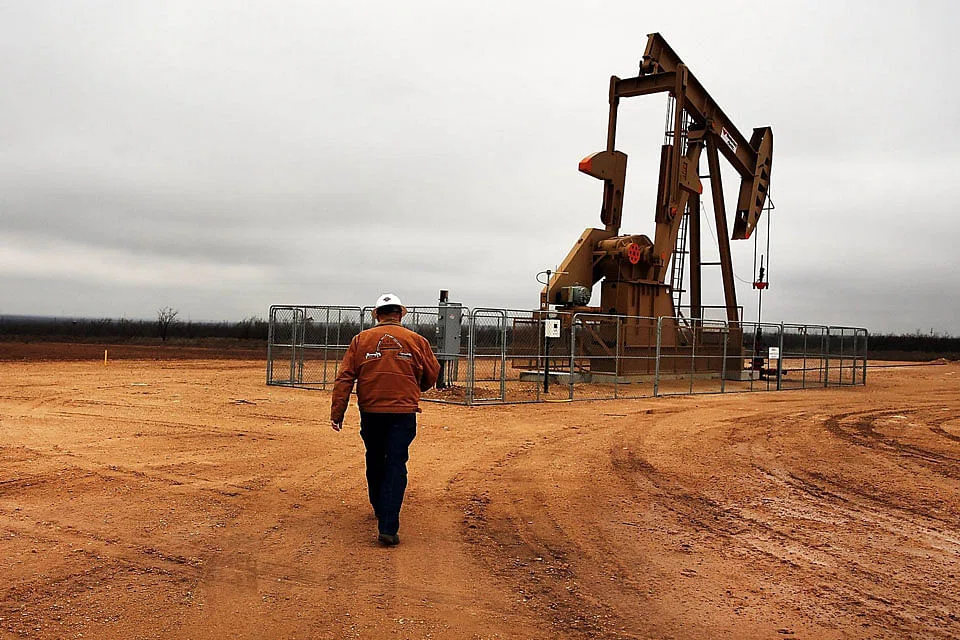
OIL drillers in the United States expecting prices to rebound after the biggest drop in six years have come up with an alternative to storing their crude in tanks: They're keeping it in the ground.
It's a new twist on an old oil trading technique, known as a contango storage play, in which a trader buys cheap crude in an oversupplied market and saves it to lock in profits at higher future prices. Drillers who have spent millions boring holes through petroleum-rich shale rock are just waiting for prices to go up before turning on the spigot.
From North Dakota to Texas, there are more than 3,000 wells that have been drilled but not tapped, based on estimates from Wood Mackenzie Ltd and RBC Capital Markets LLC. Waiting gives producers such as Apache Corp and EOG Resources Inc a better chance of receiving a higher price. It could also delay a recovery by attracting more supply every time prices rise.
"Effectively, the rock is the storage," said Troy Cook, an analyst with the Energy Information Administration in Washington DC. "If you can afford to hang on to it, you could certainly choose to wait until the price goes up."
West Texas Intermediate gained 35 cents to US$51.11 a barrel at 11.53am Singapore time, down more than 50 per cent since June. The front-month contract's discount to year-out prices fell to a US$12.32 a barrel on Feb 26, the widest gap in more than four years.
Shale drilling is a two-part process. Once a rig bores a horizontal tunnel through the underground shale layers, another crew blasts it with a mixture of water, sand and chemicals to crack the rock and release the oil. It's only after the second process, known as hydraulic fracturing or fracking, that the well is complete and able to produce oil.
The backlog of unfracked wells - call it a fracklog - is one reason that US crude output is poised to climb even as companies have idled more than a third of the rigs that were drilling for oil in October. About 85 per cent of US wells aren't being completed right now, Continental Resources Inc CEO Harold Hamm said on March 2.
"If you shut off all drilling and just went to pure completions, you're still talking about a half a year of production growth," said Harold York, vice-president of integrated energy research at consulting company Wood Mackenzie Ltd, on Thursday.
The US produced 9.32 million barrels of crude the week of Feb 27, the highest level in weekly Energy Information Administration data going back to 1983. Output will average 9.3 million barrels a day this year, up 7.8 per cent from 2014, the agency predicted on Feb 10. Oil inventories at 444.4 million barrels are at the highest level since 1930.
In North Dakota, home to the prolific Bakken shale formation, the number of unfracked wells ballooned in November as companies slowed crews to avoid releasing the initial flood of oil into a low-price environment, Lynn Helms, the state's oil and gas director, said in January.
Apache, the third-largest leaseholder in the Permian Basin, has deferred completions to trim costs and try to bring its oil to market when prices are higher, chief executive officer John Christmann said on Feb 12 on a conference call with investors.
Anadarko Petroleum Corp expects to have as many as 440 uncompleted wells by the end of the year. EOG started the year with about 200 uncompleted wells and plans to let that inventory build in the first half of the year, CEO Bill Thomas said on a Feb 25 conference call. Canadian Natural Resources Ltd, the largest heavy oil producer in Canada, has 161 uncompleted wells.
"Most of these wells, they're high-rate wells that decline fairly rapidly so it makes sense to hold off until prices stabilise," Steve Laut, the company's Calgary-based president, said on March 5. "That's where most of the value is going to be, in that first production period."
Producers are pulling back after crude prices fell by more than half since June as the rapid growth in output - driven in large part by the US shale drillers - outpaced new demand from developing countries such as China and India.
Delaying completions could also, paradoxically, extend the very oil slump companies are trying to wish away. If drillers respond to price increases by finishing more wells and adding new crude supply, it would delay the conditions needed for a rebound.
A well should take no longer than three months to complete, depending on the time it takes to hire contractors, set up equipment and fracture, according to Charles Kemp, senior consultant at Dallas-based energy consulting company Baker & O'Brien Inc. James Cron, an independent petroleum engineer in Flaxton, North Dakota, pegged it at anywhere from one to three months. Bloomberg