

How rare earths raise the stakes in China-Japan spat
[BEIJING] China and Japan are bound together by trade and geography, but a long history of rivalry and unresolved disputes makes even periods of cooperation fragile.
Long-running flashpoints – including China’s increased military activity around a cluster of disputed islands, trade restrictions and concerns over peace and stability in the Taiwan Strait – have flared at times, reminding both sides how quickly ties can sour.
Tensions resurfaced in late 2025, when blunt remarks by Japan’s prime minister about a potential Taiwan conflict triggered a sharp backlash from Beijing and a new round of diplomatic, economic and military brinkmanship.
What sparked the latest standoff between Japan and China?
In November, Japanese Prime Minister Sanae Takaichi – in response to questions in parliament – said that if China fought to take control of Taiwan, it could amount to a “survival-threatening situation” for Japan – a classification that would provide a legal justification for Tokyo to deploy its military in a supporting role if another country, most likely the US, came to Taiwan’s defence.
The Chinese government accused Takaichi of meddling in its internal affairs and responded with diplomatic and economic reprisals, including the suspension of seafood imports from Japan. China’s foreign ministry warned that citizens should avoid travelling to Japan in the near term. The government also instructed Chinese airlines to cut back on flights to the neighbouring country through March. Chinese state media said on Dec 1 that 40 per cent of scheduled flights from China to Japan in December had been cancelled.
China also demanded that the Japanese leader retract her comments, but she has resisted these calls.
The bounds of the relationship were further tested in early December, when a Chinese fighter aircraft aimed its fire-control radar at two Japanese fighter jets flying over international waters, according to the Japanese government. Chinese officials, in turn, accused the Japanese aircraft of disrupting their fighter-jet training.
Then in January, China announced a ban on exports to Japan of items that fall under the government’s “dual-use” category – civilian products that can also have military applications – if authorities determine the end use will indeed be military-related. This could potentially affect more than 40 per cent of Chinese shipments to the island, according to one estimate. Beijing then also launched an anti-dumping probe into Japanese exports of dichlorosilane, a critical chipmaking chemical, to determine whether it had been sold in China below fair market value.

What’s the history of China and Japan’s relationship?
China and Japan have for centuries been the dominant political and cultural powers of Northeast Asia. They’ve influenced each other’s language, economic development and culinary traditions. Trade picked up from the late 19th century, but so did political friction, leading to a series of armed conflicts.
Japan invaded and annexed parts of China during this period, and from the 1930s through World War II, Japan’s Imperial Army launched brutal campaigns in China, including infamous mass killings in Nanjing. These events – as well as ongoing territorial disputes – continue to overshadow relations between the two countries.
What’s behind China-Japan tensions today?
Territorial disputes remain one of the biggest flashpoints. Both countries lay claim to a group of uninhabited islands in the East China Sea – known as Senkaku in Japan and Diaoyu in China – that together cover 7 square kilometres.
China has been sending coast guard and government vessels into the area almost daily since 2012, when then-Japanese Prime Minister Yoshihiko Noda decided to move some of the islands from private to state ownership. The number of Chinese vessels entering the zone hit a record in 2024. China and Japan also have competing claims to a nearby gas field.
China’s growing military clout is another source of concern in Tokyo, as is increased military cooperation between China and Russia, which includes joint naval and air force exercises around Japan.
Japan’s 2025 annual military white paper made more than 1,000 mentions of China, saying its neighbour had achieved a rapid improvement in military power and was Japan’s “greatest strategic challenge.” Chinese President Xi Jinping has overseen a doubling of defence spending since taking office in 2013, according to the SIPRI Military Expenditure Database. This has been one of the drivers of Japan expanding its own military.
A five-year Japanese defence buildup approved in 2022 is projected to cost ¥43 trillion (S$352.6 billion) and push defence spending to 2 per cent of gross domestic product, from just over 1 per cent previously. Takaichi has accelerated the timeline, targeting the 2 per cent goal in the 2025 fiscal year instead of 2027. China has accused Japan of not learning the lessons of history and returning to militarism.
How does Taiwan fit in with China-Japan relations?
China considers Taiwan part of its territory and has vowed to reclaim the self-ruled island of 23.5 million people some day – by force, if necessary.
When Japan formalised diplomatic ties with China in 1972, it said in a joint communique that it “fully understands and respects” China’s view that Taiwan is an “inalienable part” of its territory, without specifically agreeing to the “One China” principle. Takaichi said in December that Japan’s position hasn’t changed from that statement issued more than half a century ago.
Japan doesn’t have formal diplomatic ties with Taiwan but has spoken out against any unilateral attempts to change the status quo and insists that cross-strait issues must be resolved peacefully.
Its concern stems partly from geography. Taiwan lies little more than 100 kilometres from Yonaguni, the closest Japanese island – a reminder of how quickly any conflict could spill across the East China Sea.
Japanese prime ministers have avoided discussing the details of a potential conflict over Taiwan, reflecting the sensitivities of the issue in both China and Japan. Takaichi is the first sitting Japanese leader in decades to publicly link a Taiwan Strait crisis with a possible deployment of Japan’s Self-Defence Forces.
In recent years, Japan has expanded its military installations, such as anti-ship missile bases along its southwestern island chain, motivated by concerns about Taiwan and a broader regional conflict. Meanwhile, Chinese ballistic missiles landed in Japan’s exclusive economic zone close to Taiwan in 2022, when China conducted one of its biggest exercises around the Taiwan Strait in decades.
How entwined are Japan and China’s economies?
Their economic relationship has evolved over recent decades. As China gradually opened its markets from the late 1970s, Japanese companies moved in to sell to a growing class of prosperous consumers and capitalise on cheaper labour for manufacturing. But that dynamic has shifted as China’s domestic businesses have become more competitive in producing expensive items such as cars and electronics. Some Japanese firms, including Mitsubishi Motors and Nippon Steel, have pulled out of manufacturing in China or pared back operations there.
Tighter restrictions, including China’s expanded counter espionage law, have further dampened Japanese appetite for investment. Less than 2 per cent of new Japanese outbound investment was into China and Hong Kong in the first nine months of 2025, down from more than 9 per cent in 2020.
Meanwhile, Chinese brands – including low-cost e-commerce giant Shein – are expanding their presence in Japan as interest in its consumer market grows.
This shift is emblematic of the countries’ broader trade relationship. China is Japan’s top trading partner, accounting for about 20 per cent of its imports. While Japan is also an important trade partner for China, it supplies just 5 per cent of China’s imports.
Japan is particularly reliant on China for rare earths critical to its high-tech and automotive sectors. In 2024, around 70 per cent of its rare earth imports came from China, according to the Japan Organisation for Metals and Energy Security.
Tourism is another area of exposure. Chinese travellers account for about one in four visitors to Japan annually and were the biggest spenders among all foreign visitors from July to September 2025, responsible for around 27 per cent of ¥2.1 trillion in total inbound consumption, according to the Japan Tourism Agency.
China, for its part, primarily relies on Japan for advanced machinery and electronics. Nearly half of Chinese imports from Japan were mechanical and electrical equipment and parts in 2024, according to China’s customs data.
What’s at stake if the row drags on?
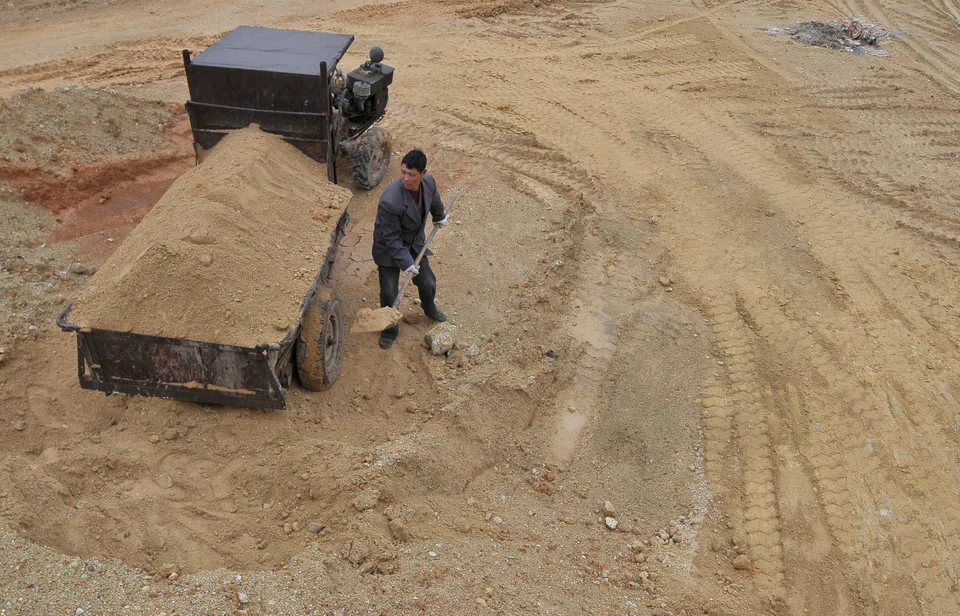
While China has not said so explicitly, there are concerns that its latest move to restrict exports with potential military uses could mean widespread curbs on rare earths. If Beijing were to weaponise its dominance of the rare-earths supply chain – a tactic it has used before – the impact on Japan would be severe.
When the two countries clashed over a territorial dispute – as well as a diplomatic row – in 2010 and again in 2012, China temporarily blocked exports of critical materials, including rare earth elements used extensively in smartphones, cars and other advanced technologies, wreaking havoc across Japan’s manufacturing industry.
Japan has been working hard to diversify its supply sources away from China to prevent a repeat of that scenario. Efforts include a state-backed project in partnership with an Australian rare earths producer, as well as an increased emphasis on the recycling of rare earth products. Still, given the sharp rise in demand over the past decade, those efforts fall far short of replacing Chinese metal elements.
While China appears to have more immediate leverage to inflict economic pain, it will also have to weigh its options. Japan is an important supplier of high-tech products that Chinese firms still struggle to produce domestically, including advanced manufacturing equipment and supplies used in semiconductor production.
If China resorts to strong-arm tactics too quickly – particularly restrictions on critical minerals – it risks drawing Japan’s ally, the US, into the fray. In October – albeit before the latest strains emerged – US President Donald Trump offered Takaichi “anything you want” during a meeting in Tokyo. Takaichi in January said she had an “extremely meaningful” call with Trump to start the year and planned to visit the US in the spring. Rare earths have been a key source of friction between the US and China, and their relationship remains fragile despite a tentative trade truce reached in October. BLOOMBERG
Decoding Asia newsletter: your guide to navigating Asia in a new global order. Sign up here to get Decoding Asia newsletter. Delivered to your inbox. Free.
Share with us your feedback on BT's products and services
TRENDING NOW

Once staunchly pro-China, Malaysian Chinese businesses are now distancing themselves from Beijing

Looking beyond looming CEO succession, should UOB potentially pursue a transformative merger?

Could stablecoins be the future of money?

Grab CEO’s wife Chloe Tong on life with Anthony Tan and finding her purpose

