HSBC regarded Hin Leong as ‘very good customer’ with ‘good track record’: witness


HIN Leong’s largest creditor HSBC had not terminated its discounting agreements with the oil trader upon learning that the transactions involving China Aviation Oil (CAO) and Unipec Singapore in fact did not materialise.
This was as the bank wanted to “keep the profit” on the transactions, suggested the defence counsel for Singapore’s former oil tycoon and Hin Leong founder Lim Oon Kuin on Monday (Apr 17).
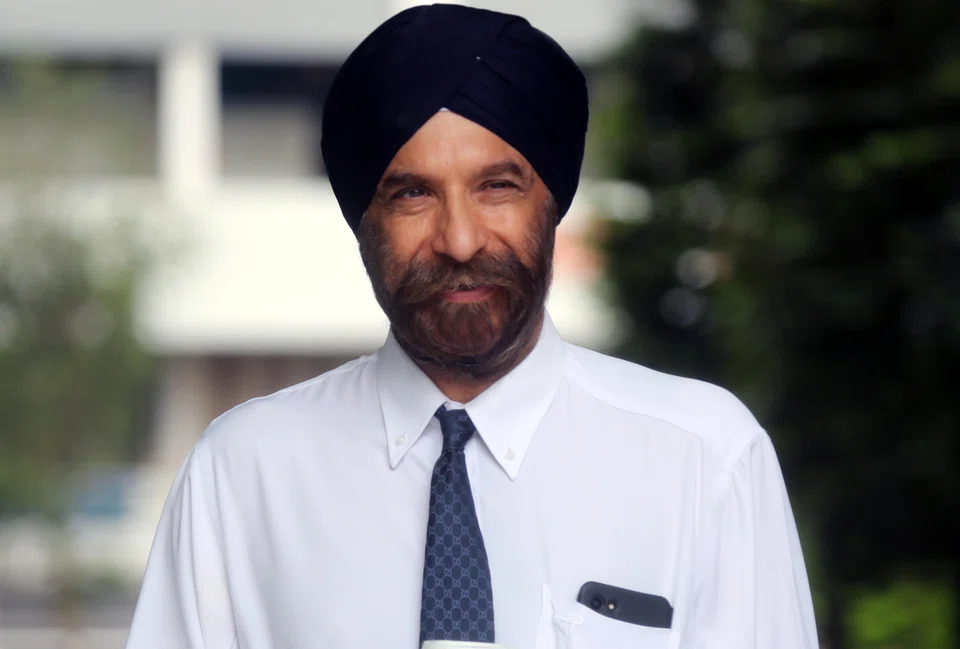
Senior Counsel Davinder Singh of Davinder Singh Chambers, who represents Lim, said this while cross-examining Singapore prosecutors’ first witness, HSBC’s senior vice-president of commodity and structured trade finance in Singapore Chua Pei Pei, on the third day of the trial involving cheating and forgery charges against Lim, better known as OK Lim.
Singh said that HSBC had instead effectively converted the outstanding amounts under the discounting applications (DAs) into loans to Hin Leong Trading (HLT) – the group’s flagship and trading arm – through a set-off mechanism on the funds in HLT’s US dollar account with the bank.
The set-off payment plan was proposed by Lim and his children Evan Lim Chee Meng and Lim Huey Ching over a teleconference call with HSBC’s representatives on Apr 12, 2020, which the bank had agreed to. Over that same call, the Lim family had informed the bank that, due to “miscommunication” within the firm, the DAs for the sale of oil to CAO and Unipec had been mistakenly submitted to HSBC when in fact, these deals had not materialised.
“The bank...was prepared to give Hin Leong time to refund the sums that were discounted by way of set-offs. And this arrangement was on basis that the bank would keep the profit on the two transactions, correct?,” Singh asked. “Correct,” replied Chua.
“So, this was not a case, as far as you know ... of Hin Leong or anyone in Hin Leong cheating the bank but of a situation where the bank, knowing that there were no transactions, was prepared to treat the outstanding amounts as loans repayable by Hin Leong,” Singh said, in putting his case to the witness.
Lim appeared in court in a wheelchair and wore a ear piece to listen to the court’s Mandarin interpreter throughout the hearing. The 81-year-old, once deemed an icon in the region’s oil circles, founded and built a sprawling oil trading and offshore empire. Hin Leong collapsed three years ago under nearly US$4 billion of debts owed to some 20 banks as the pandemic decimated energy demand and sparked a historic oil crash.
Then too, fraud allegations were uncovered. Singapore prosecutors have slapped 130 forgery and cheating charges against the former tycoon. Of these, three charges have proceeded to trial. The hearing is before Judge Toh Han Li.
Singapore prosecutors have accused Lim of cheating HSBC by representing to the bank through Hin Leong’s employees that the company had entered into two contracts for the sale of oil with CAO and Unipec Singapore, and submitting two invoice-financing applications on these purported transactions.
Prosecutors claimed that the two transactions were “complete fabrications, concocted on the accused’s directions, and the invoice-financing applications were supported by forged or fabricated documentation”. As a result of this alleged deception, HSBC was dishonestly induced into disbursing some US$111.68 million to Hin Leong.
The invoices were submitted pursuant to a “Silent Confirmation and Discounting Agreement”, a financing facility offered to Hin Leong where it could apply to HSBC to discount invoices for the sale of oil to its customers which is referred to as “discounting application”.
“Discounting” refers to accounts receivable financing, where a seller “sells” unpaid invoices to a financial institution, and typically receives a slightly discounted upfront payment, in circumstances where the credit terms for the transaction would mean that the seller would otherwise only receive payment from the buyer at a later date. If the DA is approved, HSBC would pay Hin Leong the invoice amount and charge a fee for the transaction.
Since Chua joined the bank in 2015, she has managed HLT as HSBC’s client for various “trade products” until the firm ran into troubled waters in 2020.
“I put it to you Ms Chua, that at the time Hin Leong applied for the discounting in relation to the CAO and Unipec transactions, that you and the bank were satisfied that Hin Leong was a very good customer with a very good track record. Do you agree?,” said Singh. “Yes,” Chua replied. The DAs were made in 2020.
“The applications were both processed on an extremely urgent basis...it was important to you and the bank to want to show Hin Leong that it was very responsive to its requests and was able to process it on the same day within a matter of a few hours. Agreed?, asked Singh. “Yes”, replied Chua.
Following two days of cross-examination by Singh, deputy public prosecutor Christopher Ong re-examined the witness on Monday. “If you had known at that time the DAs were made for CAO and Unipec that those transactions were fictitious, and the documents submitted in support were forged or fabricated, what would you have done?”
“As per my reply on the first day of examination, I would have reported it,” replied Chua.
The hearing before Judge Toh continues on Tuesday and is set over several dates in the ensuing months till Jul 20.