

Hyundai Heavy says trying to allay Singapore's concerns over Daewoo shipyard merger
 Add BT as a preferred source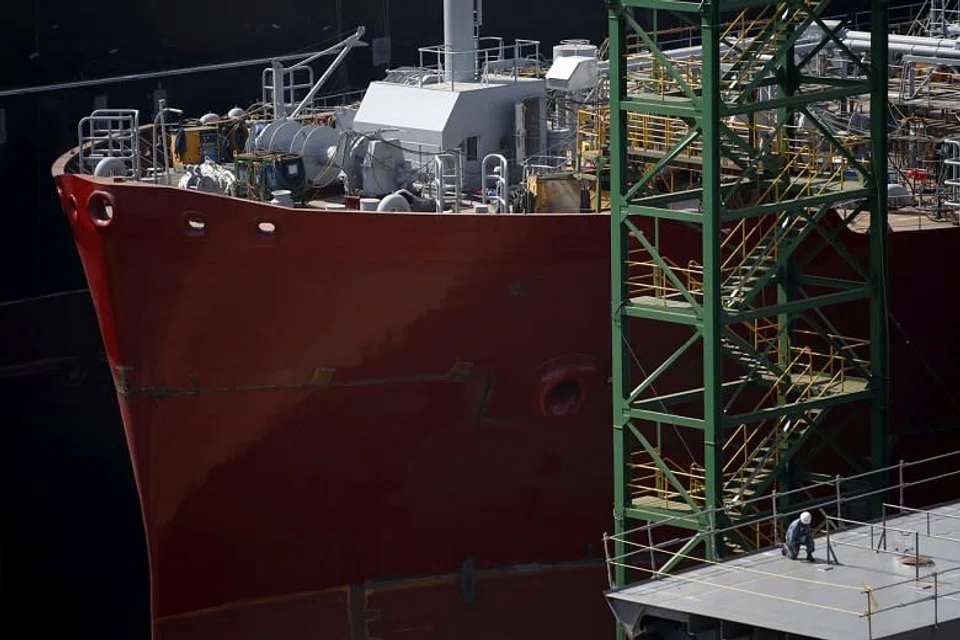
[SEOUL] Hyundai Heavy Industries Holdings said on Wednesday it is working with Singaporean regulators to alleviate concerns of its US$2 billion merger with rival shipbuilder Daewoo crimping competition in the South-east Asian maritime hub.
Plans to combine the world's two biggest shipbuilders announced in January require regulatory approval in South Korea, Singapore, China, Japan, Kazakhstan and the European Union, a Hyundai spokesman told Reuters. So far, only Kazakhstan has approved the deal, he said.
"We believe Singaporean authorities are taking a cautious approach to make a decision about the deal between the two big market players," the spokesman said.
"We will do our best to complete this well," he said, referring to Singapore's review. He did not give details on how the firm is addressing Singapore's concerns.
Daewoo Shipbuilding and Marine Engineering declined comment beyond saying Hyundai is leading the regulatory approval process.
Singaporean regulators have said the deal between the two South Korean firms threatens to remove competition in the supply of liquefied natural gas (LNG) carriers, container ships and oil tankers to Singaporean customers.
"There are concerns that the proposed transaction will remove competition between two main suppliers of these commercial vessels, to the detriment of customers in Singapore," Competition and Consumer Commission Singapore said in statement.
The regulator also said there were concerns over whether other suppliers will be able to compete with the new entity, and that barriers to entry for new players and expansion, particularly with regards LNG carriers, may be high.
The regulator has completed an initial review and a more detailed study could take around four months to complete, it said.
Hyundai was ranked the world's biggest shipbuilder by order backlogs as of last year, with Daewoo second, according to Hyundai. The firms hold a combined market share of 21.2 per cent, followed by Japan's Imabari Shipbuilding at 6.6 per cent, showed data from Clarksons Research.
The merger comes as the worldwide shipbuilding sector recovers from a global economic downturn that led to massive losses, widespread job cuts and, in 2017, the US$2.6 billion bailout of Daewoo.
The downturn also hit Singapore's offshore sector, and a US$3 billion bid in October from state investor Temasek Holdings to buy control of Singapore conglomerate Keppel Corp has sparked talk of further consolidation.
REUTERS
Share with us your feedback on BT's products and services
TRENDING NOW
NDR 2026: Singapore to create new Western island to support 'new generation of industries'

MSCI drops S-E Asian heavyweights Sembcorp, GoTo and Ayala Land from global benchmarks
E-commerce is killing ‘real’ commerce, says China’s beverage king Zhong Shanshan
Asia-Pacific aviation: is up really the only way?

