

IEA says Indonesia policy reform needed for clean energy transition
 Add BT as a preferred source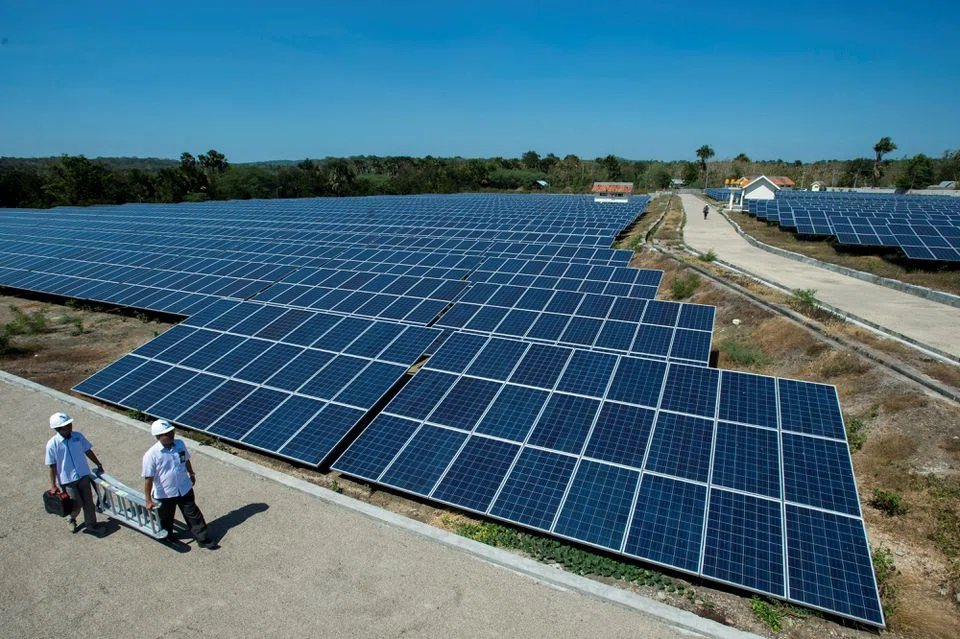
DeeperDive is a beta AI feature. Refer to full articles for the facts.
INDONESIA needs to ensure policy reforms to pave the way for renewable power and to reduce reliance on coal, as part of a goal to achieve net-zero emissions by 2060, the International Energy Agency (IEA) said in a report released on Friday (Sep 2).
Indonesia, one of the world’s biggest carbon emitters, has signed up to a global pledge to phase out coal, which is seen as crucial to help limit global temperature rises from reaching 1.5 degrees Celsius.
The South-east Asian country aims to lift the renewable portion of its energy mix to 23 per cent by 2025 but has only reached around 12 per cent so far. Coal currently powers around 60 per cent of the country’s electricity needs.
The IEA report said that the types of technology Indonesia needed to shift to cleaner energy, such as solar power systems, were already commercially available and cost-effective, provided the government put in place supporting policies.
Solar projects in Indonesia currently cost more than twice the amount of those in similar emerging economies, it said and were economically uncompetitive compared to coal and natural gas power plants.
Costs could be slashed by introducing transparent and competitive tariffs and a predictable project pipelines, according to the report, which was compiled after a request by Indonesia’s energy ministry.
Navigate Asia in
a new global order
Get the insights delivered to your inbox.
Indonesian President Joko Widodo is expected to issue a new rule on electricity tariffs aimed at attracting investment into renewables, but the regulation has been delayed for years.
Meanwhile, a plan to impose a carbon tax on coal power plans has also been delayed. The tax was initially scheduled to take effect from April 2022.
According to the IEA, under a scenario that assumes climate commitments are met, Indonesia could have 25 Gigawatts of solar and wind capacity by 2030, up from around 0.4 GW today. REUTERS
Decoding Asia newsletter: your guide to navigating Asia in a new global order. Sign up here to get Decoding Asia newsletter. Delivered to your inbox. Free.
Share with us your feedback on BT's products and services
TRENDING NOW
Why where you park your joint venture matters: Lessons from a US$689 million shareholder dispute

Richard Eu on how core values, customers keep Singapore’s TCM chain Eu Yan Sang relevant
A new logic of China-Asean economic integration emerges from the Middle East conflict
From 1MDB to ‘corporate mafia’: Is Malaysia facing a new governance test?

