

India’s Bharat Petroleum plans Singapore trading hub to cut costs and boost margins
The Mumbai-based refiner’s new desk will initially be staffed by four traders
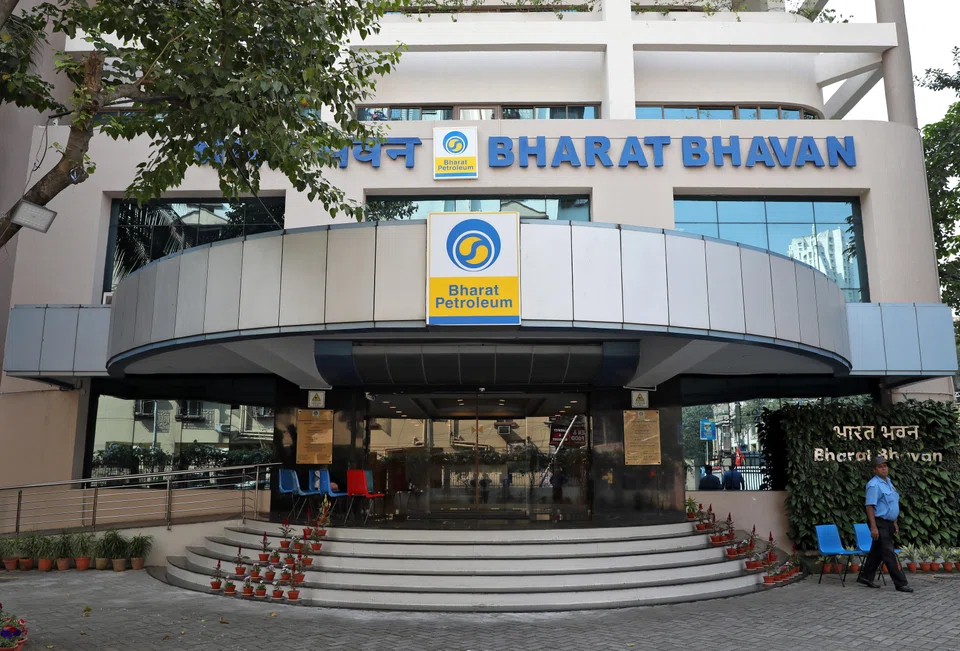
[MUMBAI] India’s Bharat Petroleum Corp (BPCL) will open a trading office in Singapore next month, as the state-owned refiner seeks to become more flexible in its feedstock procurement process and reduce costs to boost processing margins, chairman Sanjay Khanna said on Thursday (Jan 29).
The Mumbai-based refiner’s new desk will initially be staffed by four traders, and could be expanded later, Khanna told reporters on the sidelines of the India Energy Week conference in Goa on Thursday.
“The price at which we buy crude, liquefied petroleum gas, and liquefied natural gas is very crucial,” Khanna said. “There is definitely an advantage in having our own trading desk.”
Singapore is a trading hub for a wide range of commodities including oil, energy, metals and agriculture. Many global oil companies spanning the world’s largest majors to small independent refiners all have a trading presence in the island nation, but Indian firms haven’t made much of an inroad – until now.
The company joins its bigger state-run peers – Indian Oil Corp (IOC) and Oil and Natural Gas Corp (ONGC) – in a push into global energy trading, a business long dominated by Western majors and commodity trading houses. Volatile markets and a shifting geopolitical landscape are prompting a rethink of their traditionally narrow focus on physical supply.
ONGC is discussing a similar partnership with European oil majors, while IOC is in talks with Vitol Group for such a venture, Bloomberg News reported earlier.
BPCL had partnered with Shell in the middle of the last decade to improve its trading acumen. That partnership, which ended in 2019, had helped the refiner source crude at better prices, boosting margins, Khanna said, adding that BPCL is going it alone for now. A global trading partner may again be sought, should there be a need in the future, he said.
BPCL is India’s second-largest state-run processor with a refining capacity of 35.3 million tonnes a year, or 709,000 barrels a day, which it seeks to expand to 45 million tonnes. It is also responsible for sourcing crude for the nine million-tonne-a-year Numaligarh refinery, which is likely to be commissioned this year.
Taken together, the moves of India’s oil majors mark the clearest signal yet that the companies in the sector are seeking to adjust their businesses, moving beyond purely physical refining and fuel marketing into trading – a shift accelerated by recent upheavals in global energy markets.

Challenges remain, including building a greater risk appetite in traditionally conservative state-owned enterprises, as well as setting up sufficient safeguards to handle potentially volatile trading profits. BLOOMBERG
Decoding Asia newsletter: your guide to navigating Asia in a new global order. Sign up here to get Decoding Asia newsletter. Delivered to your inbox. Free.
Share with us your feedback on BT's products and services
TRENDING NOW

Grab CEO’s wife Chloe Tong on life with Anthony Tan and finding her purpose

US trade chief to consider trade deal tariff caps in excess capacity probe
Bee Cheng Hiang customers’ e-mail addresses exposed in Singapore’s first case of AI-related data breach

DFI Retail to take over Starbucks business in Asia from Maxim’s Caterers

