Indosat Ooredoo Hutchison eyes growth in digital services, home broadband post-merger

Tessa Oh
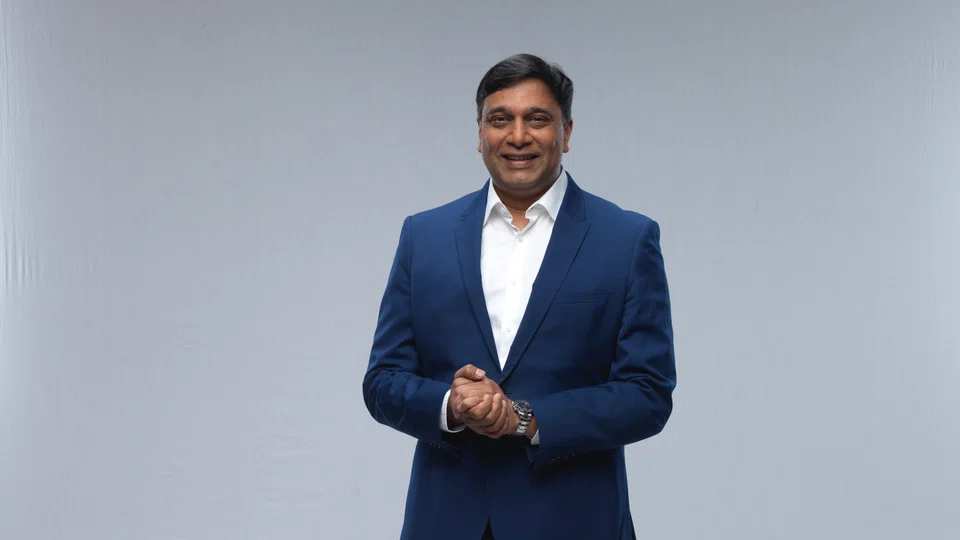
AFTER more than a year since its merger, Indosat Ooredoo Hutchison (IOH) wants to leverage its enhanced scale and synergies to branch out into new growth opportunities – in fixed home-broadband and digital services.
The company was established in 2022 following the merger of Indonesian telecommunications providers Indosat and Hutchison 3 Indonesia, then the third- and fourth-largest telcos in the country respectively.
When the merger was first floated, analysts had doubts about whether it would succeed, chief executive officer Vikram Sinha recalled during a recent interview with The Business Times.
“And I don’t blame them, because historically, 90 per cent of mergers have struggled,” he said.
But the telco’s results post-merger “speak for themselves”, noted Sinha. “We are in a very good position now.”
Indonesia-listed IOH is now the nation’s second-largest telco, with a market capitalisation of US$4.9 billion. As at Friday (Dec 29), the counter trades at 22.4 times its historical earnings and has a historical dividend yield of 2.6 per cent.
For the nine months ended Sep 30, IOH’s net profit fell 24.4 per cent to 2.8 trillion rupiah (S$239 million), from 3.7 trillion rupiah in the corresponding year-ago period.
This was mainly due to a rise in financing costs offsetting an increase in revenue and fall in cost of services, as well as a drop in operating income, said the company in an investor memo.
The earnings before interest, taxes, depreciation and amortisation in the first nine months of FY2023 was up 24 per cent at 17.5 trillion rupiah, from 14.1 trillion rupiah previously.
The company’s revenue rose 8.5 per cent to 37.5 trillion rupiah, from 34.5 trillion rupiah before.
Sinha said that IOH’s latest results demonstrate the benefits of the synergies seen since the merger came into effect. He is confident that the group is on course to deliver US$400 million in synergy value in three years’ time.
Beyond that, the telco wants to achieve more sustainable growth organically.
“The bigger question is how we set ourselves for the next five years,” Sinha said. “This is where we are pivoting into (new areas), while we keep doing our core (business). We want to keep hitting close to double-digit growth.”
Expanding offerings
One area in which IOH is intensifying its efforts is in home broadband, where it plans to reach a million customers by end-2024.
“One of the trends which we are seeing is a kind of mobile convergence, where people want a seamless experience at home and outside,” observed Sinha.
In November, the company acquired three million fixed-home and entertainment customers from Indonesian fibre-based network services provider MNC Kabel Mediacom, significantly expanding its home broadband business. Following the acquisition, IOH has 350,000 home broadband subscribers.
Part of its strategy is also tapping artificial intelligence (AI) to identify “the right building, right houses” to target new customers.
To this end, IOH is pouring investments into training and attracting the right talent to better harness AI tools to improve efficiency and productivity.
Another key growth opportunity IOH has identified is in Indonesia’s rapidly growing digital economy.
According to Sinha, this is where the group hopes to transform from a telco to a “techco” – leveraging the latest technologies to develop new digital services and experiences.
These could either be developed by IOH or with partners, to go hand-in-hand with its connectivity network.
To facilitate this, the group plans to sell and lease back some of its transmission tower infrastructure to free up capital to be invested in creating the digital services.
While these plans are still in the works, the aim is eventually for IOH’s revenue from services outside of its core connectivity business to grow to around 20 per cent of its total revenue by 2026, from 4 per cent currently, added Sinha.
Even as the company sets out to achieve new targets, the core connectivity business is not going to take a back seat, said Sinha. To grow this segment, IOH will continue to focus on capturing more customers in rural Indonesia.
Cautious on 5G
While IOH is getting ready for the 5G investment cycle, it is taking a more cautious approach.
“Globally, we have seen that there are not too many successful use cases coming out of 5G deployment,” Sinha said, adding that the company plans to wait for more relevant use cases to emerge before investing in this segment.
The 5G investment cycle is also expected to push further consolidation within the telco market in Indonesia, noted Sinha. He anticipates that the market will be dominated by just two or three big players in the next three to four years.
A proposed merger between two other telcos – XL Axiata and Smartfren – is currently in the final stages. If it goes through, it would bring the number of players in Indonesia from four to three.
Going by IOH’s experience, further consolidation could be good for the industry.
“Pre-merger, the industry was growing 1 per cent, but, in 2023, the industry was heading towards 5 to 6 per cent growth.” So I think the industry, after yo-yoing for long, is moving in the right direction now, he added.