

Japan urges LNG buyers to sign long-term deals for fuel security
 Add BT as a preferred source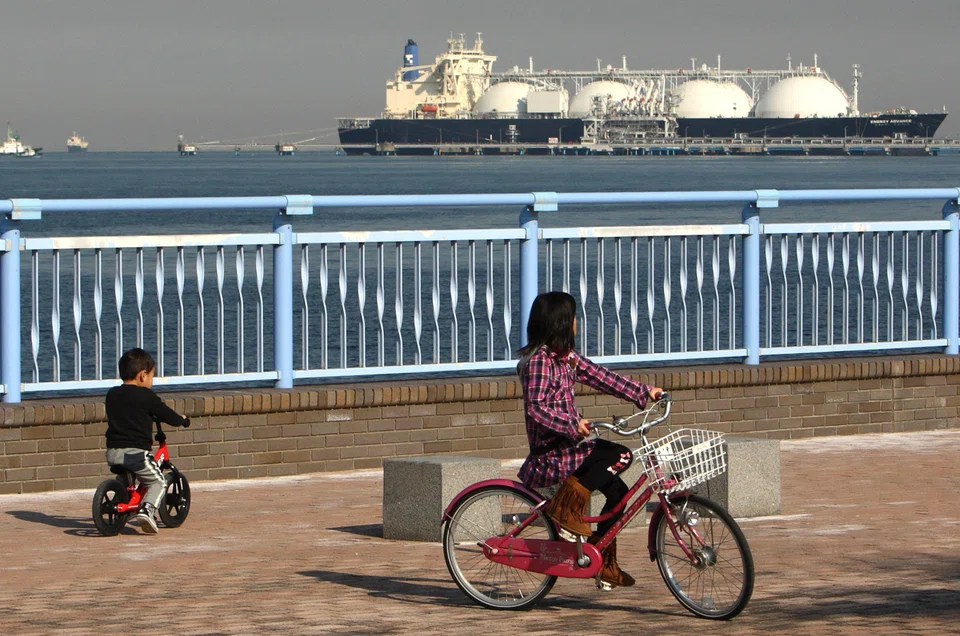
JAPAN’S government is asking liquefied natural gas importers to secure new decades-long supply deals under efforts to boost energy security.
The Ministry of Economy, Trade and Industry has been meeting with Japanese buyers, as well as overseas suppliers, to urge the signing of more long-term LNG contracts, said sources familiar with the discussions. The push is meant to insulate Japan from future supply shocks, as well as potentially harsher sanctions against Russian fuel exports, the sources said.
The move is another step by Japan, the world’s biggest LNG importer last year, to ensure that power producers and industries have enough gas amid the transition to cleaner sources. It follows European and Asian rivals’ signing of several 27-year deals with Qatar in recent months, raising questions over their climate commitments.
Japan will continue to need long-term contracts for this clean fossil fuel to provide it with a stable energy supply, which will need to be balanced with purchases on the spot market, said an official at the trade ministry. Pursuing carbon neutrality will need to take place in parallel, the official said.
Annual long-term LNG supply contracted by Japanese buyers will fall by about a third from 2022 levels to 55 million tons by 2030, said the Japan Organization for Metals and Energy Security.
Russia’s invasion of Ukraine last year upended gas markets around the world, triggering record-high prices and stoking worries about fuel security. At the Group of Seven summit earlier this year, Japan and Germany pushed for the inclusion of language that left the door open for public investment in gas.
LNG is natural gas that has been reduced to a liquid state through a process of cooling. It is used for heating homes, cooking and transport, but the fact that it is a fossil fuel limits how long it can be relied upon as the world moves towards net-zero emissions and cleaner energy sources. LNG produces 40 per cent less carbon dioxide than coal and 30 per cent less than oil, making it the cleanest of the fossil fuels, and perhaps best-placed to help in a transition to a carbon-free future. BLOOMBERG
Decoding Asia newsletter: your guide to navigating Asia in a new global order. Sign up here to get Decoding Asia newsletter. Delivered to your inbox. Free.
Share with us your feedback on BT's products and services
TRENDING NOW
Think twice about rebuilding that old landed property into a super-big house to max out GFA
SpaceX’s US$1.75 trillion IPO: How retail investors, including those in Singapore, can buy shares
Yeo’s, Tiger Beer and now Gardenia – flight of food manufacturing from Singapore might be just as planned
Battle for Asia’s ultra-rich: ‘Singapore can’t afford to keep losing clients to Dubai, Hong Kong’

