

Liquidity key to success of Singapore's carbon exchange
Existing exchanges try to balance finding a contract that will continue to be liquid and be viewed as representing high-quality credits

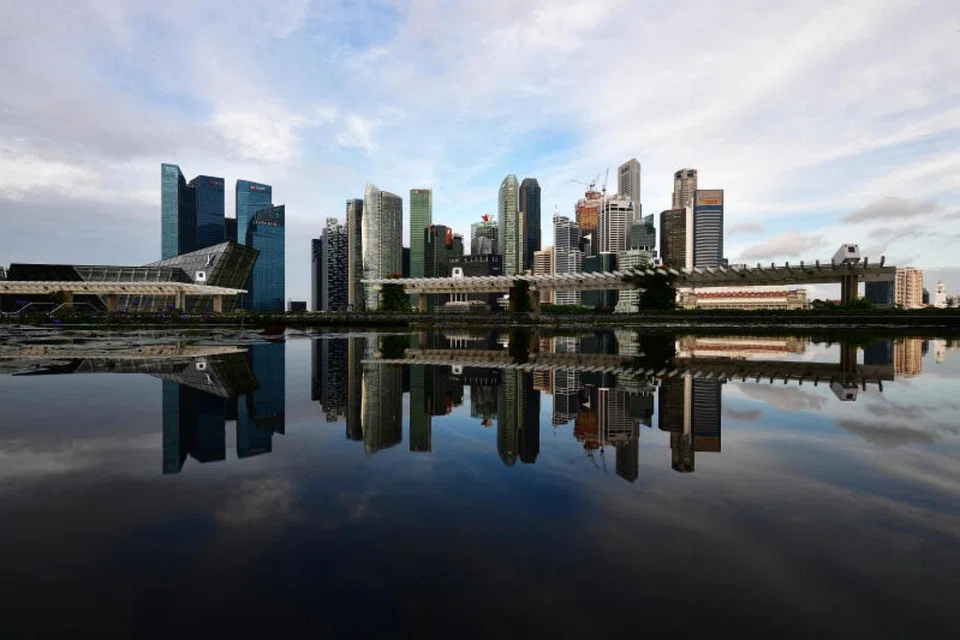
Singapore
SINGAPORE'S platform for carbon offsets, Climate Impact X (CIX), will have competitors when it is rolled out at the end of the year, with more such platforms possibly emerging in the bid to tap the climate business boom and help companies decarbonise.
But the CIX's vaunted liquidity will be key to its success.
Jonty Rushforth, senior director of S&P Global Platts price group, said: "While carbon credits have been around for over two decades, the potential for growth is now higher than ever, largely led by the hard-to-decarbonise energy sectors.
"This means countries that are at the heart of current energy trading - like China, Singapore, Australia and the US - are looking to build on their existing infrastructure."
The race to net-zero emission has turned carbon credits into a new currency, and fuelled strong demand for globally tradeable carbon credits across sectors. There are now at least five carbon exchanges in Europe and the US; China, the world's largest emitter of greenhouse gas, is set to launch its carbon-trading market in Shanghai at the end of this month. But experts say there is really no true-blue "global" carbon exchange, because the trading in these platforms is very local or regional.
If Singapore gets the recipe right, CIX - a joint effort by D05 Bank, the S68 , Standard Chartered and Temasek Holdings unveiled last month - will be the first global carbon exchange, and one premised on scaling the voluntary carbon market to help companies address the climate crisis.
In a response to queries from The Business Times, SGX's head of sustainability and sustainable finance Herry Cho said: "More credible options for the trading of carbon credits will be beneficial for all. There are other carbon exchanges in the market, but the focus of CIX is on tackling pain points such as illiquidity and market fragmentation, and offering high-quality carbon credits."
Carbon exchanges are trying to find the sweet spot between quality on one hand and fungibility on the other; the challenge is to find a contract that will continue to be liquid and be viewed as representing high-quality credits, said S&P Global Platts' Mr Rushforth.
That won't be easy.
Andrew Koscharsky, chief commercial officer of energy retailer iSwitch Energy, said: "A number of exchanges already exist and have failed to attract traders. This is primarily due to the fact that most initiatives are based on voluntary participation, rather than a mandated scheme."
In the carbon marketplace, voluntary markets where corporations and individuals take responsibility to offset emissions co-exist with mandatory compliance markets.
Voluntary markets are "crucially" different from regional compliance markets like the European Union's Emissions Trading System and North America's Regional Greenhouse Gas Initiative, which have so far dominated the discussion around global emissions reductions, S&P Global Platts said in a report.
Mr Koscharsky said: "Issues such as exchange fees, transaction costs and having local and committed natural buyers and sellers would drive liquidity to the exchange. We have seen models where some participants even have equity ownership positions in a new exchange to incentivise usage.
"The exchanges and brokerages with the best and most transparent pricing will be the ones that succeed."
Ms Cho said that CIX has drawn "heightened interest" from buyers, suppliers and intermediaries since its announcement. (Buyers are typically private corporations; suppliers are those who run the carbon removal projects. Intermediaries include financial institutions that provide funding for such projects.)
The project, which will leverage Singapore's globally-recognised financial and legal infrastructure, is shaping up to be a big event that will add a dimension to the city state's decarbonisation agenda.
Wong Kim Yin, chief executive of Singapore's leading energy firm Sembcorp Industries, said in a recent interview with BT: "It's timely and very promising. Because it's an area that is not (yet) fully developed, there are opportunities for someone to win big."
He added that Sembcorp is in a good position to play the role of market maker to stimulate trade and boost liquidity: "In Singapore, we have the biggest portfolio of renewables in terms of solar. Due to our existing business in conventional energy, we also have large downstream customers who have made environmental commitments.
"Our Korean, Japanese, Taiwanese customers in our industrial parks in Vietnam and China are looking for green solutions, so we can meet that role and create supply in the (carbon) exchange."
Wood Mackenzie Asia-Pacific's head of markets and transitions Prakash Sharma said: "There is a genuine desire in the world now to reduce greenhouse gases and to limit global warming, and there is strong policy push as well to deliver it.
"But a spark is missing in global decarbonisation effort. It's really a challenge to put a price on carbon - what it should be and how it should be assessed. A carbon exchange could potentially play that role," he said.
In essence, Mr Sharma said, an exchange should promote high-quality carbon credits and projects that result in measurable, quantifiable and additional reduction in emissions.
Secondly, it should be open to all participants and jurisdictions to drive liquidity and improve transparency and price risk management.
And finally, the marketplace needs to be aligned with the rulebook of the Paris Agreement, or the outcomes of the forthcoming session of the United Nations Climate Change Conference, or COP26.
READ MORE:
TRENDING NOW

First Resources blames El Nino, outside fires for Kalimantan hotspots amid haze scrutiny

High Court rules against Julius Baer’s Singapore trust arm in US$50 million family trust dispute
Singapore key exports jump by higher-than-expected 68.4% in September, led by non-electronics
MSCI proposes downgrading Indonesia to standalone market status

