More than half of deals have sustainability link: Norton Rose Fulbright

Singapore
THE global shift to environmental, social and governance (ESG) considerations is generating a robust pipeline of transactional activity across the energy, infrastructure and natural resources sectors in Asia, says Norton Rose Fulbright (Asia) (NRF) LLP.
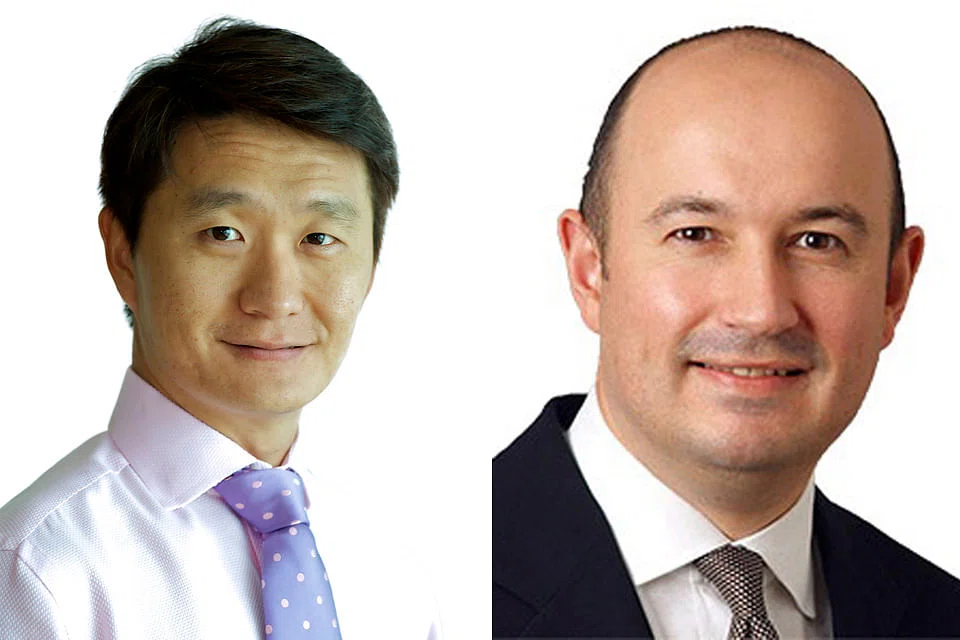
Yu-En Ong, NRF's head of Singapore, tells The Business Times that these days, one in two to three deals is linked to sustainability.
"Whether it's refinancing or whether it's a new transaction, there is always some kind of sustainability angle in it, whichever industry we're looking at," Ong says.
Nick Merritt, NRF's partner who focuses on sustainability and sustainable finance, shares that when he first arrived in Asia more than two decades ago, energy and infrastructure deals centred around coal, followed by gas.
"And now, we're on the cusp of major renewables. There's been quite a bit of renewables in China and India over the last decade or so. But the real scale is now coming with the development of the potential of offshore wind in Asia," he says.
The offshore wind market in Asia is poised to see a rapid expansion over the next five to 10 years, particularly in the more advanced economies of Taiwan, Japan and South Korea, as governments face increasing pressure to focus on climate change and hit their net-zero emissions targets.
Taiwan, the first in the region to act on a commercial scale, is expecting 10.5 gigawatt (GW) in new installations. South Korea is targeting an offshore wind capacity of 12 GW, a sharp jump from 124.5 megawatt (MW) today. Japan aims to deploy 10 GW of offshore wind capacity by 2030 and 30-45 GW by 2040 as part of its target to reach net-zero emissions by 2050. With its 7,600 km-long coastline, India too is seeking investments on this front. It has set a target of 5 GW of offshore wind installations by 2022 and 30 GW by 2030.
Within Asean, Vietnam has the most ambitious wind power development plan. It has a target of 11,800 MW of wind power capacity by 2025. This is about four times that of Thailand (3,000 MW) by 2036, and five times that of the Philippines (2,378 MW) by 2030.
These present opportunities for investors, sponsors, the financial community and others to play a key role in the development of Asia's nascent offshore wind energy sector.
Merritt says: "The scale of offshore wind projects is significantly different to onshore renewables. We were telling our junior lawyers who are doing energy infrastructure that the next 25 years is going to be about offshore wind across Asia and the energy transition."
NRF's team in Europe has been recognised for its work advising on the world's largest offshore wind farm when completed in 2026 - the Dogger Bank offshore wind farm.
Apart from offshore wind farms, plenty of work is being generated from the transition to electric vehicles (EVs). These range from capital-intensive EV-related infrastructure such as charging stations, to mega investment projects in Indonesia - home to the world's largest nickel reserves - to process nickel for batteries used in EVs. South Korea's LG Energy Solution (LGES) and Hyundai Motor Group started construction on a US$1.1 billion EV battery cell plant in Indonesia - the country's first - last year. At least seven more projects are in the pipeline, according to the Center for Strategic and International Studies.
Many of the investments are driven by companies including battery makers like LG Energy Solution and China's CTL as well as EV car makers like Tesla keen on cementing their grip on nickel supply.
Like Singapore, NRF, while not major emitters of carbon themselves, sees itself playing a key role as "agents of change" in the green shift.
Merritt says: "As the boards of our clients develop strategies of transition, almost every action they need to take requires transactional advice or represents legal risk.
"We can guide our clients and help accelerate the transition, not just in traditional areas like renewable power, but in developing reporting frameworks, improving governance, aligning executive incentives with real outcomes and developing new products, like what we did in Singapore with Hyundai Motor Group Innovation Center in Singapore (HMGICS) in developing their 'Battery as a Service' for their new EV rollout domestically."
NRF is the sole legal adviser to HMGICS, a testbed for an intelligent manufacturing platform and a small-scale EV production facility which will produce up to 30,000 vehicles a year. It has a mandate to provide legal advice on all aspects of its development including construction, procurement, financing, mergers & acquisitions, disputes, data protection, technology, insurance, real estate and employment. Merritt and associate Michael Kim are leading the Singapore team advising HMGICS.
"I see a lot of similarities between our ambitions and that of Singapore in being a facilitator and an aggregator of capital and skill sets to help support the rapid transition in those markets where it really will make a difference," Merritt says.
The lawyer, with almost three decades of experience, reckons the biggest change in corporate law has been the need for companies to report non-financial matters over the past decade.
"In the same way as companies stand behind their financial statements today that are audited and independently verified, so in the future, they're going to have to stand behind all of these other ESG metrics," Merritt says.
Greenwashing remains a real risk that must be addressed. He believes new reporting frameworks, new taxonomies for consistent reporting and initiatives such as the Monetary Authority of Singapore's "Project Greenprint", are blazing the trail to a more transparent and trusted ESG ecosystem.