New plan, rethink for Jurong Island
With mega-projects of the past few years completed, new growth will come from speciality chemicals, where projects are smaller but more knowledge-intensive
Singapore
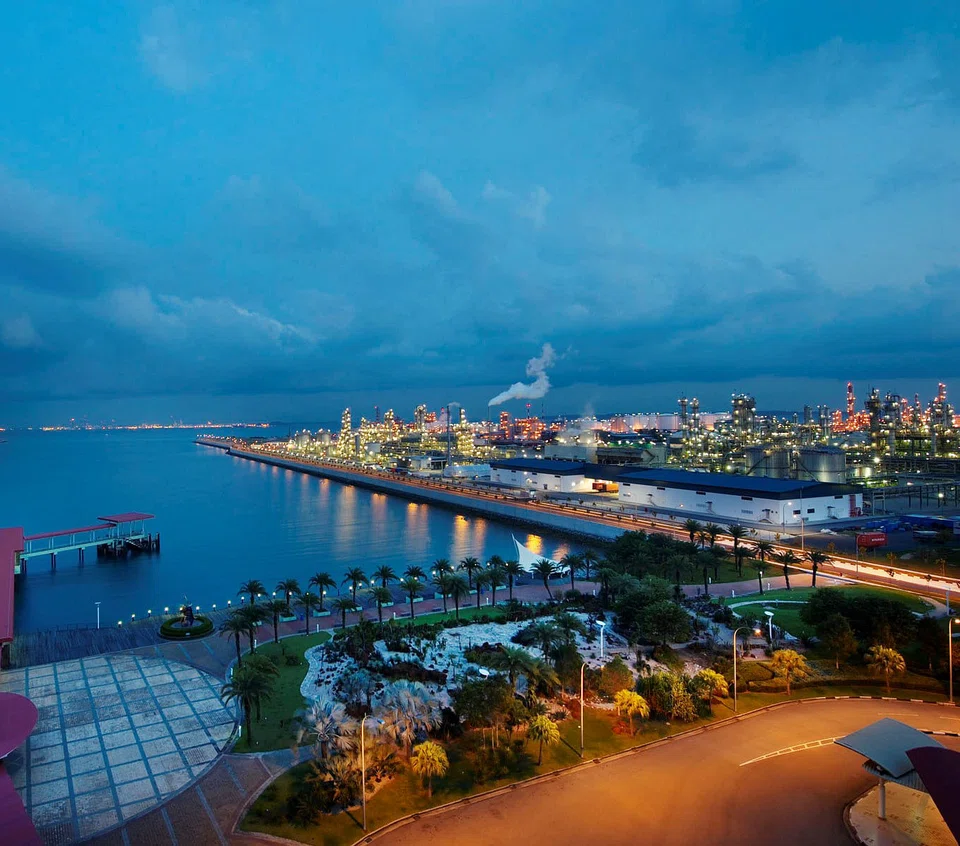
JURONG Island version 2.0 has not yet run its full course, but the government is already looking at the next phase.
This comes as investments in speciality chemical investments pick up on the island, amid a more competitive global petrochemicals sector.
"We will need a new phase of Jurong Island 2.0 at some stage... This industry has changed. The competitive dynamics have changed. So we need to rethink, now that we have done all of this, how can we again relook at some of these competitive issues," Eugene Leong, director of energy and chemicals at the Economic Development Board (EDB) told The Business Times.
Jurong Island version 2.0 - launched in 2010 - looked into optimising the use of energy, land and water on the island, as well as "plug-and-play" infrastructure such as feedstocks, logistics and utilities.
The next phase would include creating greater synergies in terms of petrochemicals feedstock, now that Singapore has a critical mass of production capability with the new giant crackers by ExxonMobil and Shell. Singapore has five crackers altogether, capable of producing 4 million tonnes of ethylene a year.
Citing a recent 100,000 tonne-a-year butadiene plant expansion by the Petrochemical Corporation of Singapore (PCS) that would not have been possible without the presence of the new crackers, Mr Leong said: "There are actually a lot of streams within the industry we can look at optimising. On its own, from one plant, it may be insufficient, but when we pull it together we can actually attract a customer."
A Jurong Island version 3.0 is, however, still in the planning stages, he noted.
The island is home to more than 100 companies with cumulative investments of over S$47 billion. Of this, more than S$10 billion were made in the past two years alone.
With the mega-projects of the past few years now completed, the next phase of investments will be in speciality chemicals, where projects are smaller but more knowledge-intensive, said Mr Leong. Companies in this space are typically one of a few in the world with such expertise. "They are not mega-plants but they create a lot of value... As a result, they make us more resilient. With the knowhow-intensive portion, we are actually much more shielded."
Singapore's continual move up the value chain - from first refining, to petrochemicals and now to speciality chemicals - is seen by petrochemicals experts as the right step forward.
Speciality chemicals require intellectual property protection, and offer higher profit margins. "Because intellectual property can be safeguarded in Singapore, companies will be more willing to set up here," said Vince Sinclair, Wood Mackenzie's Asia head of chemicals research.
With most of the expansion in Asia and Middle East driven by national oil companies, Singapore also has another advantage in having new developments anchored by private sector players.
"Singapore is different in that the hand of the state is there in enabling things, but not directly involved," Mr Sinclair said. "It probably makes it more efficient."
The Free Trade Agreements that Singapore enjoys with Asean, China and India also significantly increases the competitiveness of Singaporean producers, said Utpal Sheth, director of polymers at IHS Chemical Insight.
According to the EDB, the Asian speciality chemicals market is expected to reach S$360 billion by next year. It is, however, an extremely fragmented market with over 100 sub-speciality sectors.
Singapore is focusing on sectors that will allow it to plug into future key mega-trends: the automotive market, agro-chemicals, and plant-based chemicals.
Already, it has gained traction in automotive-related chemicals, especially in lubricants and synthetic rubber. One-fifth of all investments made in Jurong Island in the past two years, or S$2 billion, was in speciality chemicals, mainly in lubricants and synthetic rubber, as well as ethylene-oxide based and surfactant projects that feed consumer care sectors, said Mr Leong.
The other two areas are newer. Agro-chemicals are used to increase the efficiency of farms, for which there remains many opportunities in Asia, while plant-based chemicals are to tap on rising demand for natural products, Mr Leong added.
In his view, there is still more potential for Singapore to exploit within the speciality chemicals space.
"We have started with some megatrends but the possibilities are fairly wide. As new megatrends evolve there is no reason why we can't find an opportunity there."
While the authorities could not reveal the percentage of land that remains available for take-up on Jurong Island, JTC Corporation's Biomedical and Chemicals Cluster director Dennis Tan said new land and space will be created through reclamation and underground initiatives. Reclamation works continue at Chawan, Merbau and the western extension of the island, to meet industry needs.
The latest government land use plan, released last year, provides for further reclamation beyond 2030, that could more than double Pulau Bukom and Pulau Semakua - two islands to the south of Jurong Island which already host refineries and plants, and the creation of a new island between Jurong Island and Pulau Bukom too.
More from this news package on Jurong Island:
TRENDING NOW
He built the Vingroup empire. Now South-east Asia’s richest man is handing some key roles to his sons
Despite the de-dollarisation debate, demand for dollar liquidity in Asia is growing
Can a first-time homebuyer couple earning S$18,000 a month afford a new EC unit?
Asia needs new energy security architecture