

Nickel investments may reward investors with solid returns amid EV boom

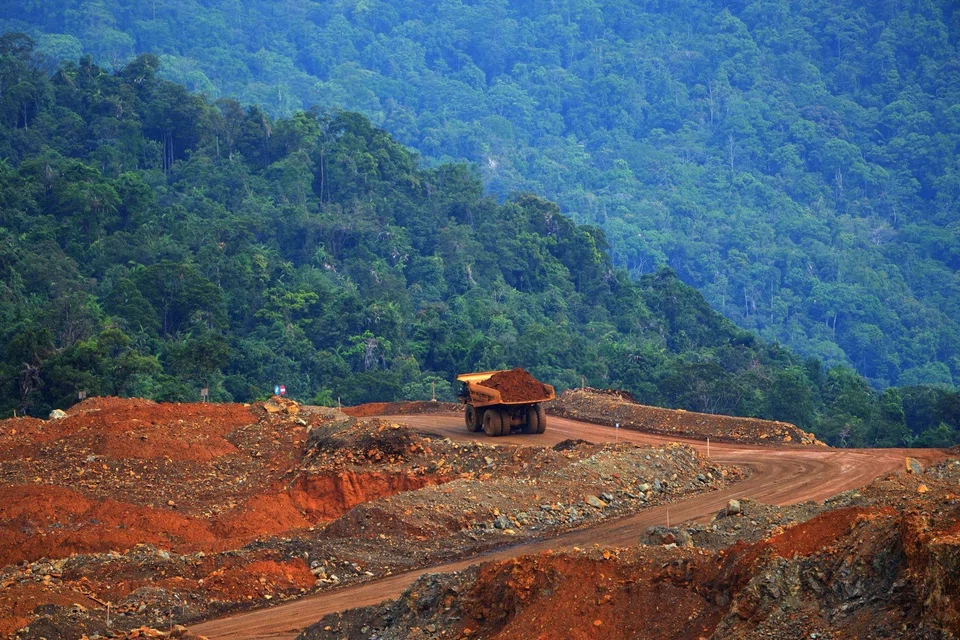
GOLD prices are rising rapidly as investors pile into this safe haven amid banking industry woes, but nickel may be the more interesting precious metal to watch – thanks to the booming electric vehicle (EV) industry.
Nickel is found in a variety of products including coins, wires and gas turbines. For the EV sector, nickel is an essential component in lithium ion batteries.
“Nickel has better demand dynamics than some other metals, given its usage in EV batteries and the growth of the EV market,” said Robeco’s head of Asia-Pacific equities Joshua Crabb.
Prices of precious metals such as gold and silver are typically driven more by more macroeconomic factors such as inflation, deflation and geopolitics, said Crabb. Nickel prices, however, depend more on industrial demand and the EV battery market.
Crabb warned, however, that nickel’s “chemistry” is constantly adjusting to optimise the cost per output equation, based on prices and technological changes. “This can act as a price cap,” he said.
Year to date, the commodity’s futures are down about 22 per cent due to the easing of both supply tightness and macroeconomic concerns. This is despite higher demand for the metal as well as economic sanctions on Russia.
A Bloomberg report last year put Russian production capacity of Class 1 nickel – the grade suitable for making batteries – at 17 per cent.
Some market watchers have revised their forecasts for nickel prices upwards. Fitch Solutions analysts expect nickel to average US$30,000 per tonne this year, up from a forecast of US$22,500 per tonne, citing demand from mainland China as well the peaking of the US dollar.
“After being driven up to record highs following the Russian invasion of Ukraine in late February 2022, over fears of reduced exports from Russia, prices fell back to around their pre-invasion levels over China’s strict Covid-19 strategy,” the analysts said.
“Prices have now started recovering with strong investor sentiment towards the metals complex, with the easing of China’s Covid-related restrictions and announcements of stimulus measures to boost domestic demand and to aid the struggling real estate sector.”
With a strong long-term demand outlook from global EV manufacturing, the analysts added that they are expecting yearly averages to remain at US$25,000 per tonne and above till 2031.
“Like most commodities, supply and demand are the key long-term drivers of nickel. Supply is relatively defined in the short to medium term, as is the cost curve for production,” said Robeco’s Crabb.
Jason Sappor, senior analyst for metals and mining research at S&P Global Commodity Insights, said in a report that he expects Indonesian primary nickel supply growth to cause the global primary nickel market surplus to expand from an estimated 125,000 tonnes in 2022 to 165,000 tonnes this year.
In S&P’s monthly nickel report for February, Sappor downgraded his average nickel price forecast to US$26,838 per tonne from US$27,518 per tonne previously.
“This is still 4.8 per cent higher than the 2022 average price, on the expectations that a recovery in China’s economy following the removal of its Covid-19 restrictions will lift industrial metals prices as the year progresses,” said Sappor.
For supply, Fitch analysts expect global refined nickel production to rise from an estimate of 2.6 million tonnes in 2023 to 3.6 million tonnes in 2031.
“High prices will encourage firms to ramp up smelting and refining capacity as project economics become increasingly attractive,” said the analysts.
According to Statista, the country with the top nickel mine production in 2022 was Indonesia. Other top producing countries included Russia, the Philippines, Australia, Canada and Brazil.
“Indonesia will emerge as an increasingly important producer and exporter of refined nickel, as domestic and foreign firms rapidly expand the country’s nickel refining capacity,” said Fitch.
Other key producing countries – China, Japan, Canada and Australia – will see steady production growth over the coming years, analysts said.
TRENDING NOW

Looking beyond looming CEO succession, should UOB potentially pursue a transformative merger?

Once staunchly pro-China, Malaysian Chinese businesses are now distancing themselves from Beijing

Family offices ‘kept captive’ by relationship managers turn to independent advisers, direct deals
MAS holds monetary policy settings, pausing after two straight tightenings

