

Oil climbs over US$1 a barrel on Opec action, Ukraine attack
Concerns about a possible conflict between the United States and Venezuela run far behind the focus on the war in Ukraine
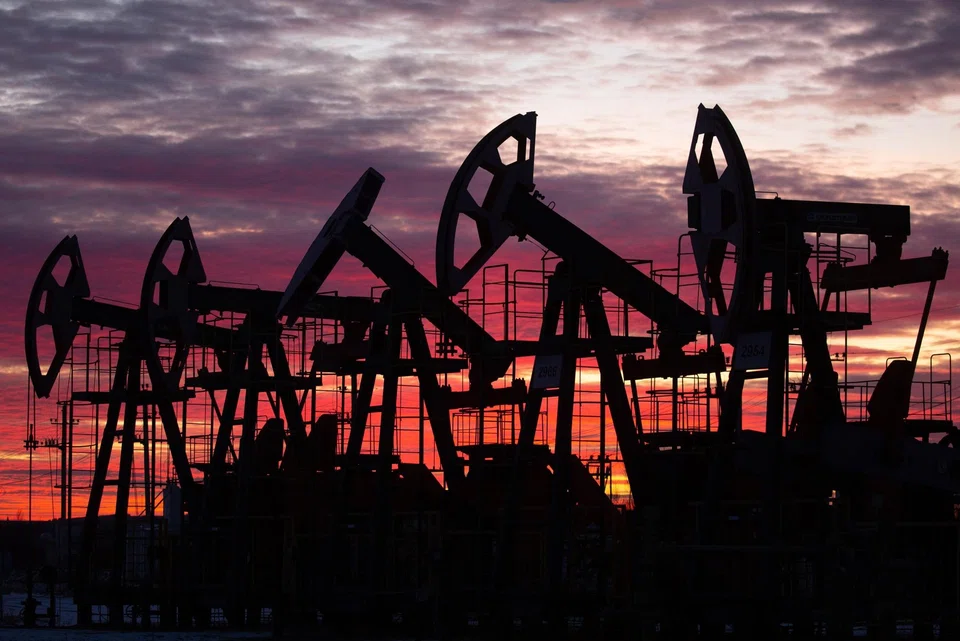
[HOUSTON] Oil prices rose more than 1 per cent on Monday (Dec 1) following drone attacks by Ukraine, the closure of Venezuelan airspace by the United States, and Organization of the Petroleum Exporting Countries’ (Opec) decision to leave output levels unchanged in the first quarter of 2026.
Brent crude futures settled at US$63.17 a barrel, up 79 US cents, or 1.27 per cent. US West Texas Intermediate (WTI) crude finished at US$59.32 a barrel, up 77 US cents, or 1.32 per cent.
“The market is very nervous at the moment because of the possible loss of Russian crude supply,” said John Kilduff, partner with Again Capital. “They are watching very closely to see if this Russia-Ukraine deal is going to go off the rails.”
Concerns about a possible conflict between the United States and Venezuela run far behind the focus on the war in Ukraine.
“I don’t think anyone is too worried about the loss of supply from Venezuela,” Kilduff said.
Phil Flynn, senior analyst with Price Futures Group, said Ukraine’s attacks, combined with Opec production commitments, drove up prices in morning trade in New York.
“Ukrainian drone attacks on Russian shadow fleet, as well as a commitment by Opec to maintain current production levels, has the market in an optimistic state,” Flynn wrote in a morning note. “This comes as global oil demand continues to rise despite the negativity that we continue to hear on the demand side of the equation.”
The Caspian Pipeline Consortium (CPC), which carries 1 per cent of global oil, said on Saturday that one of the three mooring points at its Novorossiysk terminal had been damaged, halting operations. But Chevron, a CPC shareholder, said late on Sunday that loadings were continuing at Novorossiysk. Usually, two moorings are engaged in loadings, while one is used as a backup.
The attacks on the CPC export terminal drove oil prices higher, UBS analyst Giovanni Staunovo said.
They came as Ukraine stepped up its military operations in the Black Sea and hit two oil tankers headed for Novorossiysk. Meanwhile, the Organization of the Petroleum Exporting Countries and its allies (Opec+) initially agreed on a pause in early November, slowing a push to regain market share with looming fears of a supply glut.
LSEG senior analyst Anh Pham said the market was reacting positively to the news.
“For some time, the narrative has centred on an oil glut, so Opec+’s decision to maintain its production target provided some relief and helped stabilise expectations for supply growth in the coming months.”
Brent and WTI crude futures settled lower on Friday for the fourth straight month, their longest losing streak since 2023, as expectations for higher global supply weighed on prices.
On Saturday, US President Donald Trump said “the airspace above and surrounding Venezuela” should be considered closed, sparking fresh uncertainty in the oil market, as the South American nation is a major producer. Trump on Sunday said that he had spoken to Venezuelan President Nicolas Maduro but did not give details. REUTERS
Decoding Asia newsletter: your guide to navigating Asia in a new global order. Sign up here to get Decoding Asia newsletter. Delivered to your inbox. Free.
Share with us your feedback on BT's products and services
TRENDING NOW

Malaysian king buys stake in Singapore-listed mining firm expanding into rare earths

Family offices ‘kept captive’ by relationship managers turn to independent advisers, direct deals

Once staunchly pro-China, Malaysian Chinese businesses are now distancing themselves from Beijing

Could stablecoins be the future of money?

