Oil eases 1%, reversing rally, on profit taking, interest rate worries
 Add BT as a preferred source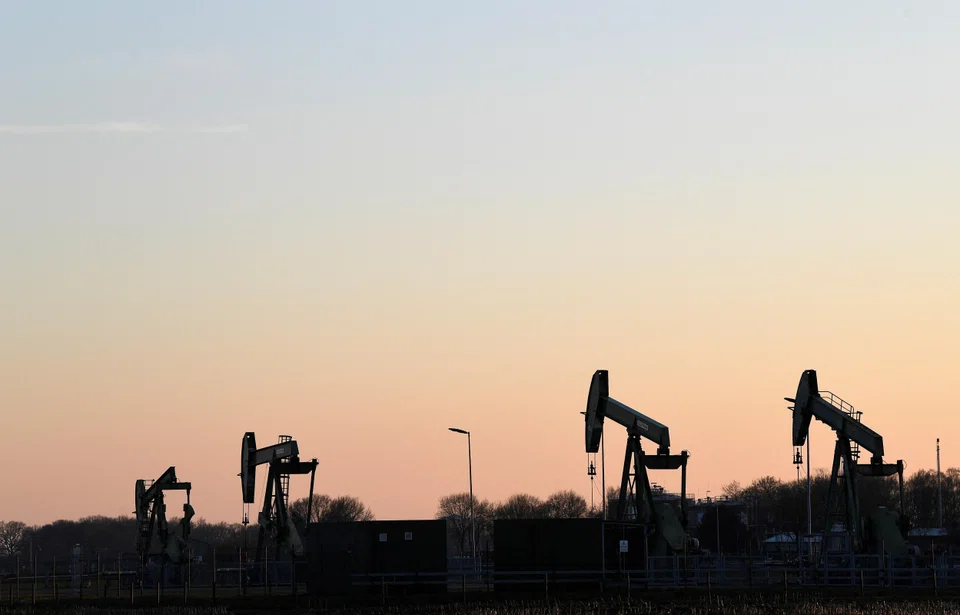
DeeperDive is a beta AI feature. Refer to full articles for the facts.
OIL futures eased about 1 per cent on Thursday, as traders took profits after prices soared to 10-month highs, and some worried that high interest rates may weigh on oil demand.
On its second to last day as the front-month, Brent futures for November delivery fell US$1.17 or 1.2 per cent, to settle at US$95.38 a barrel. Brent November futures expire on Friday.
Brent December futures fell about 1.3 per cent to settle at US$93.10 per barrel.
US West Texas Intermediate crude (WTI) fell US$1.97, or 2.1 per cent, to settle at US$91.71 per barrel.
Earlier, scarce supply and inventory supplies lifted the Brent front-month hit US$97.69, its highest since November 2022. WTI rose to its highest since August 2022 at US$95.03.
“Oil was ripe for a pullback. After coming a few dollars short of the US$100 level, energy traders are quickly locking in profits,” Edward Moya, senior market analyst at data and analytics firm Oanda, said in a note.
Navigate Asia in
a new global order
Get the insights delivered to your inbox.
Some traders worried high oil prices will stoke inflation, encouraging the US Federal Reserve and other central banks to persist with high interest rates.
“Crude is now serving as a catalyst for bearishness ... as investors view high oil prices as reason for the Fed to persist with high rates for longer than originally planned in order to curb inflation,” analysts at energy consulting firm Gelber & Associates said in a note.
The US economy maintained a fairly strong 2.1 per cent pace of growth in the second quarter and appears to have gathered momentum this quarter with a resilient labour market driving strong wage gains.
Growth estimates for the July-September quarter are currently as high as a 4.9 per cent rate. But the fourth quarter could see a sharp slowdown if there is a US government shutdown on Oct 1.
Fed officials are focused on the super core price measure after hiking the benchmark overnight interest rate by 525 basis points since March 2022 to the 5.25 to 5.50 per cent range.
Falling US inventories
The premium of the WTI front-month over the second month held near a 14-month high for a second day. The market structure called backwardation occurs when spot prices are higher than future prices, giving energy firms little incentive to pay to store fuel for future months.
On Wednesday, WTI backwardation soared 48 per cent to US$2.38 a barrel, the highest since the end of July 2022, after government data showed stocks at the Cushing, Oklahoma, storage hub and delivery point for US crude futures, extended their drawdown, also to the lowest since July 2022.
“Cushing storage has shrunk to a historically low level, leading to a further increase in backwardation in the WTI curve,” analysts at Barclays, a bank, said in a note.
“In the absence of a demand shock, it might take a sustained further narrowing of the WTI-Brent spread for a material turnaround in storage level at Cushing to occur,” Barclays said.
Cushing’s levels have slid to near historic lows due to strong refining and export demand, prompting concerns about quality of the remaining oil.
Meanwhile, tight prompt US supplies have also narrowed the premium of Brent over WTI held near a five-month low after falling to US$2.87 per barrel on Wednesday, its lowest since late April.
Falling US crude inventories follow combined cuts of 1.3 million barrels per day to the end of the year by Saudi Arabia and Russia, part of Opec+, the Organization of the Petroleum Exporting Countries (Opec) and allies.
Russia said its ban on fuel exports will remain in place until the domestic market stabilises and noted it has not discussed with Opec+ a possible supply increase to compensate for that fuel export ban. REUTERS
Decoding Asia newsletter: your guide to navigating Asia in a new global order. Sign up here to get Decoding Asia newsletter. Delivered to your inbox. Free.
Share with us your feedback on BT's products and services