Oil eases on signs US operation is loosening Iran’s Strait of Hormuz blockade
Iran launched attacks in the Gulf on May 4 to counter the US move
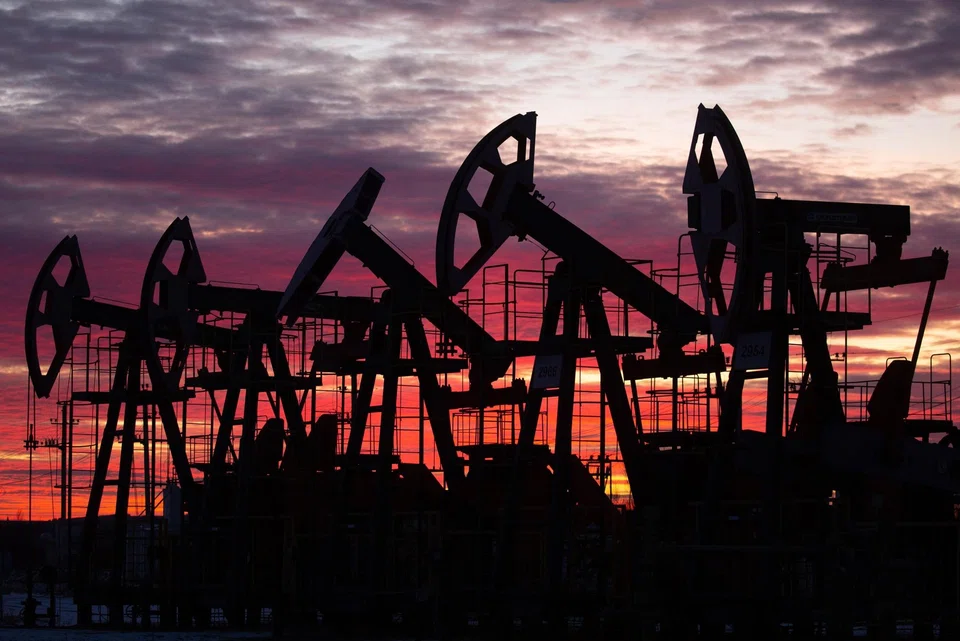
OIL prices eased on Tuesday (May 5) after climbing by as much as 6 per cent in the previous session on signs the US Navy is loosening Iran’s closure of the key Strait of Hormuz waterway, potentially opening up supply from the key Middle East producing area.
The US on Monday launched a new operation aimed at reopening Hormuz to shipping and Maersk said later its Alliance Fairfax, a US-flagged vehicle carrier, exited the Gulf via the strait accompanied by US military assets, easing some immediate supply disruption fears.
Brent oil futures for July fell US$0.51, or 0.5 per cent, to US$113.93 per barrel at 0622 GMT after settling up 5.8 per cent on Monday. US West Texas Intermediate (WTI) crude fell US$1.55, or 1.5 per cent, to US$104.87, after gaining 4.4 per cent in the previous session.
“The successful escorted exit of the Maersk-operated vessel has helped ease some immediate supply disruption fears,” said Tim Waterer, chief market analyst at KCM Trade.
“It shows that limited safe passage is possible under current conditions and helps chip away at some of the worst-case supply disruption fears. However, it’s still very much a one-off event rather than a full reopening,” he said in an e-mail.
Still, Iran launched attacks in the Gulf on Monday to counter the US move as they wrestle for control over the Strait of Hormuz, which connects the Gulf to wider markets and typically carries oil and gas supply equal to about 20 per cent of global demand every day.
Several commercial vessels were reportedly struck in the area, while a key oil port in the United Arab Emirates was set ablaze after an Iranian strike.
Trump’s attempt to use the US Navy to free up shipping is the war’s biggest escalation since a ceasefire was declared four weeks ago. The US is pushing to open Hormuz to ease a massive disruption to global energy supplies since Iran mostly shut the strait after the US and Israel started the war on Feb 28.
On Monday, Chevron chairman and CEO Mike Wirth said physical shortages in oil supply would begin appearing around the world because of the Hormuz closure.
Because of the disruptions, global oil stocks are approaching their lowest level in eight years, Goldman Sachs said on Monday, warning that the speed of depletion was becoming a concern as supplies remained restricted.
“With the world rapidly burning through commercial stockpiles, strategic reserves, and crude held in floating storage, the underlying supply squeeze remains a potent tailwind for oil prices,” IG market analyst Tony Sycamore said in a note. REUTERS
Decoding Asia newsletter: your guide to navigating Asia in a new global order. Sign up here to get Decoding Asia newsletter. Delivered to your inbox. Free.
Share with us your feedback on BT's products and services