

Oil extends weekly fall as glut bigger than thought
Global supply surplus could force prices to as low as US$20 a barrel, says Goldman
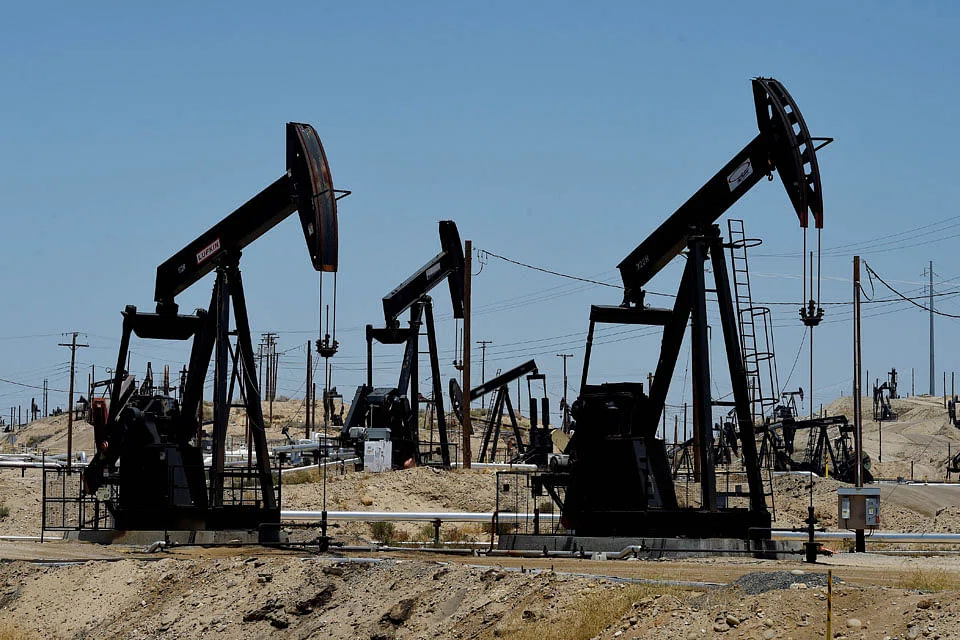
New York
OIL deepened its weekly decline as Goldman Sachs Group Inc said a global supply surplus could force prices to as low as US$20 a barrel.
Futures fell after two weeks of gains. Goldman said the world's oil glut is even bigger than it thought, according to an e-mailed report from the bank on Friday. Crude supplies outside Opec will decline next year by the most in more than two decades as the price rout curbs US shale output, according to the International Energy Agency.
Oil has fluctuated since slumping below US$40 a barrel three weeks ago as concern over slowing growth in China fuelled volatility in global markets. A Senate vote paved the way for US President Barack Obama to ease financial penalties for doing business with Iran, which would allow an increase in the nation's oil exports. US stockpiles continue to rise, even as production slows.
"The news out there is negative," says Michael Hiley, head of over-the-counter energy trading at New York-based LPS Partners. "We are stepping closer to the Iranian deal. Opec is pretty much saying that they are not going to change their production. The market is trying to find a trading range."
West Texas Intermediate for October delivery fell US$1.48, or 3.2 per cent, to US$44.44 a barrel on the New York Mercantile Exchange on Friday morning, down 3.4 per cent this week. The volume of all futures traded was about one per cent above the 100-day average.
Brent for October settlement lost US$1.27, or 2.6 per cent, to US$47.62 a barrel on the London-based ICE Futures Europe exchange, down 3.9 per cent this week. The European benchmark crude traded at a premium of US$3.18 to WTI.
While it's not Goldman Sachs' base-case scenario, a failure to reduce production fast enough may require Brent prices to fall near US$20 a barrel to clear the world's oil oversupply, the bank said in the report.
"People pay attention to what Goldman says," said Phil Flynn, senior market analyst at the Price Futures Group in Chicago.
The bank cut 2016 estimates for WTI to US$45 a barrel, from a May projection of US$57. It also reduced its 2016 Brent crude prediction to US$49.50 a barrel, from US$62.
"The oil market is even more oversupplied than we had expected and we now forecast this surplus to persist in 2016," Goldman analysts including Damien Courvalin wrote in the report. "We continue to view US shale as the likely near-term source of supply adjustment."
The Paris-based IEA forecast that production outside the Organization of Petroleum Exporting Countries will fall by 500,000 barrels a day to 57.7 million in 2016. While fuel demand this year will be the strongest since 2010, record-high oil inventories in developed nations won't start to diminish until the second half of 2016, and the revival of Iranian exports with the removal of sanctions may swell supplies further, it said.
US crude inventories climbed a second week to keep supplies about 100 million barrels above the five-year seasonal average, according to the Energy Information Administration.
Crude stockpiles in the US, the world's biggest oil consumer, expanded by 2.57 million barrels to 458 million in the week through Sept 4, according to the EIA. The nation's output slipped for a fifth week to 9.14 million barrels a day, the EIA data showed.
Iran, Opec's fourth-biggest member, has vowed to boost output to regain market share once sanctions are lifted. Opec and other oil-producing nations will respond to a request by Venezuela that the supplier group meet to try to stabilise crude prices, Qatar's Energy and Industry Minister Mohammed Al Sada said on Thursday. Bloomberg






