

Oil falls over 5% on Russia-Ukraine talk hopes, China lockdowns
 Add BT as a preferred source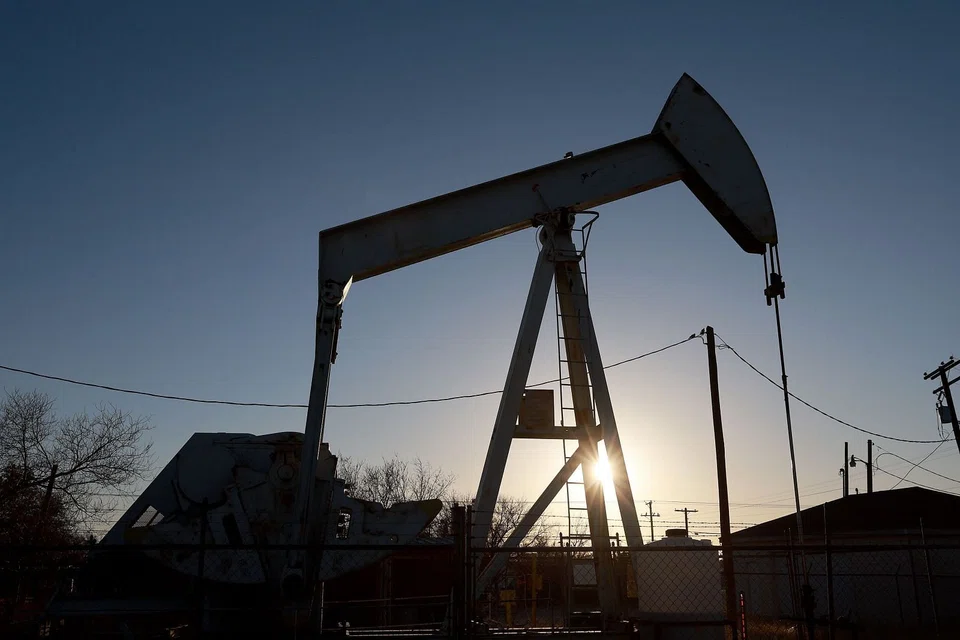
DeeperDive is a beta AI feature. Refer to full articles for the facts.
[NEW YORK] Oil prices fell more than 5 per cent on Monday to the lowest in nearly two weeks amid hopes for progress toward a diplomatic end to Russia's invasion of Ukraine - a development that would boost global supplies - while a pandemic-linked travel ban in China cast doubt on demand.
Brent futures fell US$5.77, or 5.1 per cent, to settle at US$106.90 a barrel, while US West Texas Intermediate (WTI) crude fell US$6.32, or 5.8 per cent, to settle at US$103.01.
That was the lowest close for WTI since Feb 28 and the lowest for Brent since March 1. Both benchmarks have surged since Russia's Feb 24 invasion of Ukraine and are up roughly 36 per cent so far this year.
"Oil prices are reflecting a bearish sentiment drawn from expectations of positive developments in the latest round of Russia-Ukraine negotiations," said Kaushal Ramesh, an analyst at energy research provider Rystad Energy.
Russian and Ukrainian delegations held a fourth round of talks on Monday - by video link rather than in person in neighboring Belarus as in the past - but no new progress was announced.
Ukraine said it held the talks with Russia on a ceasefire, immediate withdrawal of troops and security guarantees despite the fatal shelling of a residential building in Kyiv.
Navigate Asia in
a new global order
Get the insights delivered to your inbox.
Brent and WTI have logged their most volatile 30 days since June 2020.
Analysts at energy consulting group EBW Analytics noted that "a renewed Covid outbreak in China is leading to rising shutdowns as Omicron spreads rapidly," which could reduce global energy demand since China is the world's largest importer of oil, liquefied natural gas and coal.
A northeastern Chinese province imposed a rare travel ban due to an Omicron outbreak.
Russia's output of oil and gas condensate rose to 11.12 million barrels per day (bpd) so far in March, two sources familiar with production data told Reuters, despite sanctions.
The United States has banned Russian oil imports and Britain said it would phase them out by the end of 2022. Russia is the world's top exporter of crude and oil products combined, shipping about 7 million bpd or 7 per cent of global supplies.
A senior minister said British Prime Minister Boris Johnson was trying to persuade Saudi Arabia to boost oil output, while International Energy Agency (IEA) chief Fatih Birol urged oil-producing countries to pump more.
European Union member states have agreed on a fourth package of sanctions against Russia, the office of the French EU presidency wrote on Twitter. It did not include Russian energy exports.
"Energy traders quickly abandoned the crude trade after the next round of EU sanctions spared oil from Russian companies," said Edward Moya, senior market analyst at data and analytics firm Oanda.
India indicated it could release more oil from national stocks.
Indian officials also said New Delhi was considering a Russian offer to buy crude and other commodities at discounted prices via a rupee-rouble transaction.
The United States needs to make a decision to wrap up a deal to salvage Iran's 2015 nuclear accord with world powers, the Iranian foreign ministry spokesperson said. Some feared talks might collapse, and 49 of 50 Republican US senators said they would not back a new nuclear deal.
Analysts said an agreement with Iran could add another 1 million bpd of oil supply to the market, but noted that would not be enough to offset declining supply from Russia.
The US Federal Reserve is expected to start raising interest rates this week, which should boost the dollar. This could push down oil prices by making dollar-denominated oil more expensive for holders of foreign currencies.
Crude stockpiles at the Cushing storage hub in Oklahoma rose last week for the first time this year, traders said, referring to a report from data provider Genscape. US government data has shown stockpiles there falling for nine weeks in a row. REUTERS
Decoding Asia newsletter: your guide to navigating Asia in a new global order. Sign up here to get Decoding Asia newsletter. Delivered to your inbox. Free.
Share with us your feedback on BT's products and services
TRENDING NOW

Shelving S$5 billion office redevelopment plan proved ‘wise’ as geopolitical risks mount: OCBC chairman
OCBC is said to emerge as lead bidder for HSBC Indonesia assets
Middle East-linked energy supply shocks put Asean Power Grid back in focus

Eurokars Group introduces rental car franchises Enterprise Rent-A-Car, National Car Rental, and Alamo to Singapore

