

Oil edges lower amid resumption of strait shipments even as vessel hit near Oman
Brent and WTI crude are both set for losses of close to 7% this week
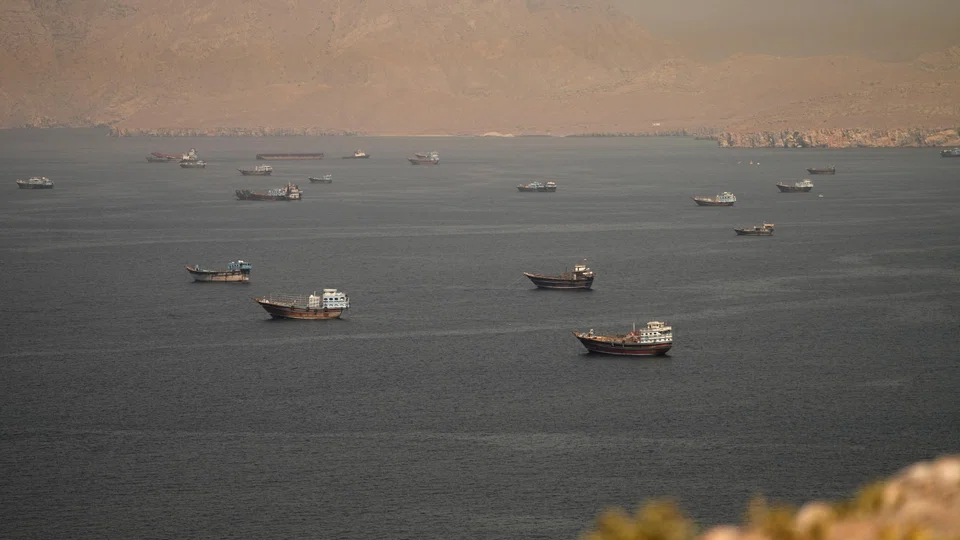
[BEIJING] Oil prices fell on Friday (Jun 26) morning and are heading for steep weekly losses amid easing supply concerns as more stranded oil tankers exited the Strait of Hormuz, even though a cargo vessel was hit near Oman on Thursday.
Brent crude futures fell 19 US cents, or 0.25 per cent, to US$75.07 a barrel as at 8.55 Singapore time, while US West Texas Intermediate (WTI) fell 13 US cents, or 0.18 per cent, to US$71.79 a barrel.
Both benchmark contracts jumped more than 2 per cent on Thursday after a cargo vessel was hit by an unknown projectile near Oman, prompting the UN’s shipping agency to suspend its voluntary evacuation scheme.
Two US officials told Reuters that Iran fired on the cargo ship as it attempted to pass through the strait. Iranian authorities said that the security of vessels passing outside the designated Hormuz routes is not guaranteed.
“With the geopolitical risk premium once again creeping back into prices, markets will be watching intently to see if tanker traffic resumes or if these latest hurdles force producers to tap the brakes on planned production increases,” said IG analyst Tony Sycamore.
Brent and WTI crude are both set for losses of close to 7 per cent this week.
Data showed on Thursday that crude shipments through the Strait of Hormuz rose this week to their highest level since the US-Israeli conflict with Iran began in February after a ceasefire deal reopened the waterway, while concerns about how long the strait would stay open also boosted trade.
However, overall traffic remain a fraction of the daily average of 125 ships passing through the strait before the Feb 28 conflict began.
Meanwhile, earthquakes in Venezuela that happened on Thursday also raised supply concerns.

Preliminary assessments by workers of Venezuela’s vast oil, gas and refining infrastructure so far showed limited damage, as most of the country’s largest output regions, refineries, pipelines and terminals are far from the hardest-hit areas.
Still, a lack of power has cast doubt on whether oil output can be sustained at its pre-earthquake level of close to 1.2 million barrels per day, sources said. REUTERS
Decoding Asia newsletter: your guide to navigating Asia in a new global order. Sign up here to get Decoding Asia newsletter. Delivered to your inbox. Free.
Share with us your feedback on BT's products and services
TRENDING NOW

DBS, OCBC, UOB rout lops billions off STI as inflation, rate concerns spook investors

Grab CEO’s wife Chloe Tong on life with Anthony Tan and finding her purpose

OCBC sheds S$8 billion in value as shares close nearly 6% down; analysts cautious on banks

Deal between tycoon friends sparks scrutiny of Philippine power sector

