Oil surges above US$100 again as Iraq halts ports, IEA release fails to quell rally
The IEA has recommended the release of 400 million barrels of oil, the largest such move in its history
 Add BT as a preferred source
DeeperDive is a beta AI feature. Refer to full articles for the facts.
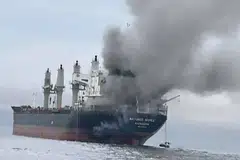
[NEW YORK] Brent crude surged above US$100 a barrel again on Thursday (Mar12) as Iraq stopped operations at its oil ports after two tankers were targeted, overshadowing a record release of emergency reserves from wealthy nations.
The global benchmark soared as much as 10.5% to $101.59 a barrel, while West Texas Intermediate surged near $96. The ships were targeted while in the loading area, the director of General Company for Ports Iraq told state-run Iraqi News agency.
The attack underscores the widespread risks to shipping across the region, not just in the Strait of Hormuz, which remains effectively closed.
Iraq was one of the first Persian Gulf majors to start reducing oil production after the near-closure of Hormuz, followed by Kuwait and Saudi Arabia.
The cuts have forced forced the International Energy Agency to act with a co-ordinated release of 400 million barrels — a historic drawdown that is significantly higher than the volume that followed Russia’s invasion of Ukraine in 2022.
The US announced it plans to release 172 million barrels as part of the effort by nations around the world to cool prices.
Navigate Asia in
a new global order
Get the insights delivered to your inbox.
Global consumption of crude is slightly more than 100 million barrels a day and Gulf producers have had to reduce roughly 6 per cent of that so far. Cuts from the Middle East could climb further.
“This is what I was concerned about with the IEA release — completely ignored, and now prices are higher,” said Darrell Fletcher, managing director for commodities at Bannockburn Capital Markets. “It may have sent the wrong signal. What do they know that we don’t?”
The near-closure of Hormuz, through which a fifth of global oil typically flows, has driven up energy prices of crude, natural gas and products such as diesel, raising concerns about an inflation crisis.
SEE ALSO



“With no end in sight to hostilities, shut-ins rising on a daily basis and the strait effectively shut, we remain of the view that Brent is set to move into a new higher US$90 to US$110 range through next week,” said Robert Rennie, head of commodity research at Westpac Banking Corp.
Oil rose on Wednesday on escalating rhetoric.
Iran told regional intermediaries that any ceasefire would require the US to guarantee that neither it nor Israel would strike the country in the future. Washington is unlikely to accept those terms, further dimming expectations that the war will end soon.
In a speech on Wednesday in Kentucky, President Donald Trump repeated his suggestion that the war would end soon, though also suggested the US would stay as long as it takes to finish its objectives. “We don’t want to leave early, right?” he told the crowd. BLOOMBERG
Decoding Asia newsletter: your guide to navigating Asia in a new global order. Sign up here to get Decoding Asia newsletter. Delivered to your inbox. Free.
Share with us your feedback on BT's products and services