

Oil rises over 3% as US and Iran resume military attacks
American forces strike two Iranian launchers on Larak Island; Teheran has reportedly retaliated against two US air bases in Jordan
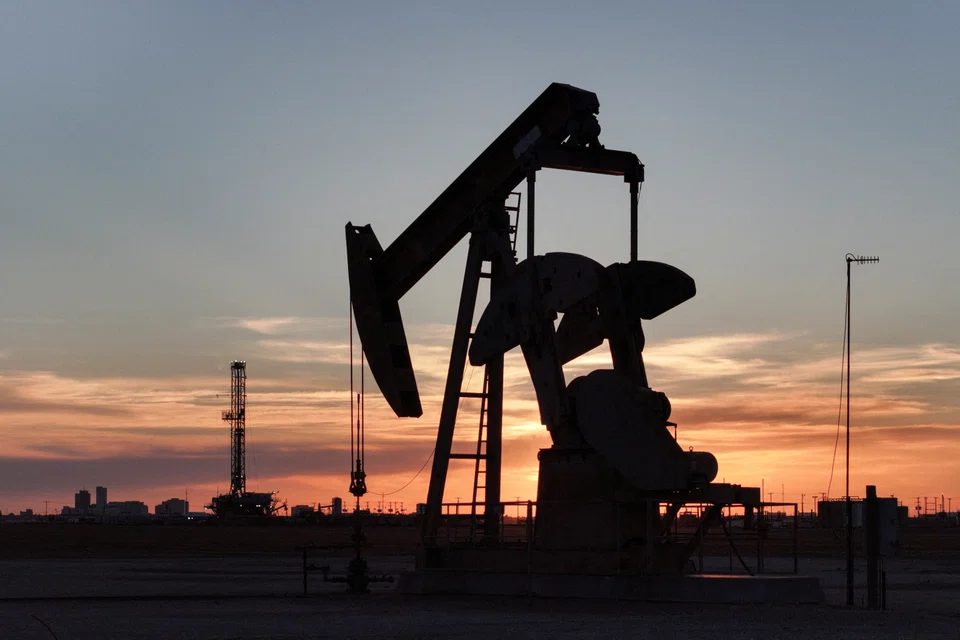
[LONDON] Oil prices rose more than 3 per cent on Monday (Aug 31) after the US attacked an Iranian island in the Strait of Hormuz and Teheran said that it had retaliated, as their conflict extended into its sixth month.
Brent crude futures were up US$2.87, or 3.26 per cent, to US$90.97 a barrel at 1120 GMT, while US West Texas Intermediate (WTI) crude was up US$2.91, or 3.49 per cent, to US$86.31.
US forces struck two launchers on Iran’s Larak Island in the Strait of Hormuz on Sunday, the first known American strikes on the country since late July.
In response, Iran attacked two US air bases in Jordan, Iranian media reported on Monday, citing Iran’s Revolutionary Guards.
“Renewed military strikes in the Middle East and concerns of further oil supply disruptions have lifted oil prices,” said UBS analyst Giovanni Staunovo, adding that markets will focus on whether the situation de-escalates or not.
US President Donald Trump said in a social media post on Sunday that Iran’s energy hub of Kharg Island was being “blown to smithereens”, but there was no evidence the island was under attack.
The post, which included an AI-generated video, provided no further details. Iran denied any attack on the island and said that oil operations were continuing.
Efforts to negotiate an end to the conflict remain stalled as mediators seek to reopen the Strait of Hormuz, through which a fifth of global oil supplies passed before the war began at the end of February.
The strong market reaction on Monday reflected in part thin trading volumes due to a UK public holiday, said Saxo Bank analyst Ole Hansen.
Shipping data showed the number of visible commodity vessels transiting the strait over the weekend fell to five a day, highlighting caution among operators concerned about attacks on shipping.
The United Kingdom Maritime Trade Operations agency said on Sunday that a tanker had been struck by a projectile while entering the strait on Saturday.
US Treasury Secretary Scott Bessent told Reuters on Sunday that the US was likely to impose new secondary sanctions on Iran every week.
Despite Monday’s rally, Brent and WTI were still on track to post modest losses for August after falling more than 4 per cent last week, their first weekly declines in three weeks.
Trump also said on Sunday that oil secured under a deal with Venezuela would be used to replenish the US Strategic Petroleum Reserve, which has fallen to near its lowest level in 44 years. REUTERS
Decoding Asia newsletter: your guide to navigating Asia in a new global order. Sign up here to get Decoding Asia newsletter. Delivered to your inbox. Free.
Share with us your feedback on BT's products and services
TRENDING NOW
Prima to move out of historic Keppel Road flour mill building in 2028

Grab CEO’s wife Chloe Tong on life with Anthony Tan and finding her purpose

OCBC sheds S$8 billion in value as shares close nearly 6% down; analysts cautious on banks

As Asia’s food delivery giants rejig the pie, who will win the market?

