

Oil little changed as Trump visits China
The International Energy Agency said global oil supply would not meet total demand this year
[LONDON] Oil prices were little changed on Wednesday as investors monitored a fragile Middle East ceasefire and awaited a high-stakes summit in Beijing between US President Donald Trump and China’s Xi Jinping.
Brent crude futures were down 30 cents, or 0.3 per cent, to US$107.47 a barrel at 1220 GMT. US West Texas Intermediate futures were down 14 cents, or 0.1 per cent, to US$102.04.
Both benchmarks have hovered around or above US$100 per barrel since the US-Israeli war on Iran began at the end of February after which Teheran effectively shut the vital Strait of Hormuz.
“The market remains highly reactive to every update from the region, meaning sharp swings are likely to persist. Any further escalation or direct threat to supply flows could quickly revive strong upside momentum in both Brent and WTI,” said Priyanka Sachdeva, senior market analyst at Phillip Nova.
Supporting prices, the International Energy Agency said global oil supply would not meet total demand this year as the war wreaks havoc on Middle Eastern production.
“The latest IEA oil market report just showed the magnitude of the disruption with large oil inventory declines over the last two months,” UBS analyst Giovanni Staunovo said.
The IEA also said Russia’s crude oil production declined by 460,000 barrels per day in April from a year earlier to around 8.8 million bpd, as Ukraine ramped up drone attacks on energy targets.
Opec on Wednesday lowered its forecast for world oil demand growth in 2026.
Trump says he does not need China’s help to end war
On Tuesday, oil prices rose more than 3 per cent as hopes for a lasting US-Iran ceasefire faded, dimming prospects for reopening the strait, through which about a fifth of global oil and liquefied natural gas normally flows.
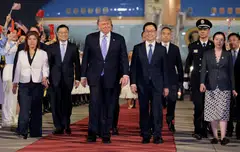
Trump landed in Beijing on Wednesday after saying on Tuesday he did not think he would need China’s help to end the war, even as prospects for a lasting peace deal weakened and Teheran tightened its grip over the strait.
China is the biggest buyer of Iranian oil despite sanctions pressure from the Trump administration. Trump is scheduled to meet Xi on Thursday and Friday.
“The length of the disruption and the scale of the supply loss - already more than 1 billion barrels - means oil prices are likely to remain above US$80 per barrel for the rest of the year,” Eurasia Group said in a client note.
The war has begun to weigh on the US economy, with higher oil prices pushing up fuel costs and economists expecting to see second-round effects in the months ahead.
In April, US consumer prices rose sharply for a second straight month, producing the largest annual increase in inflation in nearly three years and reinforcing expectations the Federal Reserve will keep interest rates steady for a while.
Elevated interest rates raise borrowing costs and can curb oil demand.
US crude inventories fell for a fourth straight week last week, while distillate stocks also declined, according to market sources citing American Petroleum Institute data. Official US stockpile data is due later on Wednesday. REUTERS
Decoding Asia newsletter: your guide to navigating Asia in a new global order. Sign up here to get Decoding Asia newsletter. Delivered to your inbox. Free.
Share with us your feedback on BT's products and services
TRENDING NOW

Government to bring forward raising of retirement age, give employers more financial support to create flexi-load jobs
If Europe goes to war, the fallout will be felt in East Asia

Indonesia stocks suffer worst plunge in nearly 30 years as MSCI proposes standalone status

Vietnam’s northern provinces, not Hanoi or Ho Chi Minh City, are powering near 10% GDP growth

