

Oil pares some losses after shedding most of Russian war gains
 Add BT as a preferred source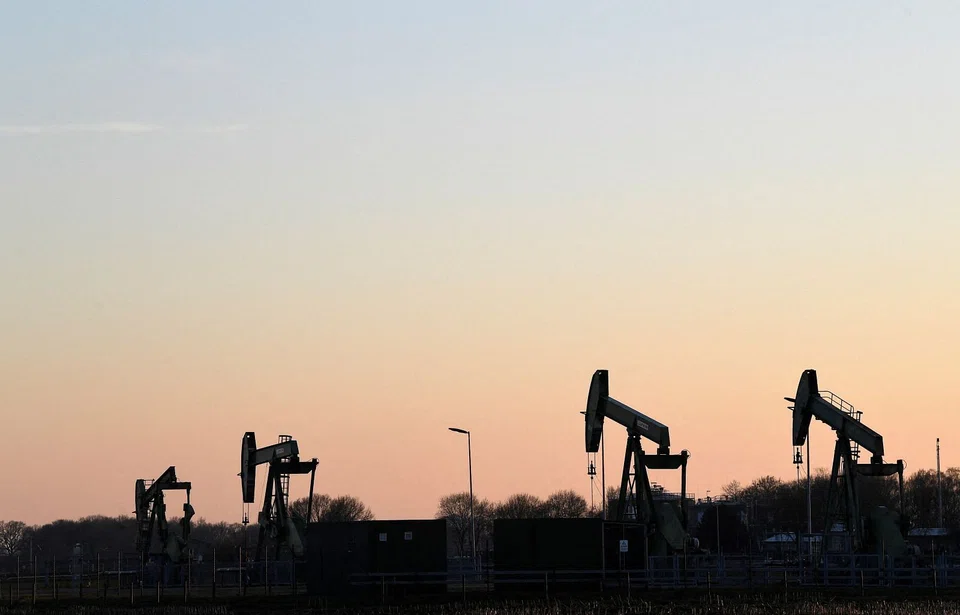
DeeperDive is a beta AI feature. Refer to full articles for the facts.
[LONDON] Oil rose amid a broader market rally, halting an extended slide that had erased most of the gains following Russia's invasion of Ukraine.
Futures in New York climbed to trade near US$98 a barrel and stocks rallied as China vowed policies to boost financial markets and economic growth. That arrested a slump in oil, which had tumbled more than 20 per cent since closing at the highest since 2008 just over a week ago. The International Energy Agency said Wednesday that Russia's oil output may drop by about a quarter next month.
"The dominant feature in this market is volatility," said John Driscoll, a Singapore-based chief strategist at JTD Energy Services. "It's not really fundamentals at all, it's the geopolitics, the hysteria and the fear. This market is likely to rebound, but maybe not as aggressively."
Oil has experienced one of its most tumultuous trading periods ever as rapid developments around the war in Ukraine and the ensuing sanctions drove wild price fluctuations that pushed volatility to historic levels. The conflict is raging on despite efforts for a cease-fire, while the market keeps a keen eye on the worst coronavirus outbreak in China since the pandemic began.
Russia's invasion of Ukraine has roiled global commodity markets, driving up the prices of everything from fuels to metals and grains. Opec took an unusual step in acknowledging that the war threatens to intensify the surge in global inflation in its monthly report on Tuesday.
US President Joe Biden will travel to Brussels next week to meet with Nato allies. Russian President Vladimir Putin told European Council President Charles Michel that Ukraine "is not showing a serious attitude toward finding mutually acceptable solutions" in talks on ending the fighting, the Kremlin said.
Navigate Asia in
a new global order
Get the insights delivered to your inbox.
Russian Foreign Minister Sergei Lavrov said sanctions on his country won't affect the Iranian nuclear deal, sparking optimism a deal could be reached that would allow the resumption of official oil flows from the Opec producer.
Since Wuhan two years ago, China has had relative success in minimising disruption by bringing virus cases quickly under control. Now, the geographic spread of infections and the higher transmissibility of Omicron is challenging its Covid Zero strategy.
The Federal Reserve, meanwhile, is expected to start tightening monetary policy on Wednesday, adding to the bearish sentiment.
Separately, the American Petroleum Institute reported US crude stockpiles rose by 3.75 million barrels last week, while Cushing inventories climbed by 2.3 million barrels, according to people familiar with the figures. The Energy Information Administration will report official data on Wednesday. BLOOMBERG
Decoding Asia newsletter: your guide to navigating Asia in a new global order. Sign up here to get Decoding Asia newsletter. Delivered to your inbox. Free.
Copyright SPH Media. All rights reserved.
TRENDING NOW

StarHub hands Ensign InfoSecurity control back to Temasek in S$115 million deal, books S$200 million gain
Singaporeans can now buy record amount of yen per Singdollar

Air India asks Tata, Singapore Airlines for funds after US$2.4 billion loss

Keppel DC Reit posts 13.2% higher Q1 DPU of S$0.02833 on strong portfolio performance

