Oil prices climb 3% as market awaits US-Iran talks
Opec members Saudi Arabia, Iran, the United Arab Emirates, Kuwait and Iraq export most of their crude via the Strait of Hormuz, mainly to Asia
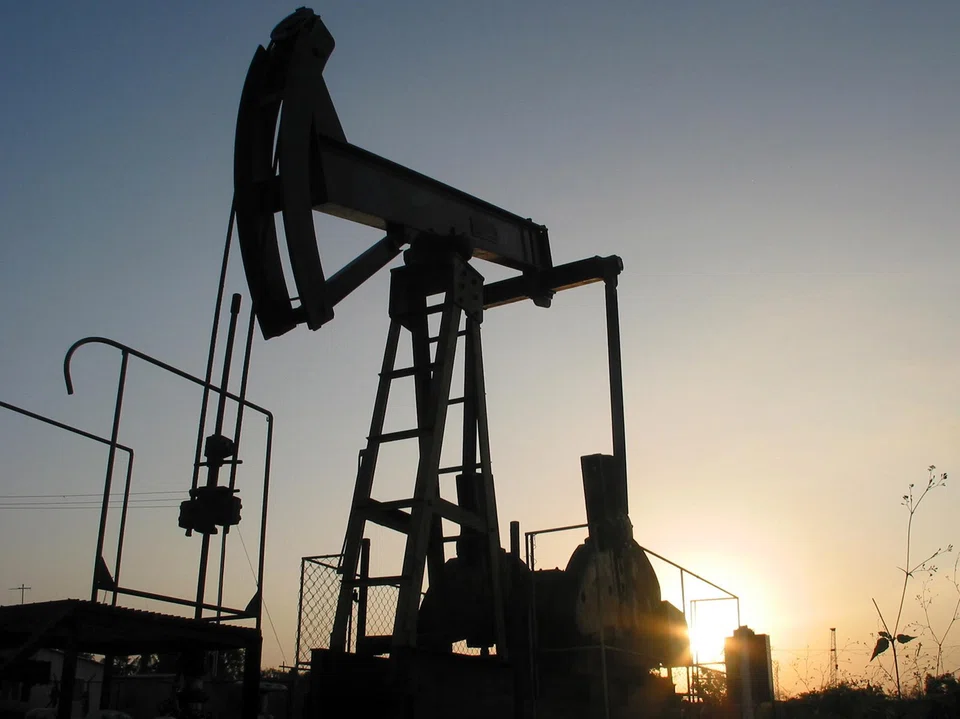
[NEW YORK] Oil prices surged about 3 per cent on Wednesday (Feb 4) after a media report suggested planned talks between the United States and Iran on Friday could collapse.
Brent futures settled US$2.13, or 3.16 per cent, higher at US$69.46 a barrel, while US West Texas Intermediate (WTI) crude gained US$1.93, or 3.05 per cent, to US$65.14.
The US rejected Iran’s request to change the location of talks planned for Friday, Axios reported on Wednesday, citing two US officials. Both crude benchmarks have seesawed this week between news of talks to de-escalate tensions between the US and Iran and heightened fears of potential disruption to oil flows through the Strait of Hormuz.
“If a hot war is seen in Iran, this could put Iran’s 3.4 million b/d of supply at risk. But even more significant is Iran’s control of the Strait of Hormuz, through which around 20 per cent of global oil liquids pass,” said Ajay Parmar, director of energy and refining at ICIS.
This risk premium is still in the market and it is the main reason why prices remain higher right now than fundamentals would otherwise indicate, he added.
The US military on Tuesday shot down an Iranian drone that “aggressively” approached a US aircraft carrier in the Arabian Sea, the US military said.
Separately, a group of Iranian gunboats approached a US-flagged tanker north of Oman, maritime sources and a security consultancy said. The US and Iran were due to hold talks in Oman on Friday, according to a regional official.
Opec members Saudi Arabia, Iran, the United Arab Emirates, Kuwait and Iraq export most of their crude via the Strait of Hormuz, mainly to Asia.
Meanwhile, India’s Russian oil imports slipped in January, continuing a downturn that began in December, as refiners sought alternative sources due to Western sanctions pressure and ongoing US-India trade talks, Reuters sources said and data showed.

Crude oil inventories fall
The US Energy Information Administration (EIA) said on Wednesday that US crude stocks fell last week as a winter storm gripped large swaths of the country.
US crude oil inventories fell by 3.5 million barrels to 420.3 million barrels last week, as oil output slid to the lowest level since November 2024, the EIA said, compared with analysts’ expectations in a Reuters poll for a 489,000-barrel rise.
The gains from the oil inventories draw were likely limited as the decline was not as large as the more than 11 million-barrel decline estimated by the American Petroleum Institute on Tuesday, said Phil Flynn, senior analyst with Price Futures Group. REUTERS
Decoding Asia newsletter: your guide to navigating Asia in a new global order. Sign up here to get Decoding Asia newsletter. Delivered to your inbox. Free.
Share with us your feedback on BT's products and services