

Oil prices decline over 1% on Chinese demand jitters
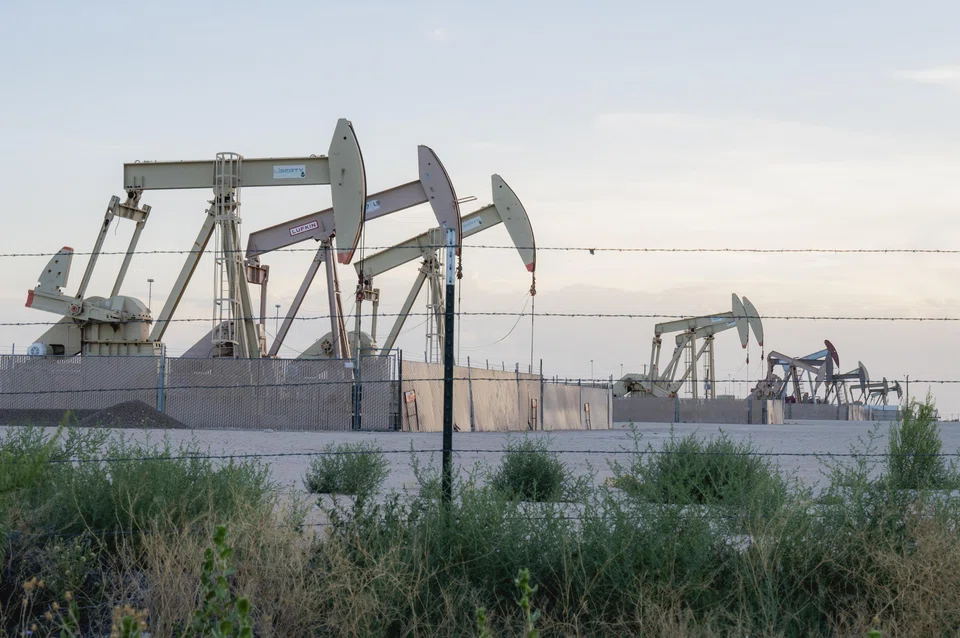
OIL prices settled more than 1 per cent lower on Tuesday, the third straight day of losses, on worries of a slowing Chinese economy crimping demand, though declines were stemmed by a growing consensus the US Federal Reserve could begin cutting its key interest rate as soon as September.
Brent futures closed down US$1.12, or 1.3 per cent, at US$83.73 a barrel, while US West Texas Intermediate (WTI) crude fell US$1.15, or 1.4 per cent, to US$80.76.
“Weaker economic data continues to flow from China as continued government support programs have been disappointing, with many of China’s refineries cutting back on weaker fuel demand,” said Dennis Kissler, senior vice-president of trading at BOK Financial.
The world’s second-largest economy grew 4.7 per cent in April-June, official data showed, its slowest rate since the first quarter of 2023 and missing a 5.1 per cent forecast in a Reuters poll. It slowed from the previous quarter’s 5.3 per cent expansion, hamstrung by a protracted property downturn and job insecurity.
Meanwhile, the global economy is set for modest growth over the next two years amid cooling activity in the US, a bottoming-out in Europe and stronger consumption and exports for China, but risks to the path abound, the International Monetary Fund said on Tuesday
In the US, crude oil inventories fell by 4.4 million barrels last week, according to market sources citing American Petroleum Institute figures on Tuesday. Stocks on average were expected to fall by 33,000 barrels last week, according to a Reuters poll on Tuesday.
Government data on inventories is expected on Wednesday.
Fed Chair Jerome Powell said on Monday the three US inflation readings over the second quarter of this year “add somewhat to confidence” that the pace of price increases is returning to the central bank’s target in a sustainable fashion. Market participants interpreted the comments as indicating that a turn to interest rate cuts may not be far off.
Lower interest rates decrease the cost of borrowing, which can boost economic activity and oil demand.

US retail sales were also unchanged in June, a show of consumer resilience that boosts economic growth prospects for the second quarter, helping assuage fears of a sharp slowdown in the economy.
Federal Reserve Governor Adriana Kugler said it will be appropriate to begin easing monetary policy later this year if economic conditions continue to evolve favorably.
But some analysts cautioned about excess bullishness as expected weakness in some macroeconomic data from the US could still indirectly hurt oil demand in the near term. REUTERS
Decoding Asia newsletter: your guide to navigating Asia in a new global order. Sign up here to get Decoding Asia newsletter. Delivered to your inbox. Free.
Share with us your feedback on BT's products and services
TRENDING NOW

He built the Vingroup empire. Now South-east Asia’s richest man is handing some key roles to his sons

Quarter of Singtel special discounted shares sold ahead of CPF Board transfer

Why Tan Aik Keong of digital solutions specialist Agmo wants to make himself less indispensable

Asia needs new energy security architecture

