



Global oil prices hit 4-year high on concern of US-Iran war escalation
The gains risk a renewed spike in global inflation and higher pump prices in the US ahead of mid-term elections later this year

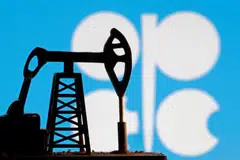
[LONDON] Global oil prices jumped to a four-year high of more than US$122 a barrel on Thursday (Apr 30), on concerns that the US-Iran war could worsen and lead to a protracted Middle East oil supply disruption that could hurt global economic growth.
The market moved higher after Axios, citing unidentified sources, reported late on Wednesday that US President Donald Trump was slated to receive a briefing on Thursday on plans for a series of military strikes on Iran in hopes it will return to negotiations on its nuclear programme.
Global oil benchmark Brent crude futures rose US$3.73, or 3.2 per cent, to US$121.76 a barrel as of 0820 GMT, after touching an intraday high of US$126.41, the loftiest since Mar 9, 2022. The prompt contract for June delivery expires on Thursday. The more active July contract was at US$111.89, up US$1.45 or 1.3 per cent.
The price of Brent crude has doubled since the US-Israeli attack on Iran began on Feb 28 and the US benchmark West Texas Intermediate (WTI) crude is up around 90 per cent due to the effective closure of the Strait of Hormuz, through which about a fifth of the world’s oil and liquefied natural gas transits.
The oil price gains risk a renewed spike in global inflation and higher pump prices in the US ahead of mid-term elections later this year.
“Oil prices need little encouragement to tempt them higher at present,” said John Evans of oil broker PVM. “For those who do not think Brent prices have the potential to reach US$150 a barrel, you ought to look away now.”
WTI crude futures posed smaller gains, rising US$1.49, or 1.4 per cent, to US$108.37. The contract reached US$110.93 earlier, the highest since Apr 7. Both benchmarks are on track for their fourth month of gains, reflecting fears that the Iran conflict could choke global oil supplies for months to come.
Trump called a ceasefire in the war earlier last month, but also imposed its own blockade on Iranian ports.
Talks to resolve the conflict, which has killed thousands and caused what the International Energy Agency says is the world’s biggest oil disruption ever, have deadlocked, with the US insisting on discussing Iran’s alleged nuclear weapons programme and Iran demanding some control over the strait and reparations for damage from the war.
“Prospects for any near-term resolution to the Iran conflict or a reopening of the Strait of Hormuz remain dim,” IG market analyst Tony Sycamore said in a note.
Possibility of extended blockade
In a sign the conflict and resulting energy supply disruptions are set to continue for longer, Trump spoke on Wednesday with oil companies about how to mitigate the impact of a possible months-long US blockade, a White House official said. “In the near term, market participants remain focused on the dynamics of the US-Iran conflict and the risk of a prolonged closure of the Strait of Hormuz,” said Oanda senior market analyst Kelvin Wong.
This factor outweighs the long-term implications of the potential waning influence of Opec+ following the exit of the United Arab Emirates from the group, he added.
The exit will complicate the efforts of Opec+ – a wider group that includes Opec plus Russia and other allies – to balance the market through adjustments to supply because the group would control less global production, Opec+ sources said.
Even so, Opec+ is likely to agree to a small increase of around 188,000 barrels per day in its oil output quotas on Sunday, sources told Reuters on Wednesday, even though most producers cannot raise output due to the effective closure of the Strait of Hormuz.
The UAE’s exit from Opec and Opec+ would allow it to raise production after exports restart, according to analysts.
However, this is unlikely to have much impact on market fundamentals for now given the Hormuz closure and production disruptions from the war.
Analysts now say destruction in the demand for oil due to the high prices may be the most likely factor to alleviate the current tight supply situation.
ING analysts see about 1.6 million bpd of demand lost as consumers and end-users simply stop using oil products in some form because of high prices.
Though significant, “it’s clearly not enough to fill the supply gap we are currently facing”, the analysts added in a note. REUTERS
Decoding Asia newsletter: your guide to navigating Asia in a new global order. Sign up here to get Decoding Asia newsletter. Delivered to your inbox. Free.
Share with us your feedback on BT's products and services






