

Oil prices slip as tankers continue to ply the Middle East despite escalating US-Iran war
The US carried out two hours of attacks on Iran on Jul 29, the US Central Command says
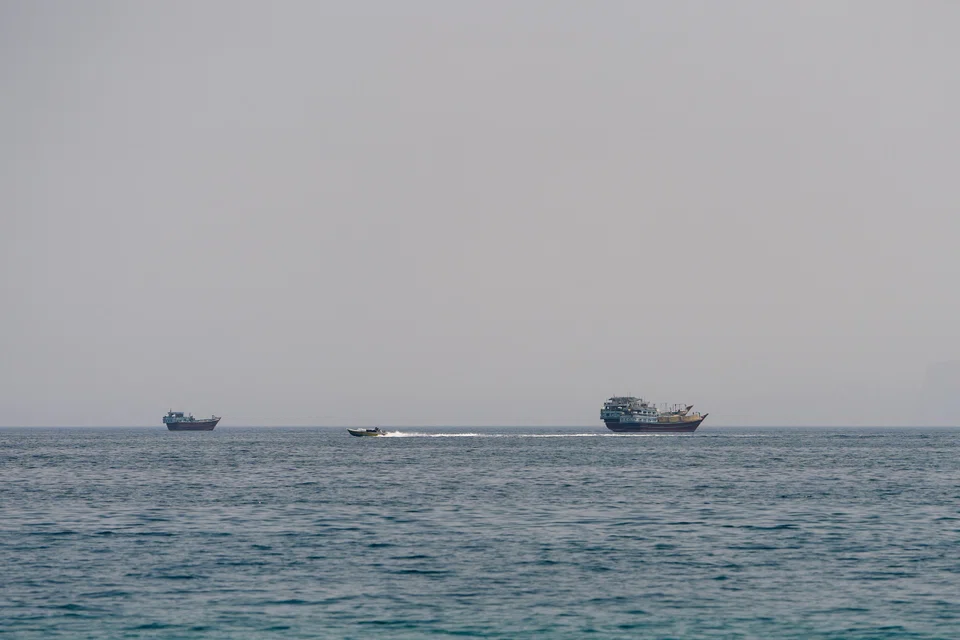
[NEW DELHI] Oil prices erased some of their previous gains on Thursday (Jul 30), despite escalating attacks in the Gulf as investor focus shifted to supply flows through the key chokepoints in the region.
Brent futures fell US$0.96, or 1.06 per cent, to US$89.78 a barrel as of 0418 GMT. US West Texas Intermediate (WTI) crude fell US$0.64, or 0.76 per cent, to US$83.82 a barrel.
Brent settled up 7.91 per cent in the previous session and WTI up 6.56 per cent in one of the sharpest spikes of the Iran war, reversing a 5 per cent plunge on Tuesday after a pause in hostilities in the five-month conflict.
On Wednesday, the US and Saudi Arabia attacked Iran-backed paramilitary forces in Iraq, the first time that Saudi had publicly joined US air strikes, in retaliation for drone attacks on Saudi oil targets launched from Iraq.
The US also carried out two hours of attacks on Iran on Wednesday, the US Central Command said. That ended a lull in US strikes on Iran that began over the Jul 25-26 weekend.
“Trump’s ‘hit hard’ rhetoric caused the price spike immediately but looks like the market has fully priced (that) in and (is) considering the ‘Taco’ possibility right now,” said Ye Lin, vice president of commodity markets, oil, at Rystad Energy, referring to the acronym Trump Always Chickens Out.
Ye said the market is following a pattern: geopolitical headlines are triggering rapid price spikes, but those gains are often short-lived as actual supply flows and parallel diplomatic efforts tend to determine how long those upward price moves persist.
Prices are being capped as crude supply is still moving from the key Gulf region despite the near shutdown of the Strait of Hormuz. Iran closed the waterway, through which around a fifth of global oil and gas flows previously passed, after the US-Israeli war began on February 28.
Rystad Energy estimates about 13 million barrels per day of oil from the Gulf is still reaching markets.
SEE ALSO



Even after the Iran-aligned Houthis in Yemen imposed a naval blockade on Saudi Arabia in the Red Sea on Jul 20, disrupting shipping in the Bab el-Mandeb strait, some cargoes, particularly on Chinese-connected tankers, have flowed to markets.
“While overall volumes are reduced, oil continues to leak out of the region through multiple channels, and additional workarounds are being explored. The longer this situation persists, the more these alternative routes and methods will erode Iran’s leverage over the Strait of Hormuz,” IG market analyst Tony Sycamore said in a note. REUTERS
Decoding Asia newsletter: your guide to navigating Asia in a new global order. Sign up here to get Decoding Asia newsletter. Delivered to your inbox. Free.
Share with us your feedback on BT's products and services
TRENDING NOW

High Court rules against Julius Baer’s Singapore trust arm in US$50 million family trust dispute

MSCI proposes standalone status for Indonesia; Jakarta stocks plunge 8%

Once staunchly pro-China, Malaysian Chinese businesses are now distancing themselves from Beijing

No chicken feed: How Malayan Flour Mills built an empire from flour to fowl

