

Oil races towards US$100, but party may not last

Anita Gabriel
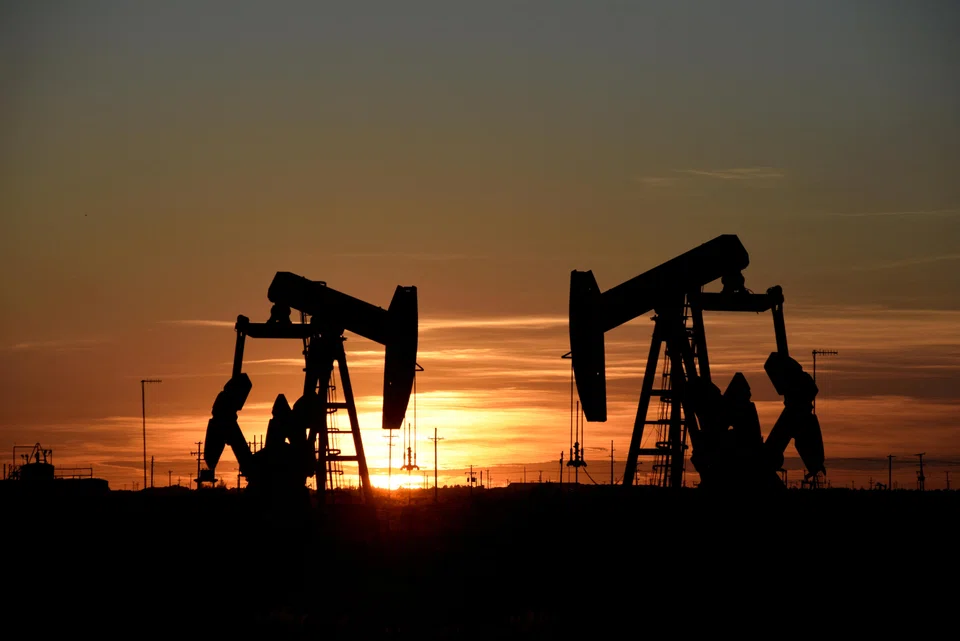
CRUDE prices are a hair’s breadth from the magic mark of US$100 a barrel, after a four-month rally. Demand for oil far exceeds supply – and the gulf is widening because of the Saudi Arabia-led cartel’s extended output cuts.
But oil bulls may want to put a lid on expectations that oil is in for a “higher-for-longer” run, even as the commodity is set to log its best quarter since March 2022. That triple-digit mark appears to be a shoo-in.
TD Commodities wrote in a recent report: “While we continue to expect tight crude markets into the year-end, producers, consumers and merchants were widely expecting a period of steep deficits, and appear to have been well-positioned against recent upside risks to prices.”
This could dampen the continued upside momentum in crude markets, said the commodities research house.
Stephen Innes, managing partner of SPI Asset management, said: “I feel that US$100 could be a hard cap, similar to US$80 being a hard floor.”
He added: “As much as US$80 is the perceived line in the sand for Saudi Arabia, and US$90 is the supreme sweet spot, I suspect producers need to be cautious about over-tightening, so they might vocalise that they are happy with the current level.
“It could lead traders to interpret that a move higher will cause Opec (Organization of the Petroleum Exporting Countries) to add more barrels to the markets.”
Oil hit its highest point in 10 months this week, with Brent, the global crude benchmark, surpassing US$97.50 a barrel. On Friday (Sep 29), the commodity softened to around US$95 during Asia’s afternoon trading hours; traders were taking profit after the recent rally, led chiefly by tight supply concerns.
At the current levels, Brent is nearly 35 per cent higher than the lows of March this year, and about 7 per cent higher than a year ago.
The recent gains are a significant trajectory for oil.
XTB Mena’s senior market analyst Hani Abuagla said: “For a long time this year, oil traded at lower levels than in the corresponding period the year before, leading to rapid inflation containment. That’s in the past now.”
When Russia attacked Ukraine in early 2022, supply woes pushed crude prices to almost US$130 per barrel. But when the market saw that there were no global oil-supply issues, the price dropped significantly from June 2022 to June this year.
Now, record global demand and strong output cuts by Opec+ have brought back the “ghost of US$100 per barrel”. “This may indicate that the fight against inflation is far from over,” Abuagla wrote in a recent note.
The recent spike in oil prices followed Russia and Saudi Arabia’s announcement about extending production cuts through the end of this year. The International Energy Agency said the extension of output cuts would “lock in a substantial market deficit” in the fourth quarter.
Abuagla said: “The market had earlier expected a deficit of two million barrels a day by year’s end, but it’s now clear that this deficit will be even greater.” He noted that a deficit of this size was last seen from 2007 to 2008, when prices soared to nearly US$150 a barrel.
The recent rally was also triggered by a large draw at the major US storage hub at Cushing, Oklahoma, on the back of higher demand from refiners. Oil inventories there are near a historic low, and dangerously close to the minimum operating level.
An increase in international travel during China’s Golden Week holiday, expected to bump up the demand for oil, is also keeping prices elevated.
But at a certain price level, “demand destruction” could kick in. This happened in 2008, and again in June 2022, when prices plunged in short order from around US$130 a barrel to US$100 a barrel.
Innes said: “Ultimately, Opec+ faces a delicate balancing act in managing the oil market. While they aim to support higher oil prices, they also need to avoid pushing prices to levels that could lead to increased demand destruction. Overly high oil prices can weigh on economic growth and consumer spending, potentially reducing oil demand. “Finding the right balance between tightening the market to support prices, and ensuring that oil remains affordable for consumers and doesn’t harm economic growth, is a crucial challenge for Opec+ and its member countries.”
Factors such as China’s sluggish growth and a slowing global economy amid higher interest rates and weaker trade could also hurt oil demand.
Said Kang Wu, head of demand research at S&P Global Commodity Insights: “As we move into the last quarter of the year, global oil stock draws are expected to level off and eventually turn into builds in early 2024, as demand growth slows down.”
So although it cannot be ruled out that daily Platts Dated Brent could reach US$100 a barrel, he said that oil prices are unlikely to stay at that high level in the short run. He expects prices to moderate by year’s end and over the first quarter of next year.
BMI, a unit of Fitch Solutions, expects prices to soften in the final quarter on the back of seasonally weaker oil demand, coupled with a significant slowdown in global economic activity.
Nevertheless, given the strength in oil prices in the latest quarter, BMI has raised its annual average forecast to US$83 a barrel in 2023, up from US$80 per barrel previously.






