

Oil rises 2% on US crude drawdown, weaker dollar
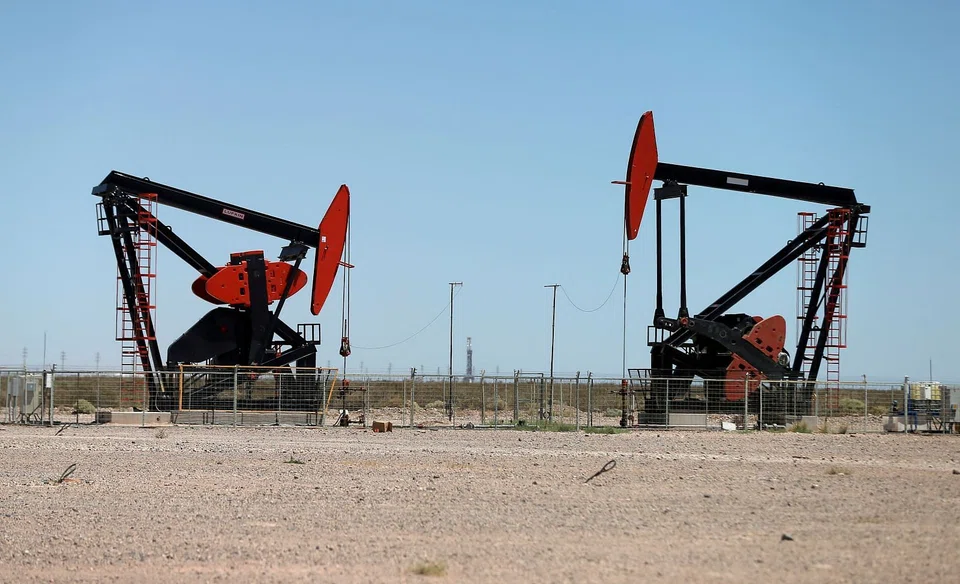
[NEW YORK] Oil prices hit two-month highs on Wednesday on tight supply as crude inventories in the United States, the world's top consumer, fell to their lowest since 2018, and as the dollar weakened and worries eased about the Omicron coronavirus variant.
US crude inventories fell 4.6 million barrels last week to 413.3 million barrels, their lowest since October 2018, the Energy Information Administration said. Analysts had forecast in a Reuters poll a 1.9 million-barrel drop.
"The crude draw was bigger than expected despite a material drop in refining activity," said Matt Smith, lead oil analyst for the Americas at Kpler, a data firm.
Brent crude futures settled up 95 cents, or 1.1 per cent, at US$84.67 a barrel. US West Texas Intermediate (WTI) crude futures were up US$1.42, or 1.8 per cent, at US$82.64.
The falling dollar was the main driver of higher oil prices, overtaking even the EIA draw, Kpler's Smith said. A weaker greenback makes dollar-denominated oil contracts cheaper for holders of other currencies.
The dollar fell to a fresh two-month low against a basket of currencies after data showed US consumer prices rose solidly in December.
The Brent contract LCOc1-LCOc7 was in backwardation, with front-month delivery around US$4.41 more expensive than delivery in six months, indicating tight near-term supply.
US crude inventories have dropped for seven consecutive weeks, and overall inventories have been tightening across the globe as major producers struggle to increase supply even as demand rises despite rising cases of Omicron.
Opec+ producers, the Organization of the Petroleum Exporting Countries and its allies, are still holding back more than 3 million barrels per day (bpd) in output while Iranian exports are pinned back by US sanctions.
Though Opec+ is raising output targets each month, technical difficulties have prevented several countries from hitting their quotas.
US Federal Reserve Chairman Jerome Powell said the US economy should weather the current Covid-19 surge with only "short-lived" impact and is ready for the start of tighter monetary policy.
"Assuming China doesn't suffer a sharp slowdown, that Omicron actually becomes Omi-gone, and with Opec+'s ability to raise production clearly limited, I see no reason why Brent crude cannot move towards US$100 in Q1, possibly sooner," said Oanda analyst Jeffrey Halley.
"There are plenty of variable outcomes in the previous sentence, the biggest threat being Omicron in China, India and Indonesia."
REUTERS
Decoding Asia newsletter: your guide to navigating Asia in a new global order. Sign up here to get Decoding Asia newsletter. Delivered to your inbox. Free.
Share with us your feedback on BT's products and services
TRENDING NOW

Temasek’s Wan Chee Foong to helm PIL, Lars Kastrup to be board adviser

Chagee, Mixue and Luckin won the market. Sustaining their edge is the harder part

He built the Vingroup empire. Now South-east Asia’s richest man is handing some key roles to his sons

One-third of Singapore-listed firms at risk in severe AI downturn: MAS

