Oil rises as Trump’s Venezuela blockade takes edge off global crude surplus concerns
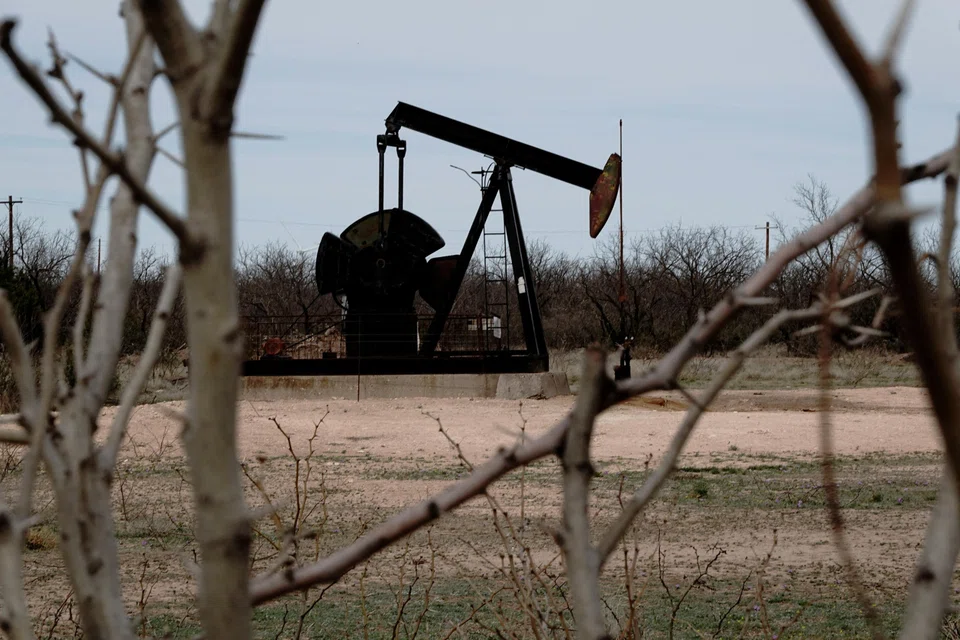
[NEW YORK] Oil prices rallied by more than 1 per cent on Wednesday after US President Donald Trump ordered a blockade of all oil tankers under sanctions entering and leaving Venezuela, raising global political tensions and easing concerns about a swelling surplus of global crude.
Brent crude futures settled at US$59.68 a barrel, rising 76 cents, or 1.3 per cent. US West Texas Intermediate crude settled at US$55.94 a barrel, up 67 cents, or 1.2 per cent.
Growing US fuel inventories tempered the rise in oil prices. Prices had settled near five-year lows in the previous session on signs of progress in Russia-Ukraine peace talks. A peace agreement could see Western sanctions on Moscow eased, freeing up supply as the market grapples with fragile global demand.
On Tuesday, Trump ordered a blockade of all sanctioned oil tankers entering and leaving Venezuela, saying he regarded President Nicolas Maduro’s administration as a foreign terrorist organisation.
The Venezuelan government said in a statement it rejected Trump’s “grotesque threat.” Trump made his blockade comments a week after the US seized a sanctioned oil tanker off Venezuela’s coast.
How would blockade work?
It is unclear how many tankers will be affected and how the US will impose the blockade, and whether Trump will turn to the US Coast Guard to interdict vessels, as he did last week. In recent months, the US has moved warships into the region.
Some energy experts are skeptical that Trump’s latest actions would make a meaningful dent in global crude oil supplies.
“While US actions may inject short-term noise and modest risk premium, they are insufficient on their own to tighten global balances or drive a sustained rally in crude prices,” Kpler energy analysts said in a note.
While many vessels picking up oil in Venezuela are under sanctions, others transporting the country’s oil and crude by way of Iran and Russia have not been sanctioned.
Tankers chartered by Chevron are carrying Venezuelan crude to the US under an authorisation previously granted by Washington.
China is the biggest buyer of Venezuelan crude, which accounts for about 1 per cent of global supplies. Adding further uncertainty to Venezuela’s energy production, state-run oil company PDVSA on Wednesday said it was resuming oil cargo deliveries at its terminals following a cyberattack that affected its centralised administrative systems.
At least two tankers carrying oil byproducts, including methanol and petroleum coke, departed from Venezuela’s largest port, Jose, according to ship-tracking data and internal documents from state company PDVSA.
The US has not targeted exports of oil byproducts or petrochemicals since it first imposed energy sanctions on Venezuela in 2019.
Rising inventories
Rising inventories of petrol and distillate in the US took some of the steam out of crude oil‘s rise. While crude inventories fell last week, those of petrol and distillate grew more than analysts expected, according to the US Energy Information Administration.
Crude inventories dropped by 1.3 million barrels to 424.4 million barrels in the week ended December 12, the EIA said, compared with analysts’ expectations in a Reuters poll for a draw of 1.1 million barrels.
US petrol stocks, meanwhile, added 4.8 million barrels in the week to 225.6 million barrels, the EIA said, compared with analysts’ expectations in a Reuters poll for a build of 2.1 million barrels.
Distillate stockpiles, which include diesel and heating oil, rose by 1.7 million barrels in the week to 118.5 million barrels, versus expectations for a rise of 1.2 million barrels, the EIA data showed. REUTERS
Decoding Asia newsletter: your guide to navigating Asia in a new global order. Sign up here to get Decoding Asia newsletter. Delivered to your inbox. Free.
Share with us your feedback on BT's products and services